✂️ Collection as Teacher—From Touchboard to Black Dress
Editorial note:
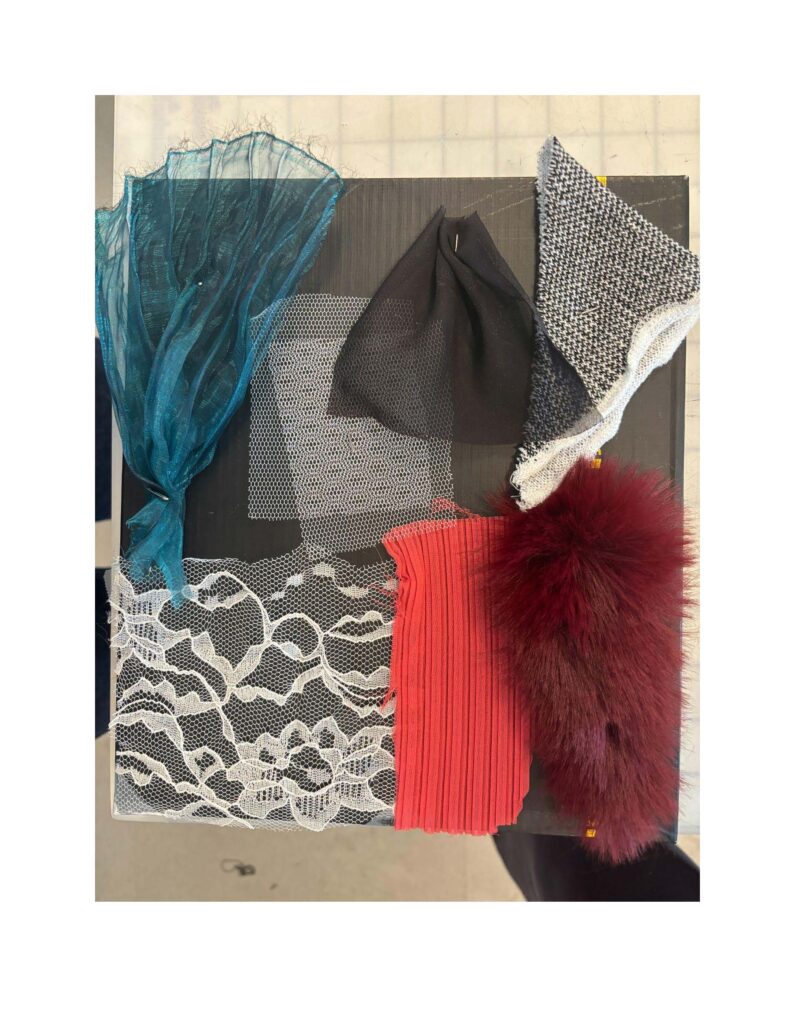
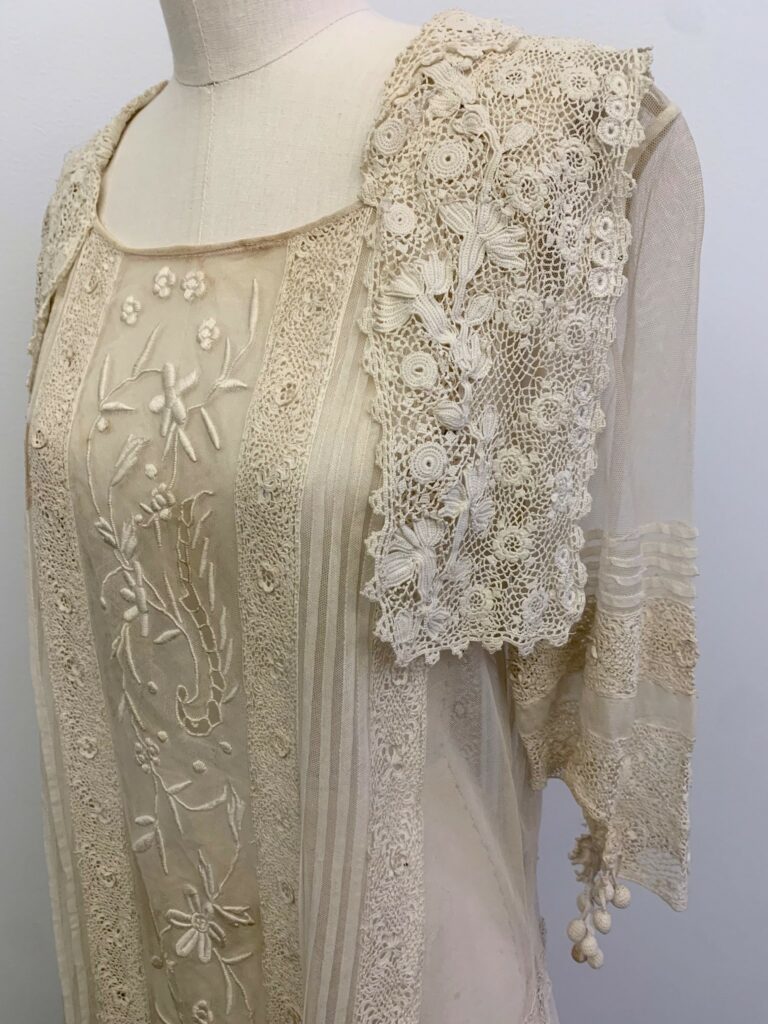
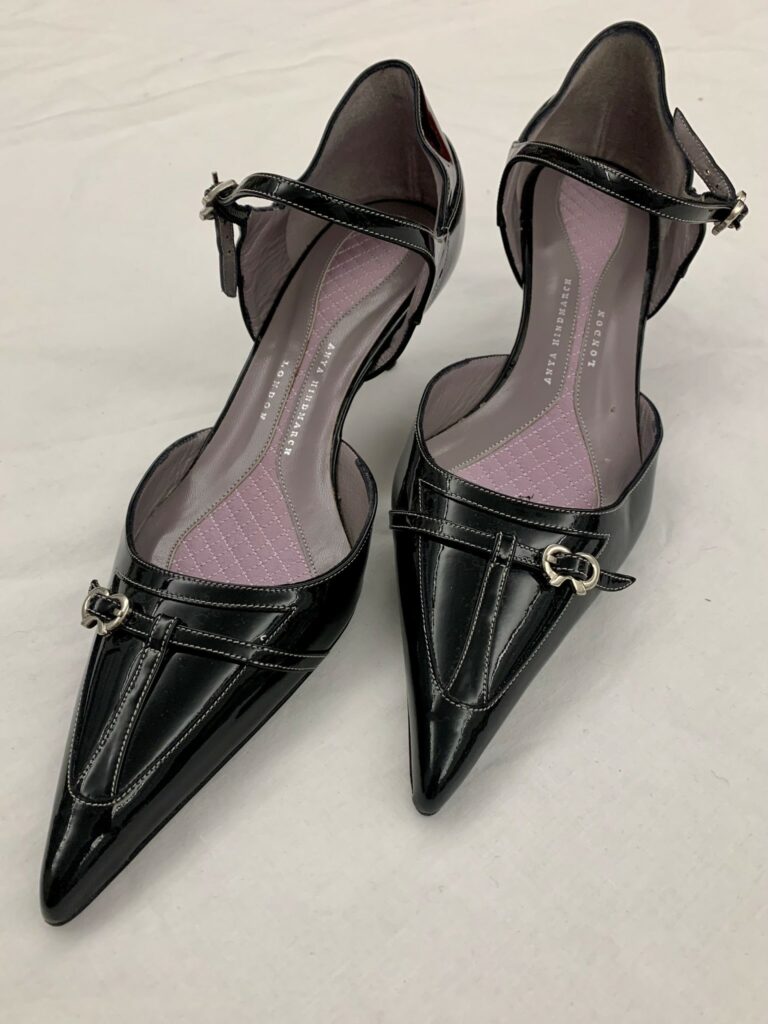
These works has been created in the context of the Bauhaus Open Studios programme with students from Cornell College of Human Ecology’s Department of Human Centered Design (studio lead: Catherine Kueffer Blumenkamp) in spring 2024. Students were asked to select an object from CF+TC, create a touchboard as in the preliminary course at the Bauhaus and then develop their own design based on this material analysis.
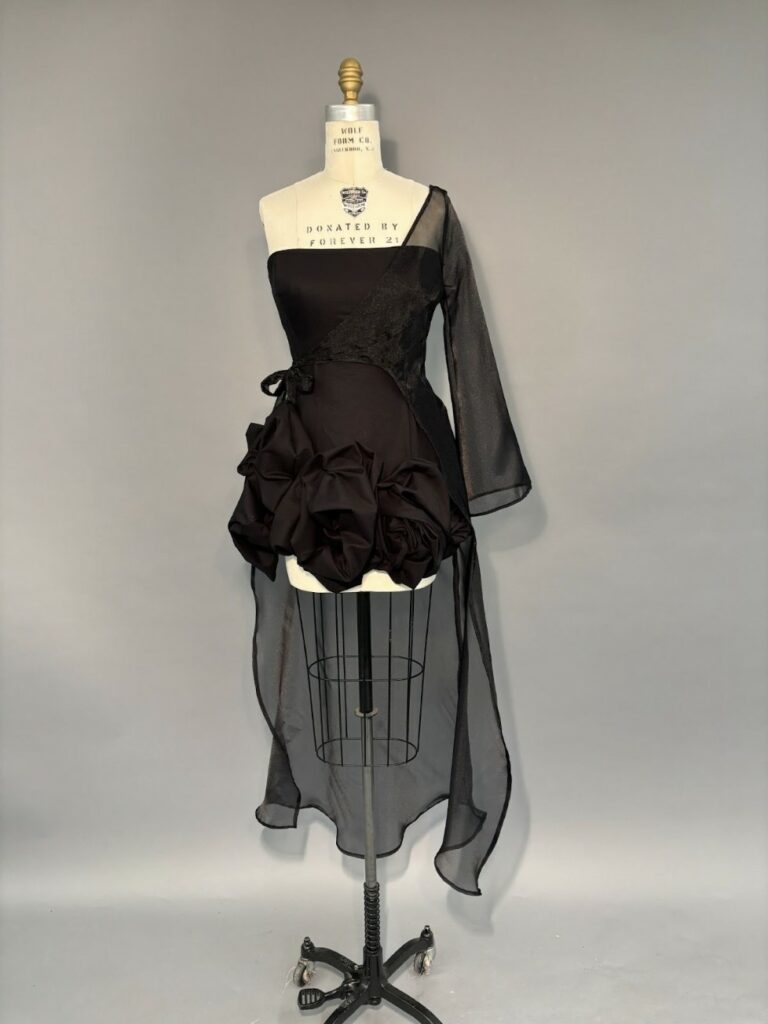
This Project was split up between us by which piece we made. Kate made the sheer one-shoulder piece on top, and Cleah made the dress underneath. The most difficult part of making the sheer layer was hemming all the edges. Because it was cut on the bias, as it was hemmed, the fabric would stretch, not creating the cleanest finish look. Then when trying to iron it flat, certain parts of the fabric would tend to melt and feel tougher. This was the only part I was not satisfied with. I made sure to do French seams on the interior of the piece in order to conceal fraying since the piece was transparent and all seams would be visible. The darts were also one of the more difficult elements because they needed to be clean because you could see the other side of them through the transparent background. I chose to make this a design element and stitch the excess down.
As for the dress, the hardest part was getting the right fit since the pattern was made up of 6 panels. The drape-to-pattern paper technique was very helpful in creating the foundation. Because there was going to be so much weight on the bottom of the dress, I thought adding the multiple seams / top stitching would add to the stiffness of the top, both in support and to add balance to the design. In terms of construction, I’m satisfied with how the dress looks on the outside but wish I could’ve lined the whole thing to keep the level of construction throughout, along with the zipper, I think it would have looked better with an invisible one.
Something I was really excited about was the bottom textured element. I patterned multiple ovals and circles and turned them right side out to then manicure the shape. Our design was very figurative in terms of referencing the chosen piece from the collection. We opted to turn physical heaviness from the fur to the heaviness at the bottom of the dress, the lace was translated into a sheer and light fabric, embodying the “feel” on the body rather than the look of it. We also used black which contracted the many light pieces we chose as a way to play with similar elements working together with different materials.
Cleah Dyer is a third-year student at Cornell University, majoring in Fashion Design and Management with a minor in Creative Writing. Aiming to combine her passion for storytelling with fashion, the San Francisco native sets her sights on the bridal industry post-graduation.
Kate Stiens is a first-year studying fashion design in the College of Human Ecology at Cornell University. She is passionate about sustainable fashion and hopes to incorporate that into her design practice.