🕳️ Ecologies of absence: Fabric in space
Editorial note: This work has been created in the context of the Bauhaus Open Studios programme by students from the Academy of Fine Arts in Zagreb (studio leads: Nikola Bojić, Ivan Skvrce, Marko Tadić) in October 2025. Engaging with selected objects from the collection of the Museum of Contemporary Art in Zagreb (MSU)—textile fragments by Otti Berger, Ivana Tomljenović’s experimental film, and the correspondence of Marie-Luise Betlheim and Lou Scheper—the student research group explored not only what is present and preserved, but also what is absent and lost. They ask whether fragments can become active models for learning, and whether forms such as friendships, memories, and gestures of care can guide us in thinking about ecology, responsibility, and shared futures. Collections thus are not static repositories, but learning environments—ecologies in which human and non-human, personal and collective, past and present, remain fragmented and incomplete, yet living and entangled.
My research is inspired by the textile fragments of Otti Berger and her essay “Stoffe im Raum” (Fabrics in Space). This title itself became a point of departure for my own work, evoking the idea of fabric as something that extends beyond surface, existing within and shaping space. Berger’s reflections on the tactile, spatial and emotional qualities of textiles became the conceptual framework through which I began to question how material, memory, and form might intertwine in my own practice.
Throughout the research process, several questions emerged:
How can I apply Otti Berger’s theoretical principles in the creation of my own work?
How can I connect her textile fragments with the ones my family use or have used and translate her spatial thinking into my personal language of form?
And finally, how can I make the work more personal — how can I allow it to embody my own experiences, emotions, and sense of space?
I was interested in the relationship between surface and volume. I came up with the idea of bending the form of Otti Berger´s fragments into space to see what shape I would get and the result reminded me of an architectural construction. I was also interested in Berger’s essay “Stoffe im Raum” from 1930 where she writes that fabric is not a static surface, but a structure in space that operates on multiple levels of perception. Its significance does not lie in function, but in its ability to be perceived through sensory and emotional experience. Otti Berger insists that fabric should be “alive”—to be sensed by touch, seen through light, and felt unconsciously:
“…to weave a white fabric, the glitter of snow can unite with the hard shine of porcelain and with the transparency of a blossom.”
She places fabric in a parallel relationship with architecture: both create space, but on different levels — through form, rhythm, light, and movement.
In my work, I focused on three central ideas drawn from Otti Berger’s “Stoffe im Raum”:
Firstly, fabric is not merely a decorative surface, but an active element of space — a material that shapes light, acoustics, and atmosphere.
Secondly, Berger writes of fabric as a bridge between architecture and the feeling of home; it carries warmth, familiarity, and emotional resonance into otherwise neutral spatial structures.
Finally, she highlights the importance of tactility and subconscious perception — the way touch and material can evoke emotional responses that go beyond visual experience.
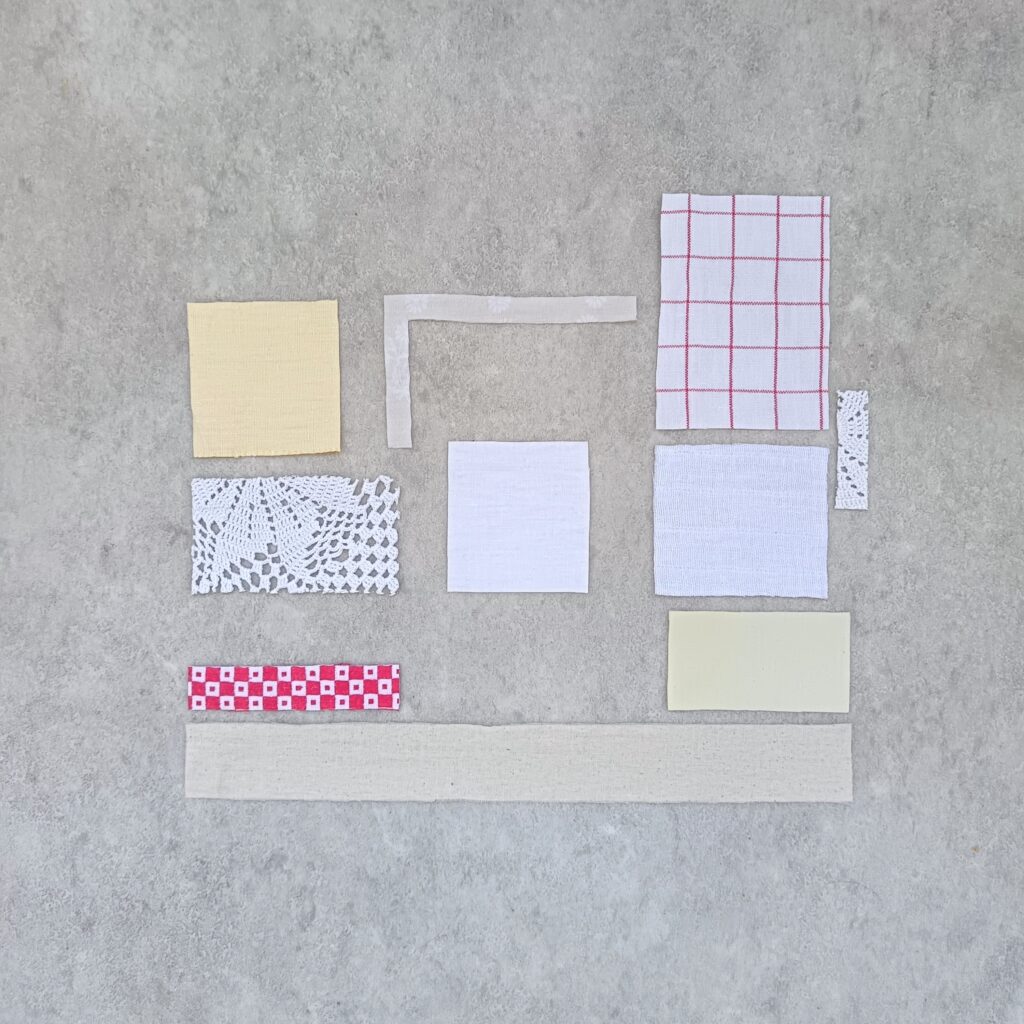
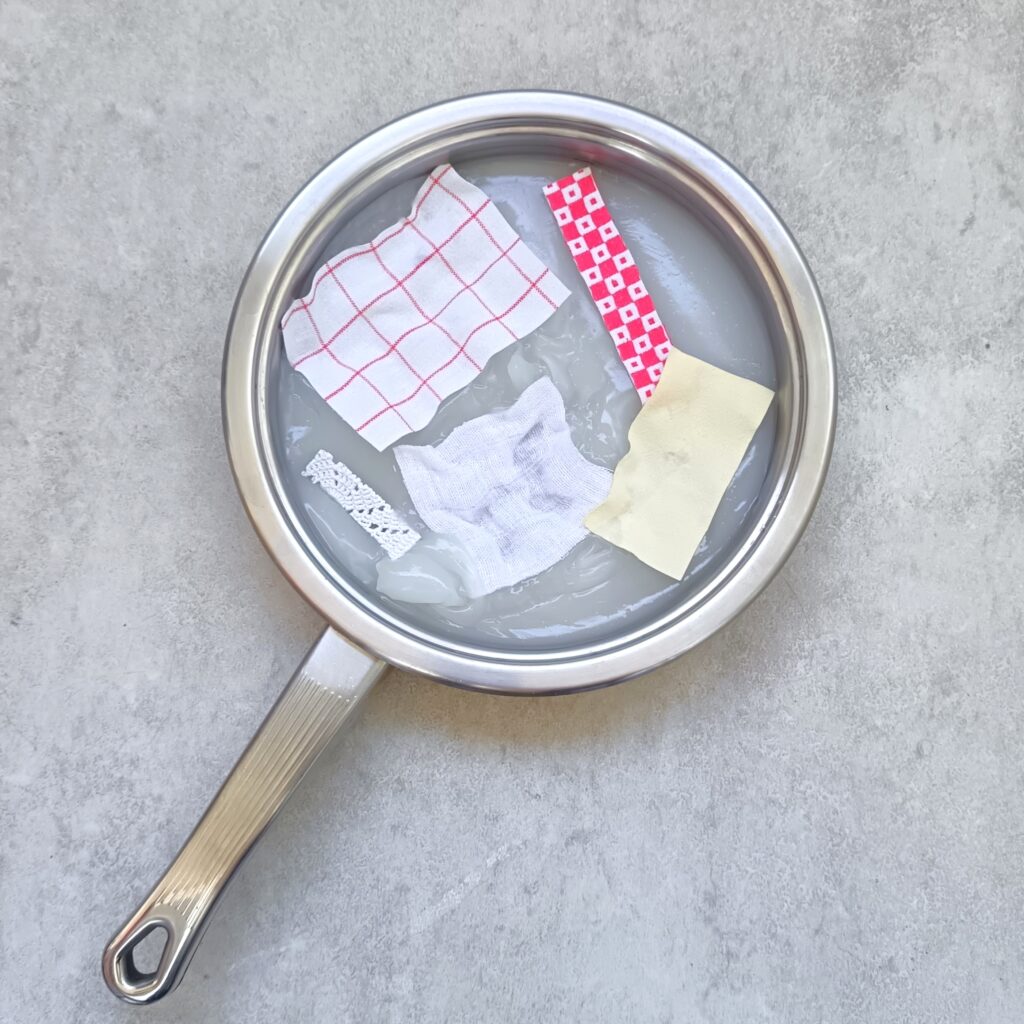
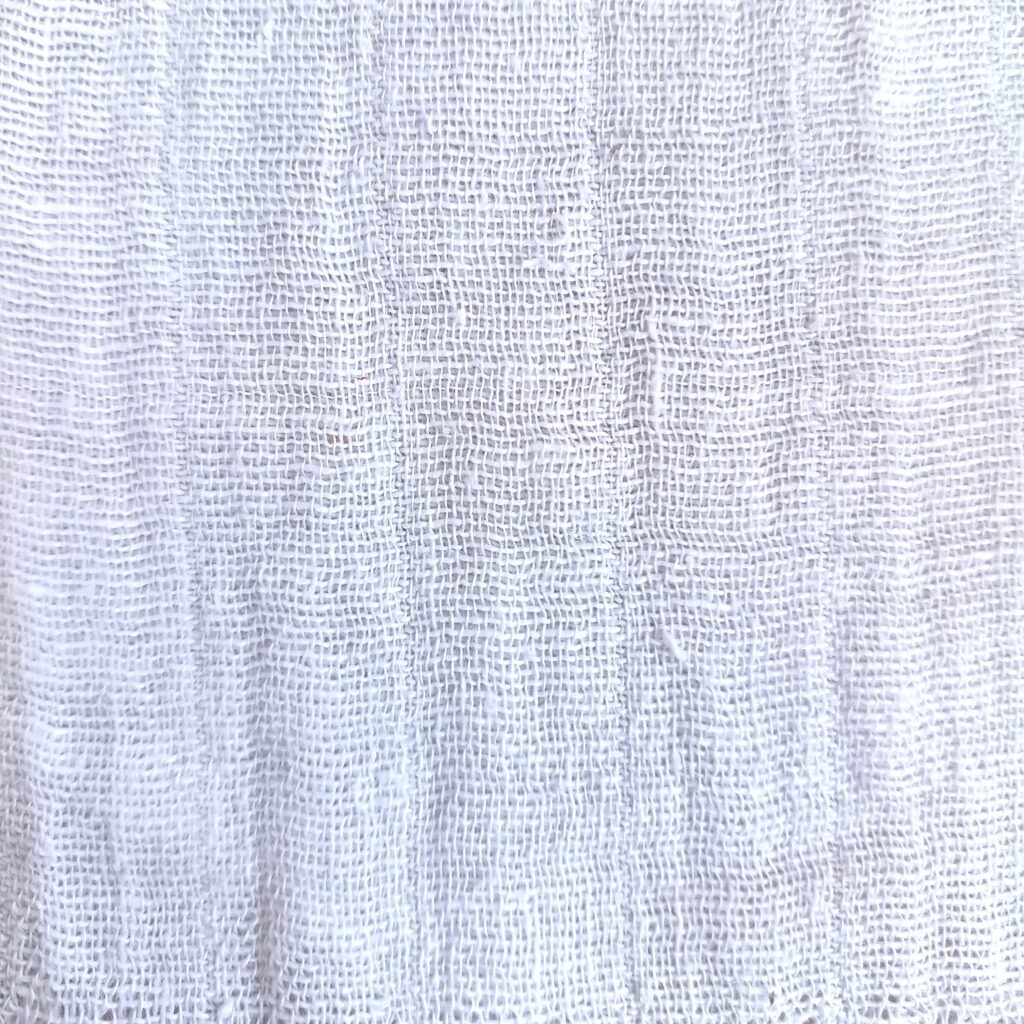
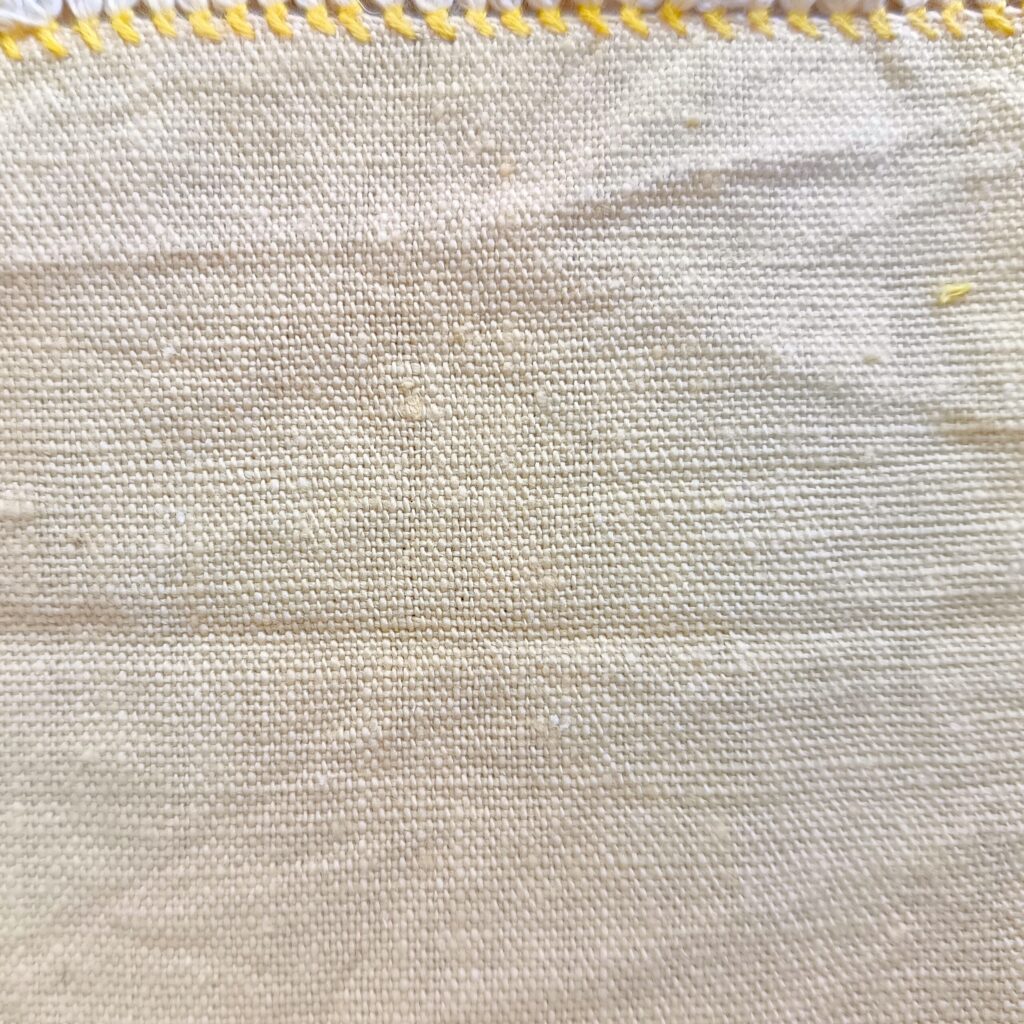
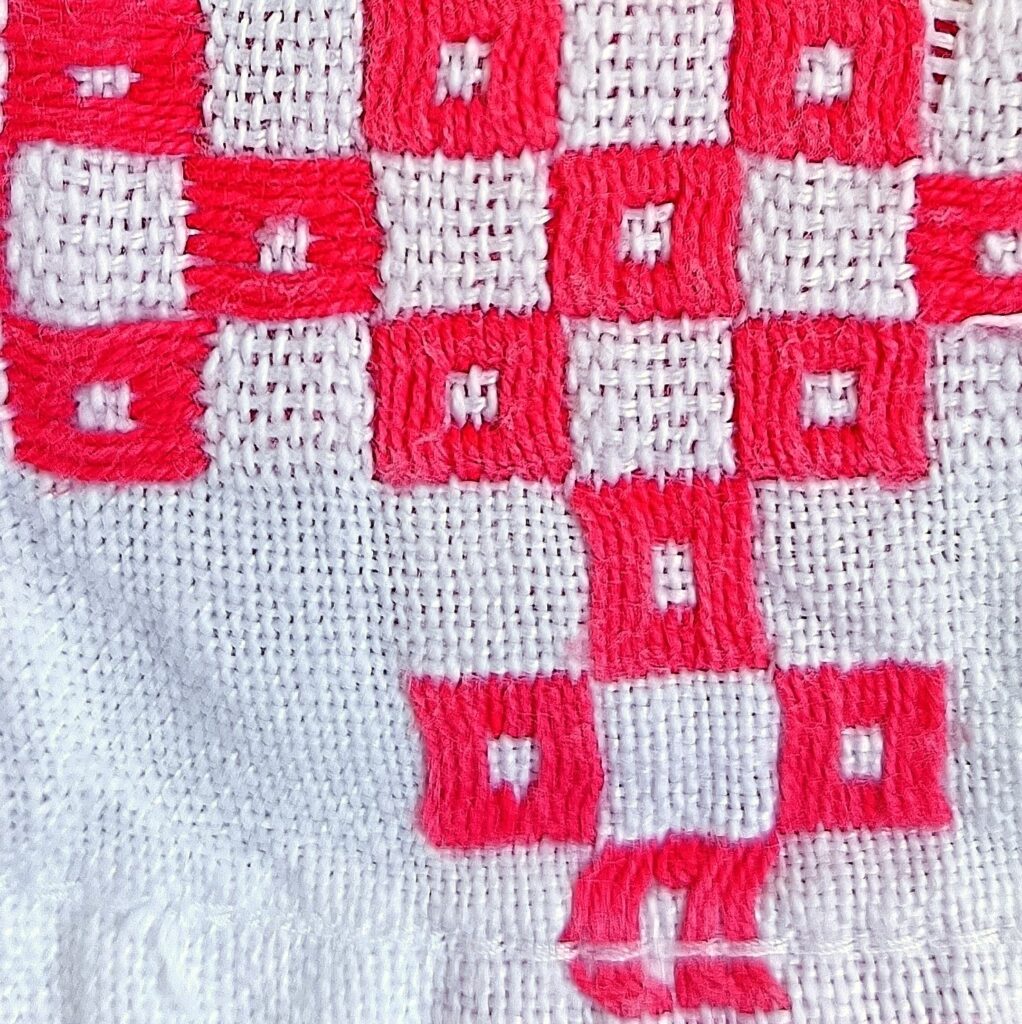
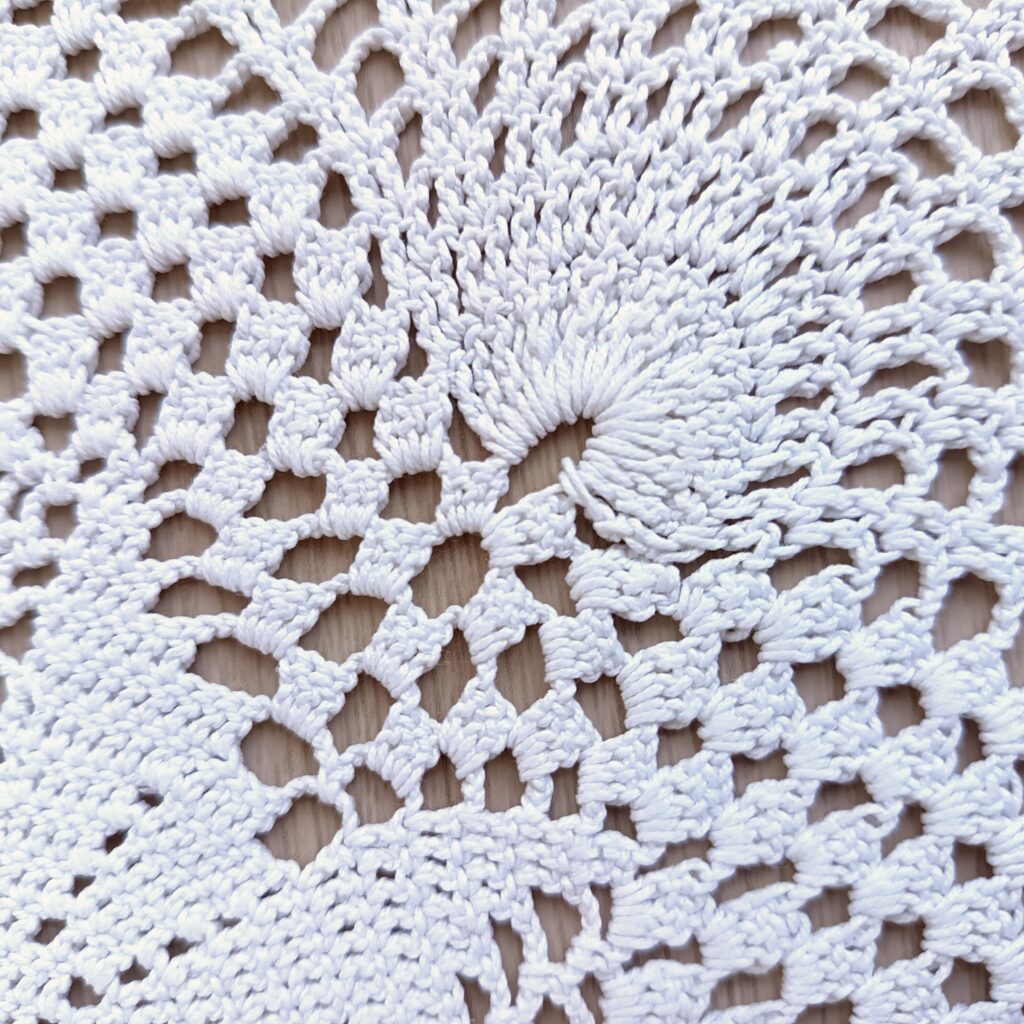
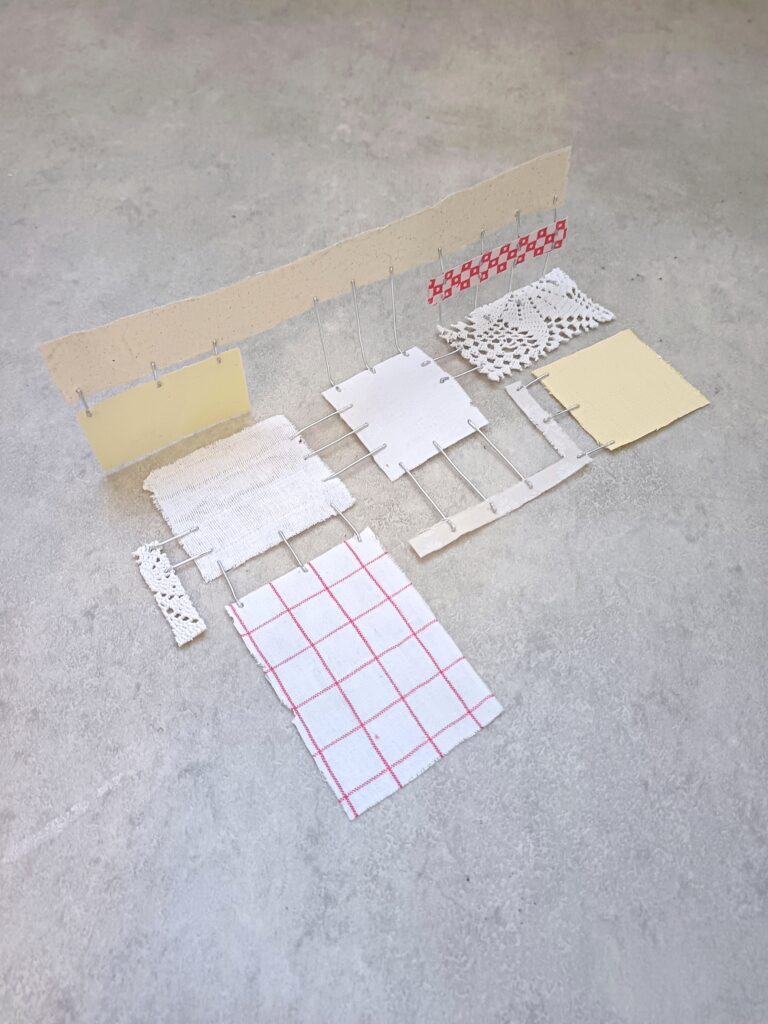
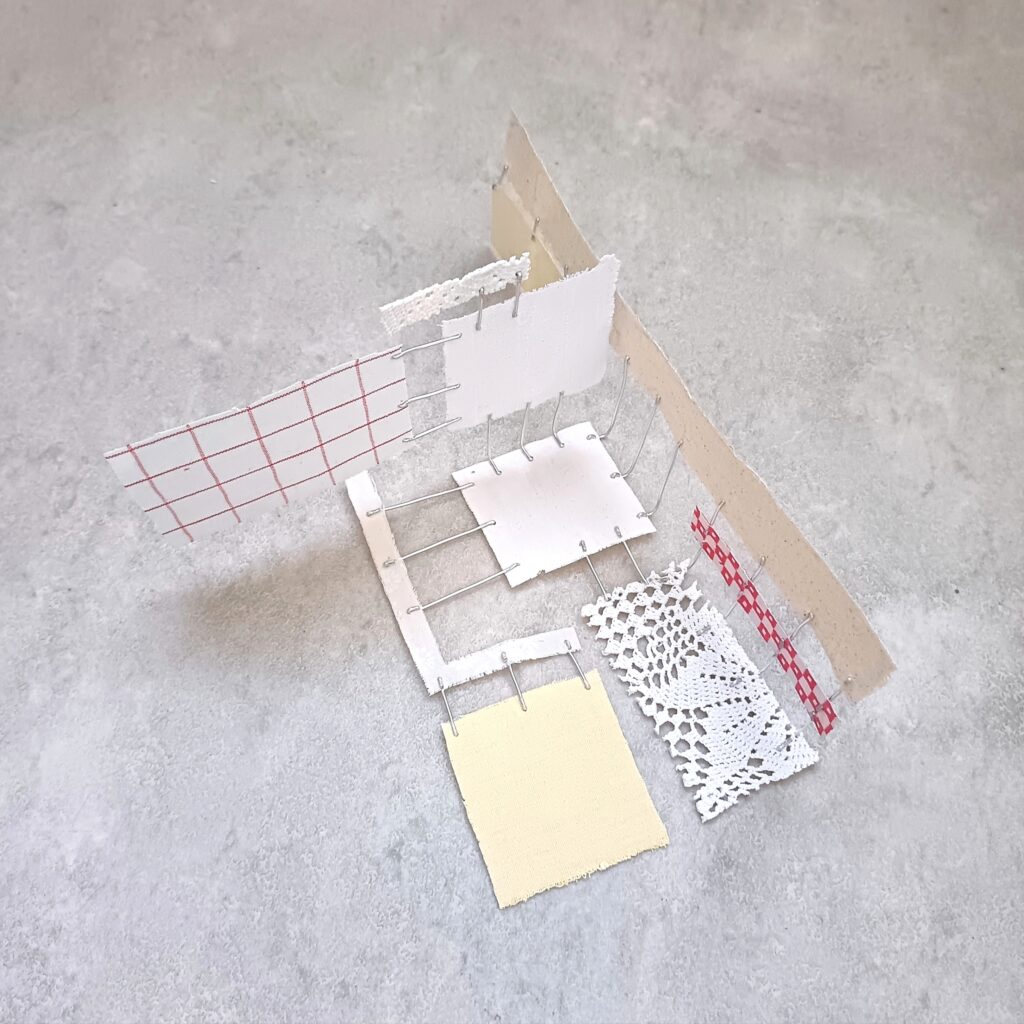
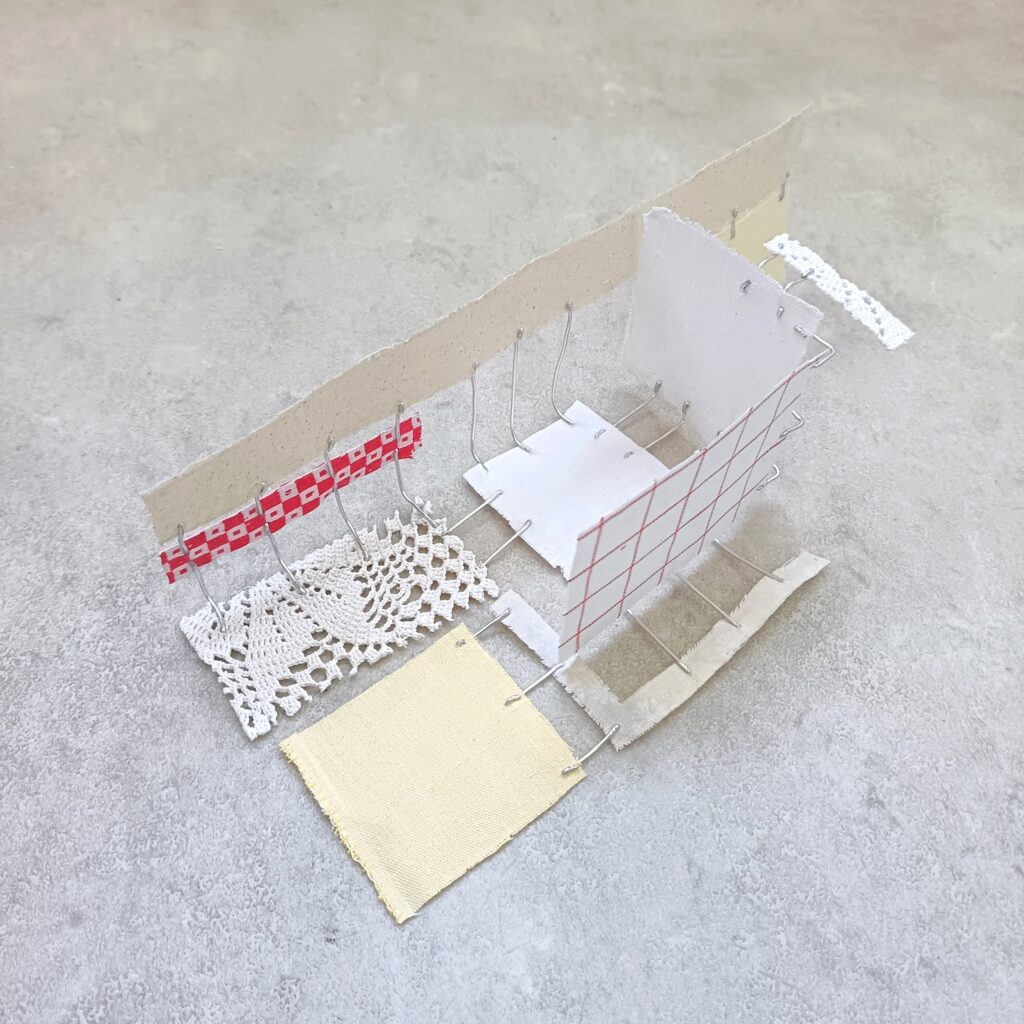
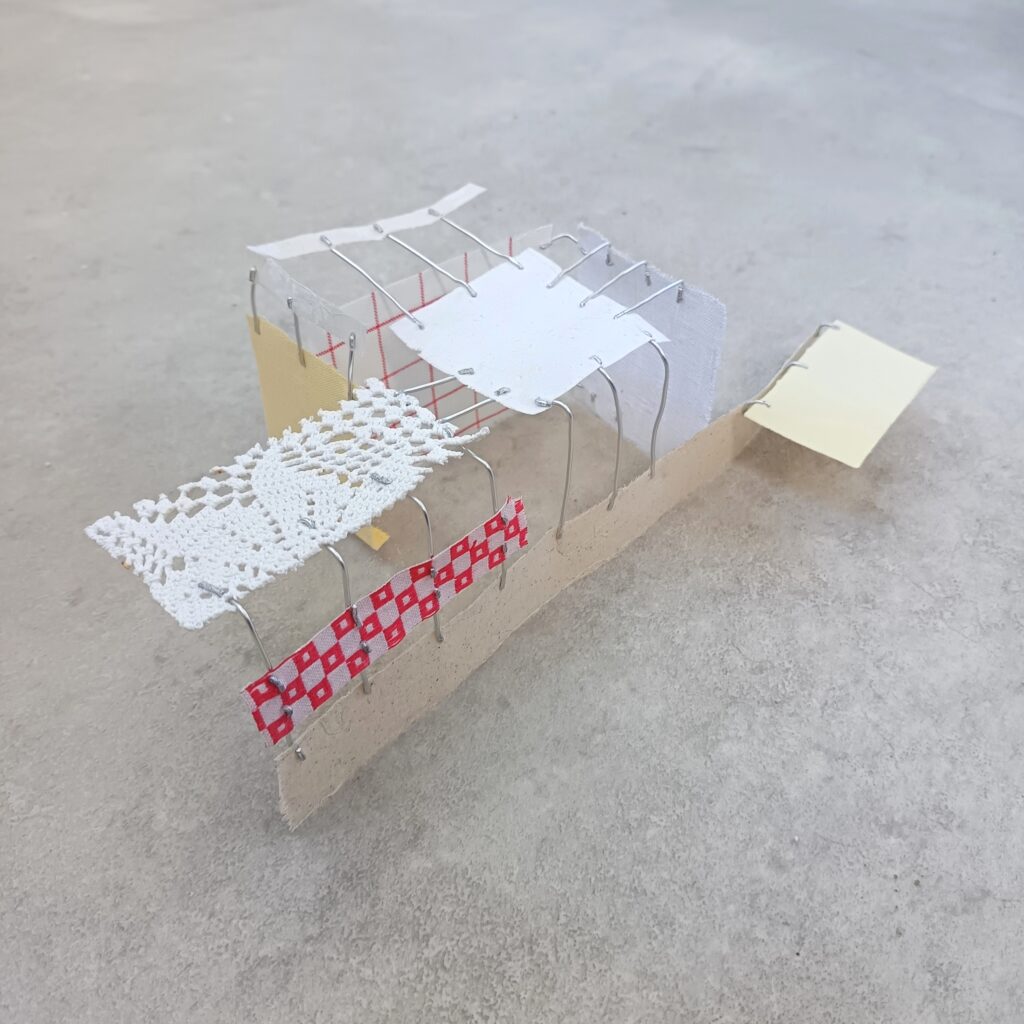
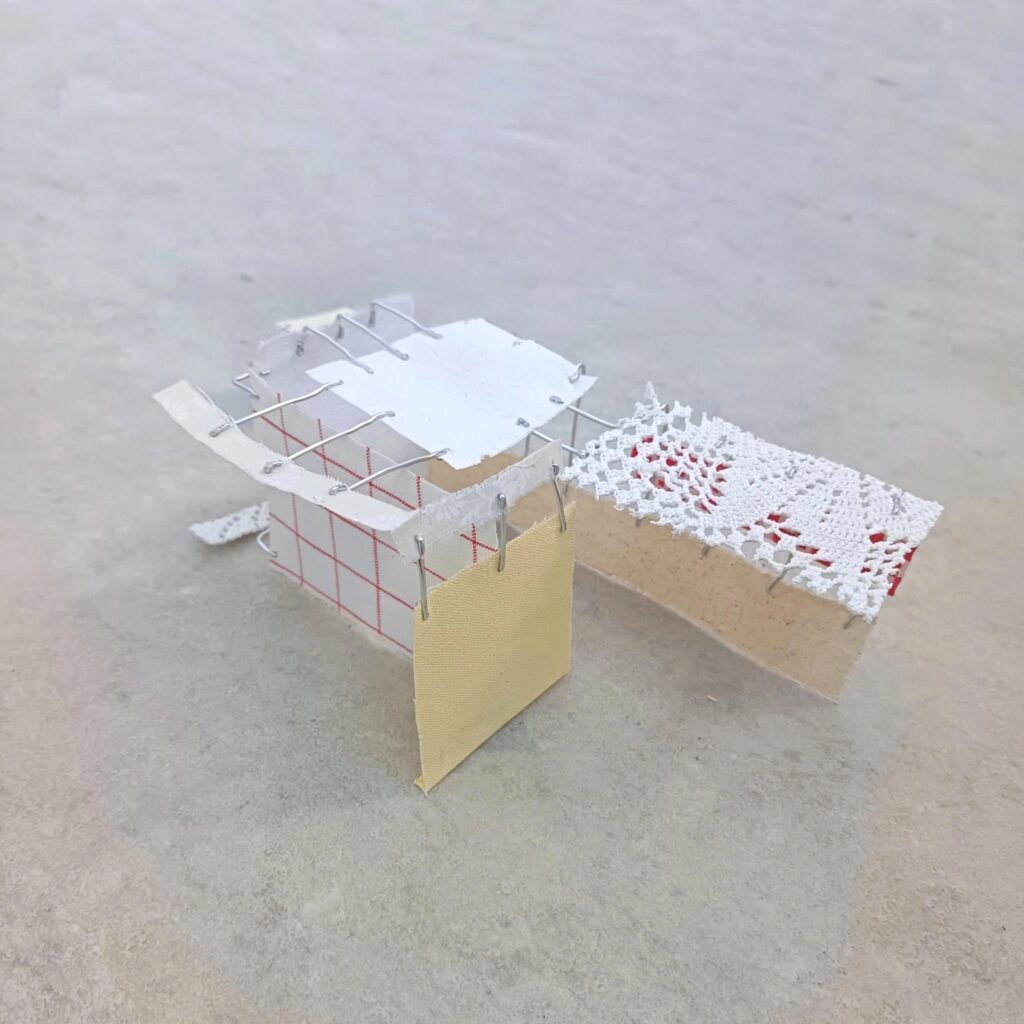
I made a reconstruction of Berger´s fragments out of fabric from my family home. Tablecloths, dishcloths, napkins, garments, and other fabric that holds emotional value. Those are the pieces that I remember my grandma and grandpa were using or having them as a decor when I was a child. I bounded those fragments together by wire and started bending the wire so that the textile extend from the surface into space, creating a construction that takes on an architectural aspect.
The idea behind the final work is that fabric becomes a structure in space and my personal archive. The wires become both the skeleton of the construction, and a metaphor for the bonds that shape my home. The fragments don´t form real, functional architectural space, but a space of meaning; a space built from feelings, memories, and tactile impressions. A symbolic home.
Also, I created a stop-motion animation showing the construction expanding and collapsing from surface into space and vice versa. This way, the stop-motion doesn´t just document the process of making the construction, but extend Otti Berger’s idea of fabric as a dynamic element of space. The sequence of rising and falling could represent a visual metaphor for the memory of home, which is constantly being built and dismantled in our mind.


is a 3rd-year student of art education at the Academy of Fine Arts, Zagreb