🏷️ Collection as Teacher—Alternative object record: Aba, heavy gray silk coat
Editorial note:
This work has been created in the context of the Bauhaus Open Studios programme with students from Cornell College of Human Ecology’s Department of Human Centered Design (studio lead: Catherine Kueffer Blumenkamp) in September 2023. Students were asked to select an object from CF+TC, and devise an alternative object record. Starting from the structure and information in the record, we encouraged them to explore ways to go beyond the visual and verbal description provided therein—sensory features, speculation—in order to describe their object’s specific qualities.
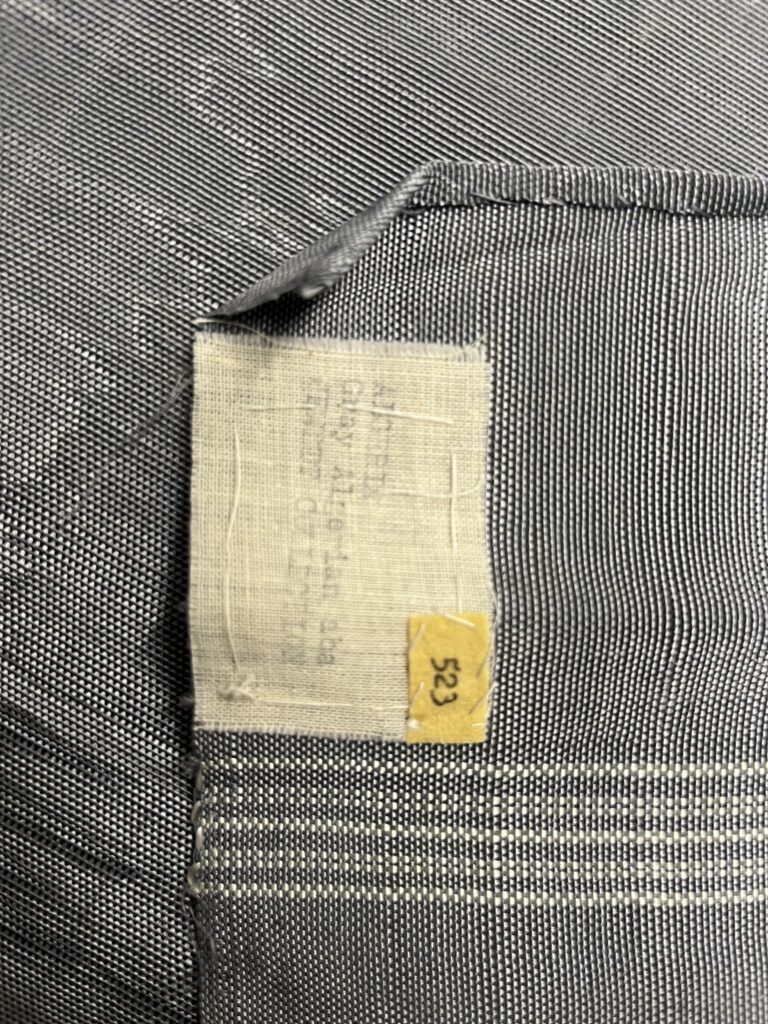
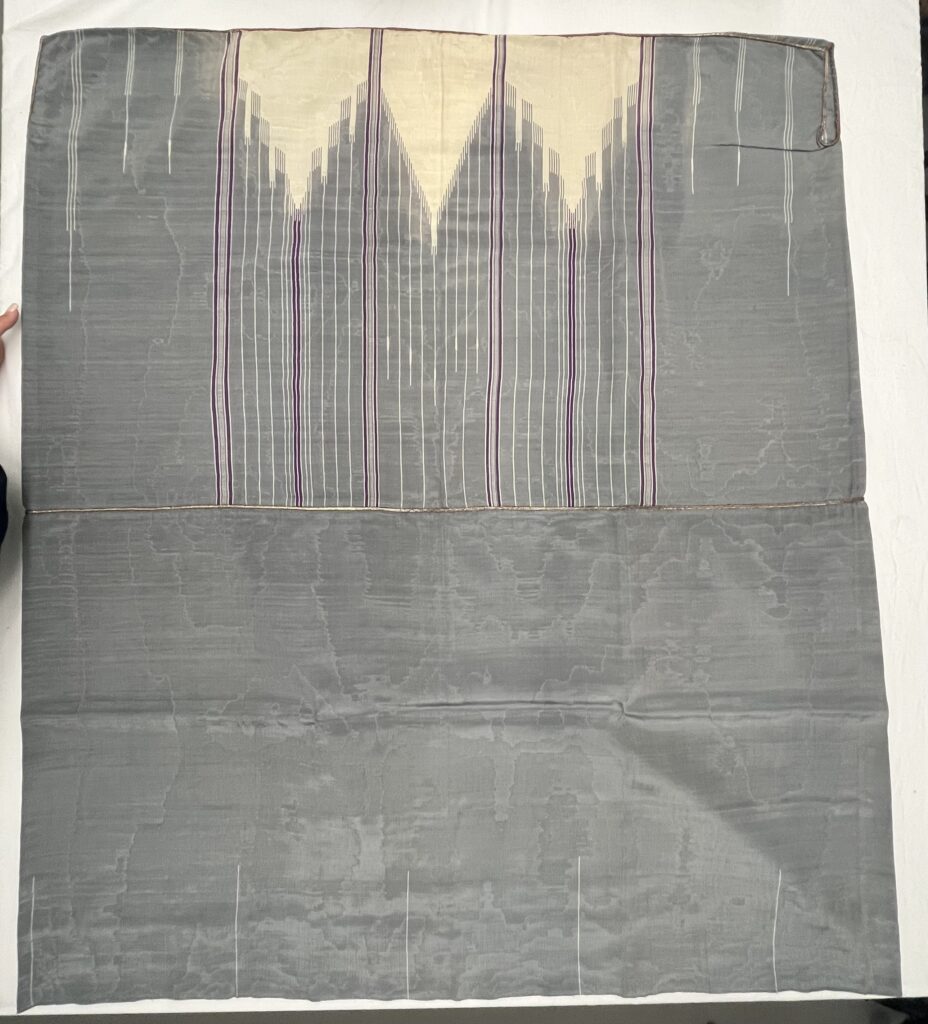
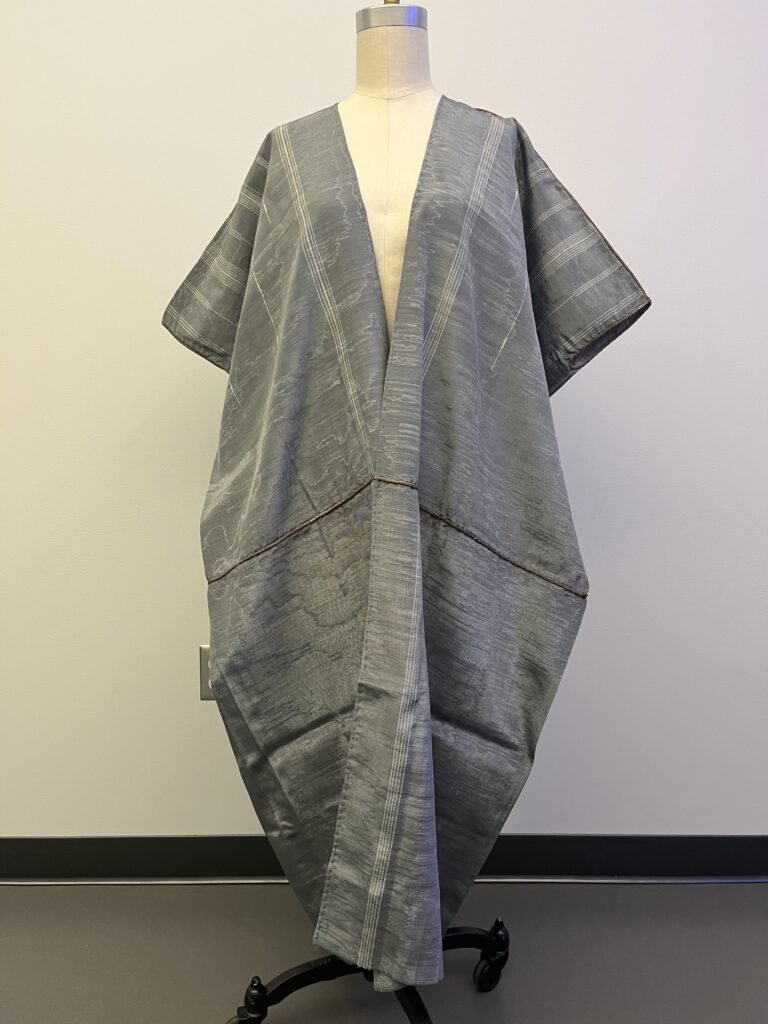
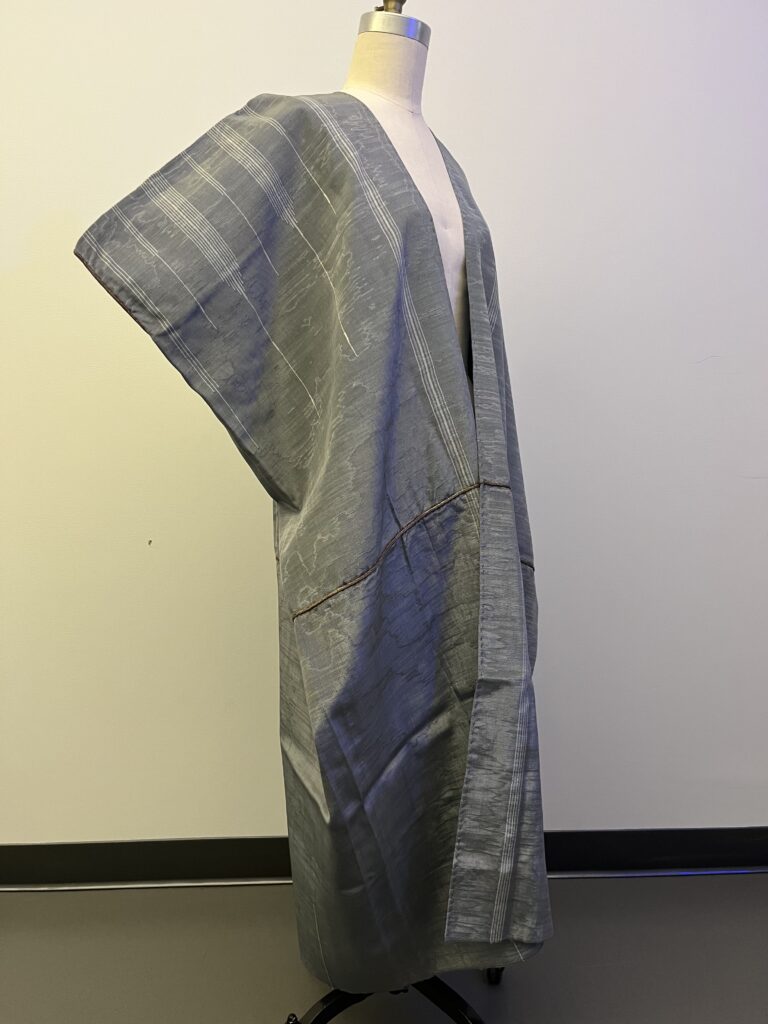
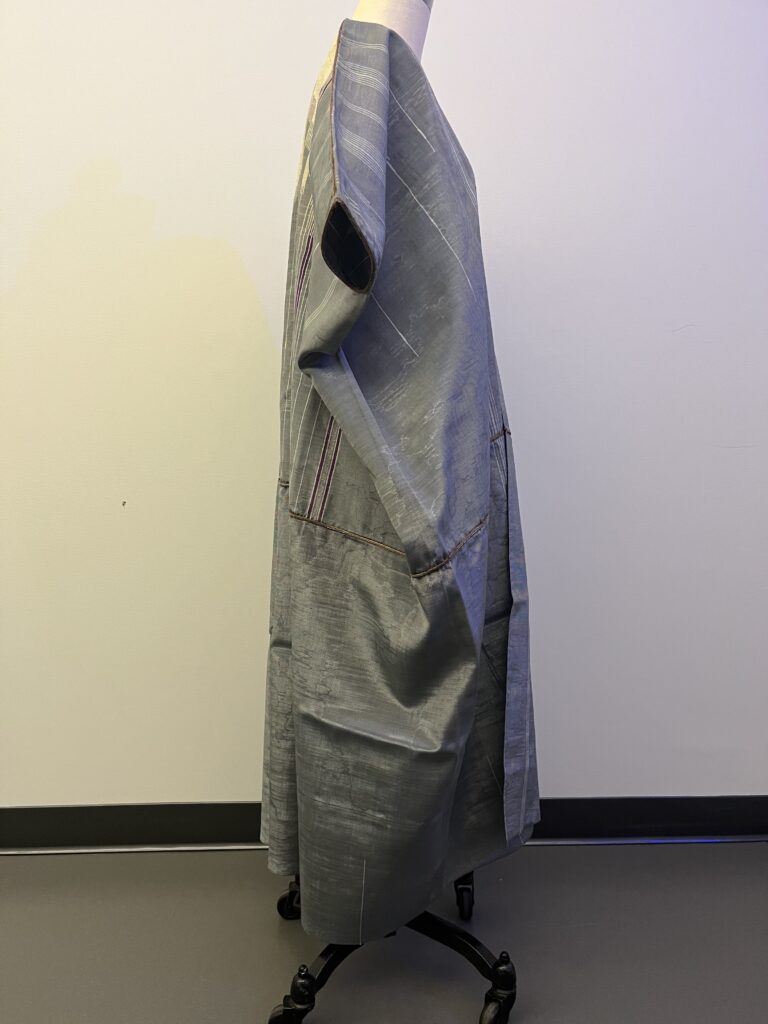
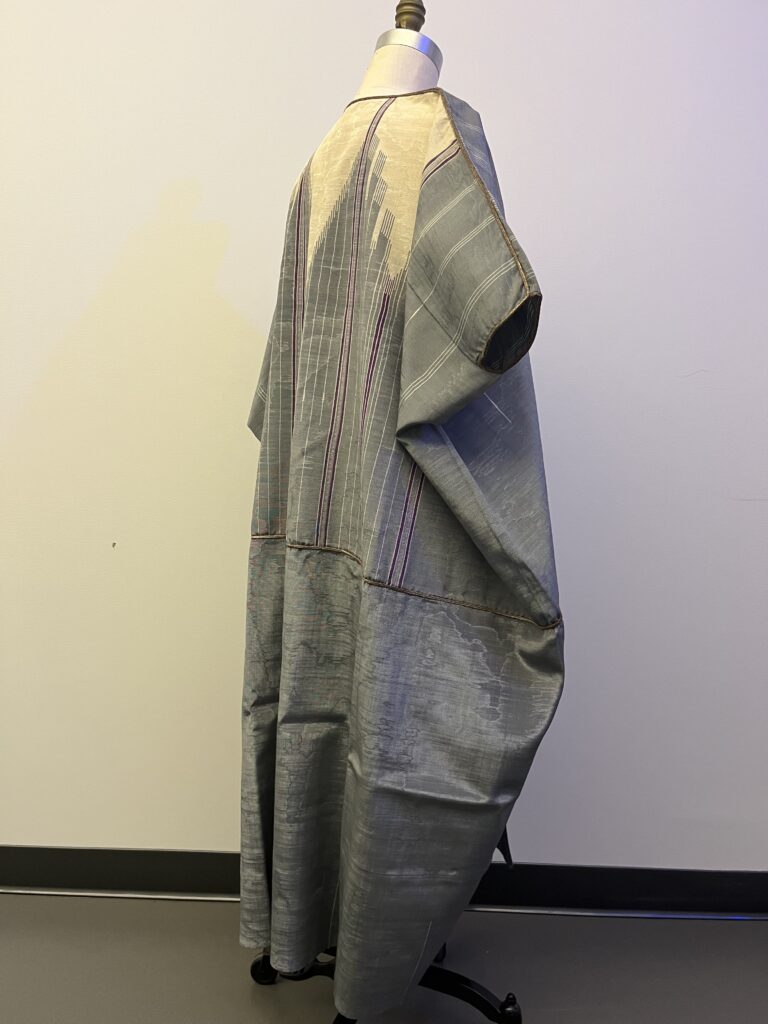
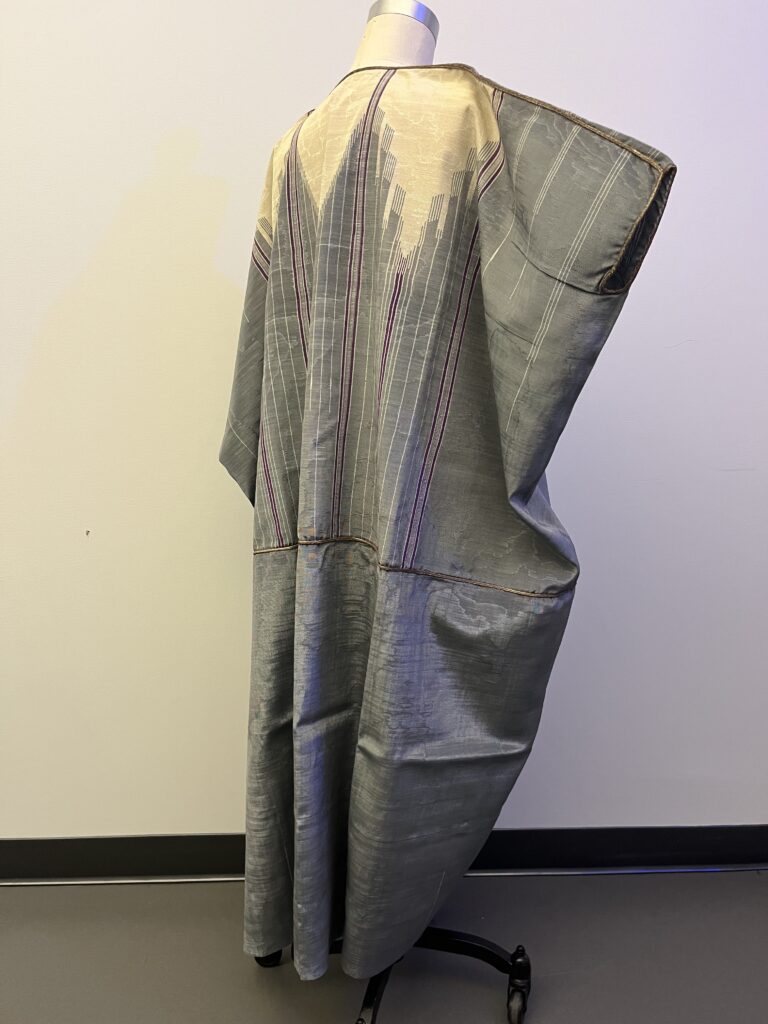
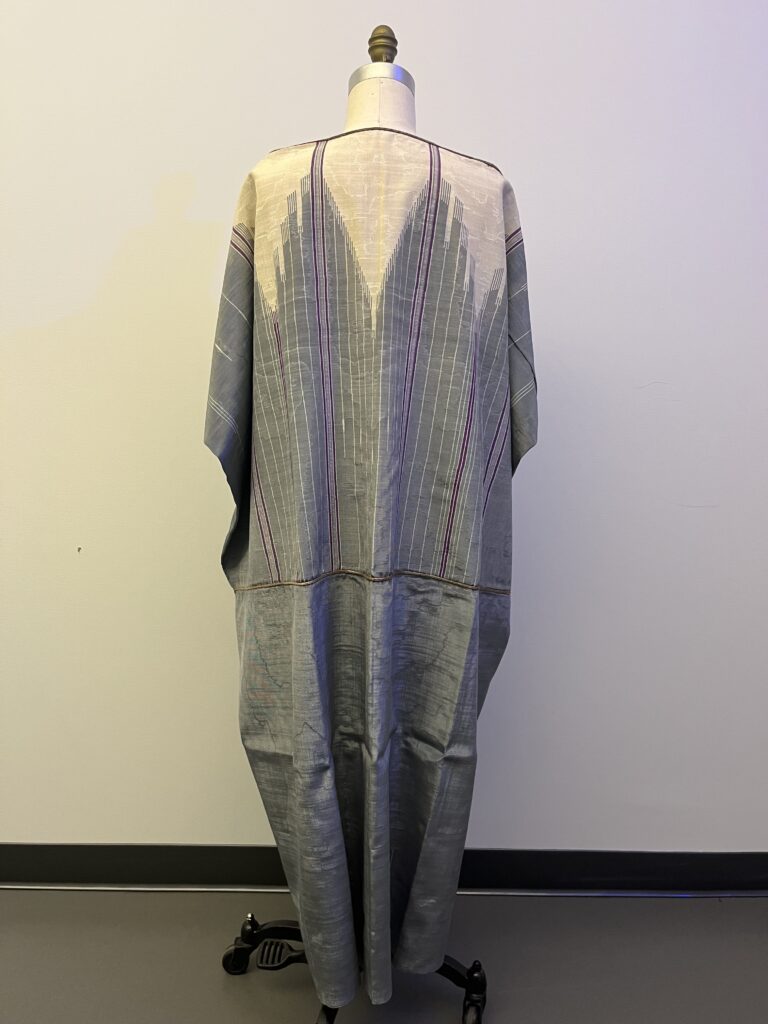
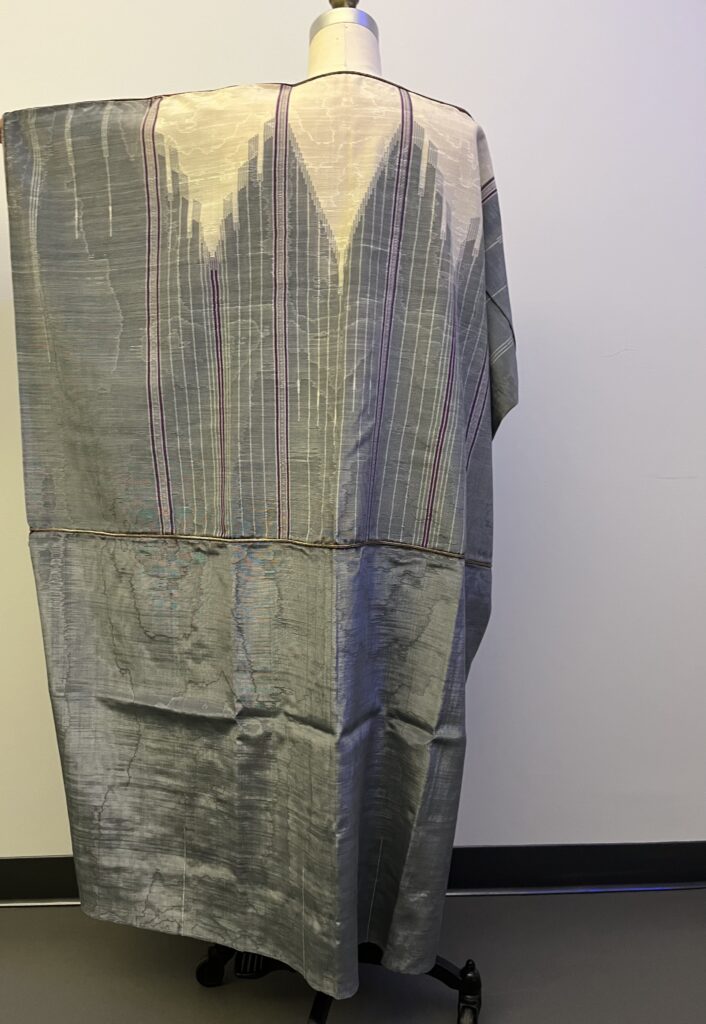
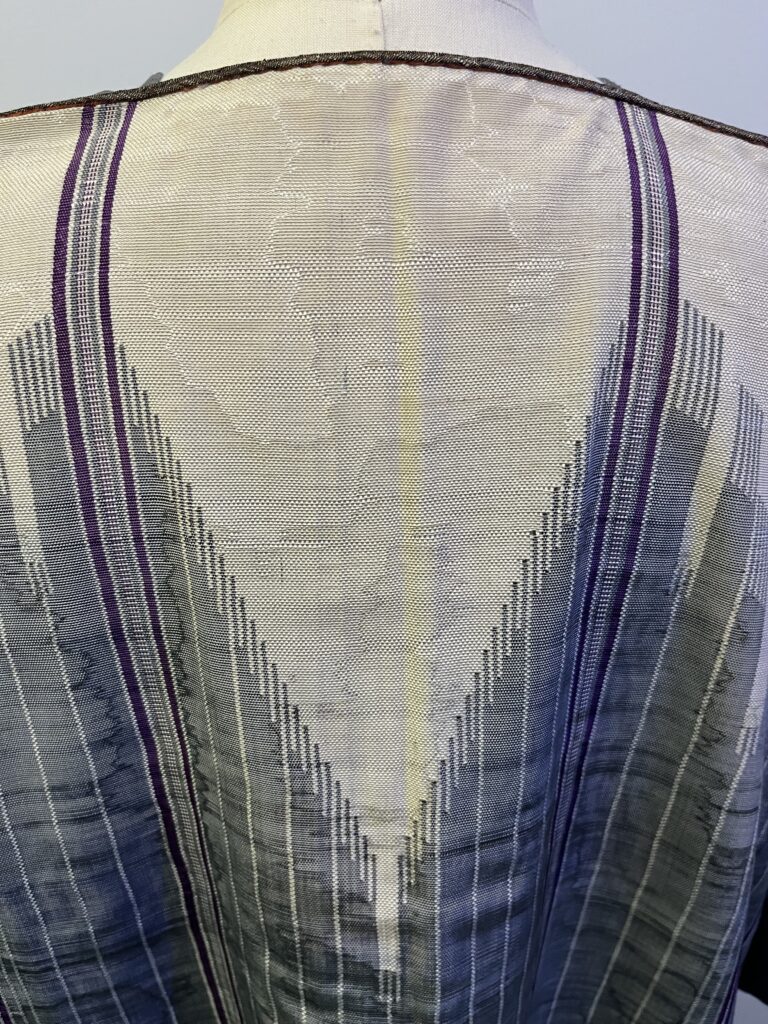
Every garment is cross-sense coding, a kind of synesthesia. Object #523 in Cornell Fashion + Textile Collection is an aba-style coat, made out of densely woven hypnotic techno bass of grey cactus silk in the conventional rectangular shape of lo-fi ambient FX, draped with the heaviness of downtempo trip hop vocal, layered with the sprawling orchestral brass of silvery moiré, patterned with deep house strings of undulating white stripes and occasional tech house reverse piano keys of purple stripes at crescendo-decrescendo points, adorned with crisp chords of red metallic braids along shoulder seams, horizontal seam through middle, and around armholes. A finishing touch of Middle Eastern harp nods to the garment’s Algerian origin.
The sharp-edged linearity of the stripes and the nebulousness of the moiré create a counterpoint – or as Kandinsky wrote, “so entsteht ein Zweiklang,” – where distinct elements are unified into a whole while maintaining a certain separation and never attaining a sustained equilibrium. The colored stripes (dyed) and the moiré (moistened and then run through patterned rollers under high temperature and pressure) occupy different space and time within the inner logic of the fabric. The garment therefore maps its own history through visual and textile representations of emotional charges redistributed across space and time.
We observe a similar process as the garment elevates, expands, and evolves from the horizontal, two-dimensional, impersonal rectangle on the table into a vertical, three-dimensional wrap on a person or dress form, sharing the shape and temperature of the host, thereby redistributing emotional charges spatially and temporally, aided by gravity and movement (often anti-gravity by nature). Some traces of the rectangle remain, like the sharp corners at the tips of the sleeves. The garment embodies a fluid state that is firm yet malleable, weighty yet airy; it is a symphony poised upon a conductor’s baton.
With every movement, the garment responds with a choreographed chaos of horizontal and vertical lines in movement in different directions, thickening and fading radiances across the surface of the fabric that sound high or low. In this exchange of vibrations, I feel the subtle warmth of sunrise in the industrial landscape of silent steel skyscrapers, the dampness of the watercolor ink of my homeland, the ephemeral iridescence of ceremoniousness and soap bubbles. I wonder what the original maker(s) and wear(s) of this garment have heard and felt from this same garment.