🕳️ Ecologies of absence: Mapping the memory of space
Editorial note: This work has been created in the context of the Bauhaus Open Studios programme by students from the Academy of Fine Arts in Zagreb (studio leads: Nikola Bojić, Ivan Skvrce, Marko Tadić) in October 2025. Engaging with selected objects from the collection of the Museum of Contemporary Art in Zagreb (MSU)—textile fragments by Otti Berger, Ivana Tomljenović’s experimental film, and the correspondence of Marie-Luise Betlheim and Lou Scheper—the student research group explored not only what is present and preserved, but also what is absent and lost. They ask whether fragments can become active models for learning, and whether forms such as friendships, memories, and gestures of care can guide us in thinking about ecology, responsibility, and shared futures. Collections thus are not static repositories, but learning environments—ecologies in which human and non-human, personal and collective, past and present, remain fragmented and incomplete, yet living and entangled.

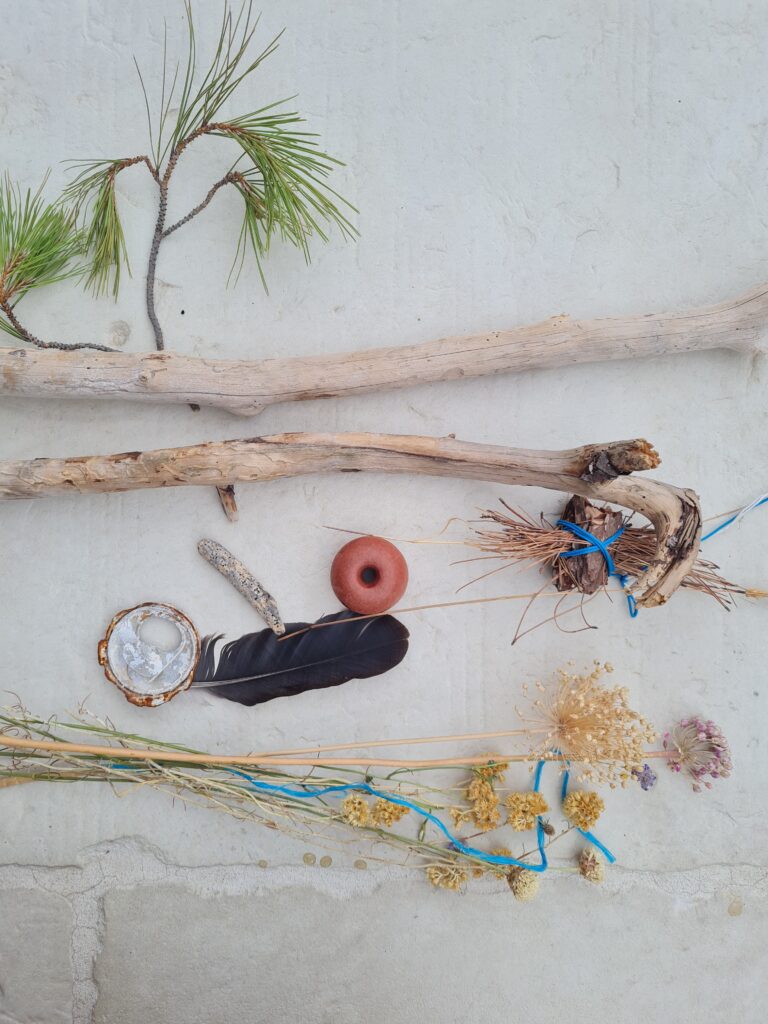
Is space, together with the objects and materials it holds, merely a silent witness of time—or does it carry traces of events, emotions and presence?
Can the energetic imprint of space be experienced beyond the limits of human subjectivity—or is it inevitably a reflection of our own memories, imagination and inner states?
In what ways can the lived experience of a particular space be translated into the rhythms of weaving and the emergence of patterns and how might this translation open up new modes of understanding spatial perception through textile practice?
How does the selection of materials contribute to shaping the narrative of space and the ways in which it is experienced and in what ways might these material choices mediate or transform our understanding of spatial perception?
The project departs from the idea of space, not as a neutral frame or passive background, but as a complex material subjectivity —an active carrier of meaning, memory and presence. The research focuses on the idea that every space and every object holds an energetic imprint—a trace of time, events and emotions.
Through engaging with materials and objects from various spaces, the project seeks to understand their capacity to hold and convey the energetic imprint of past events, investigating the multilayered memory encoded in their molecular structure. At the same time, it questions the anthropocentric values embedded in this process, since humans tend to perceive the world through objects and impose meaning as a way of orienting themselves and defining their own purpose.
The project draws on Otti Berger’s textile work, within which weaving is understood as an act of archiving, connecting and translating spatial documentation. As one of the most ancient crafts, hand weaving has long functioned as a medium of narrative transmission, with patterns and weaving rhythms carrying stories, memories and symbolic meaning. Within this framework, the project examines how spatial experience can be translated into weaving, where the rhythm of patterns functions not only as a structural principle but also as a conduit for emotion, memory and presence. Just as spaces hold atmosphere and energetic traces, the repetition, variation, and flow within woven patterns embody perceptual and affective qualities, inscribing the multilayered experience of place into material form.
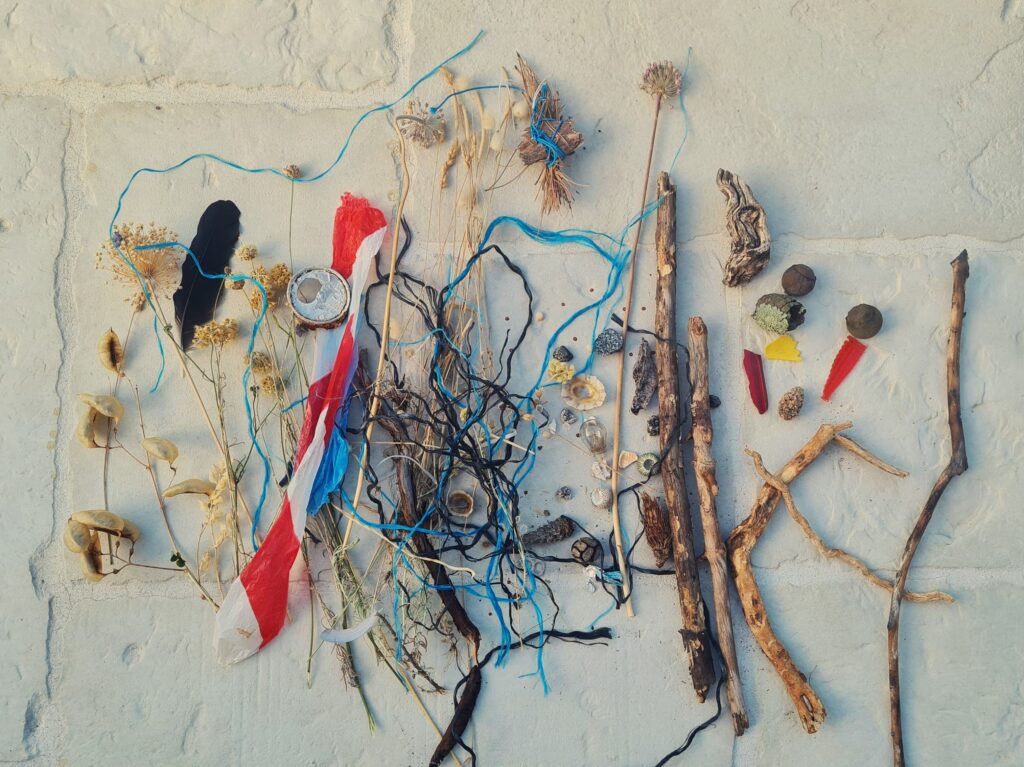
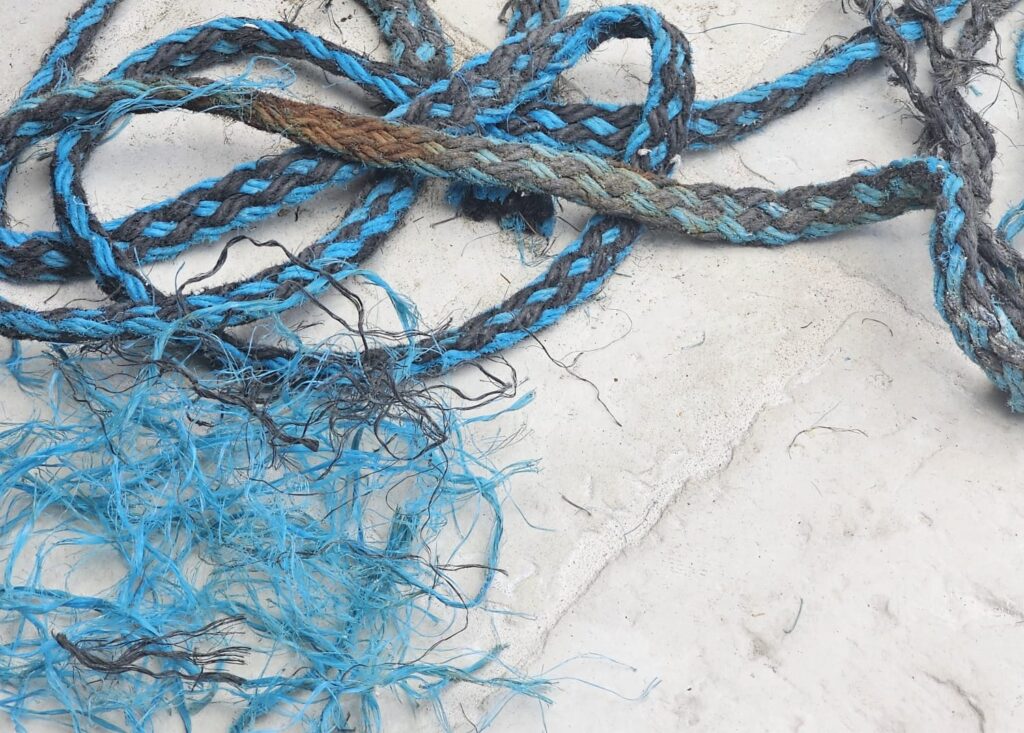
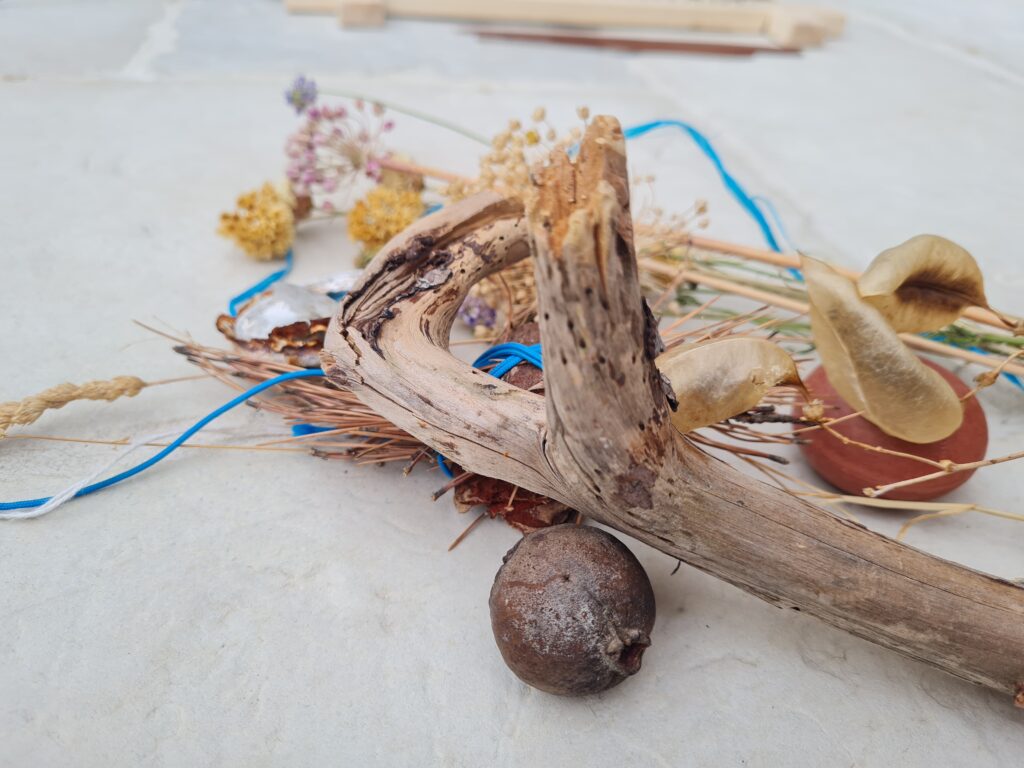
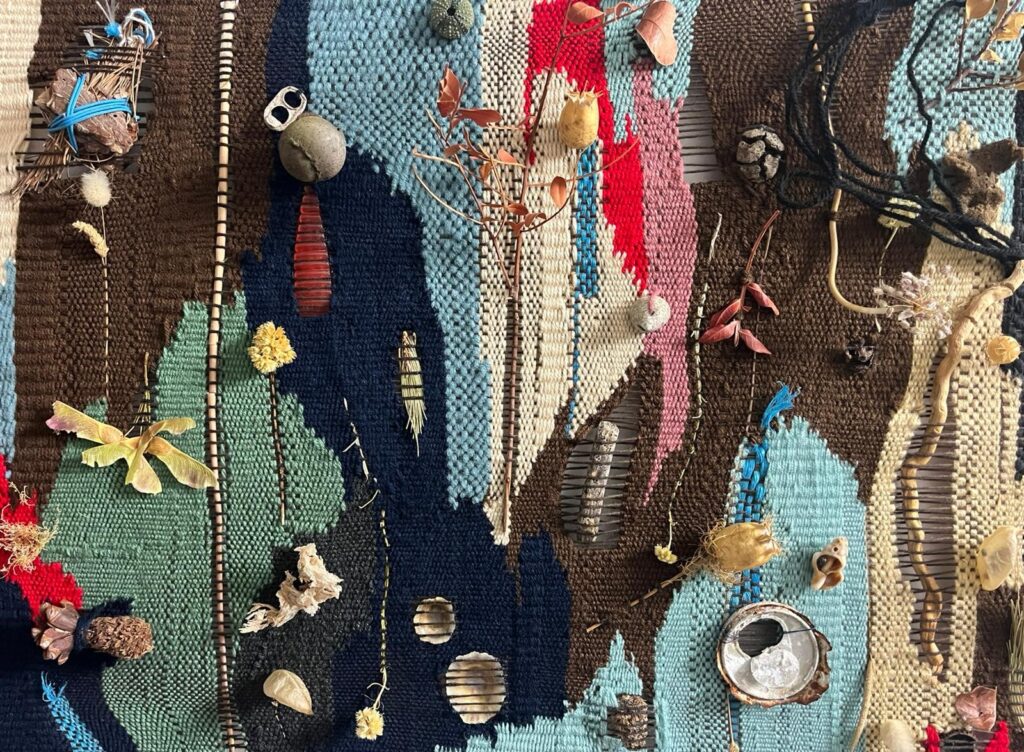
The methodology of the project was based on site-specific exploration carried out over a three-month period, focusing mainly on diverse locations along the Adriatic coast, as well as the cities of Berlin, Klanjec and Grožnjan. During this time, a variety of objects and fragments were gathered through an intuitive approach, consisting of (an)organic matter – including various plant materials, pieces of driftwood, stones, shells and old fragments of plastic and metal. Most of the collected items originate from the artist’s native region, situating the work within broader questions of home, belonging, and identity.


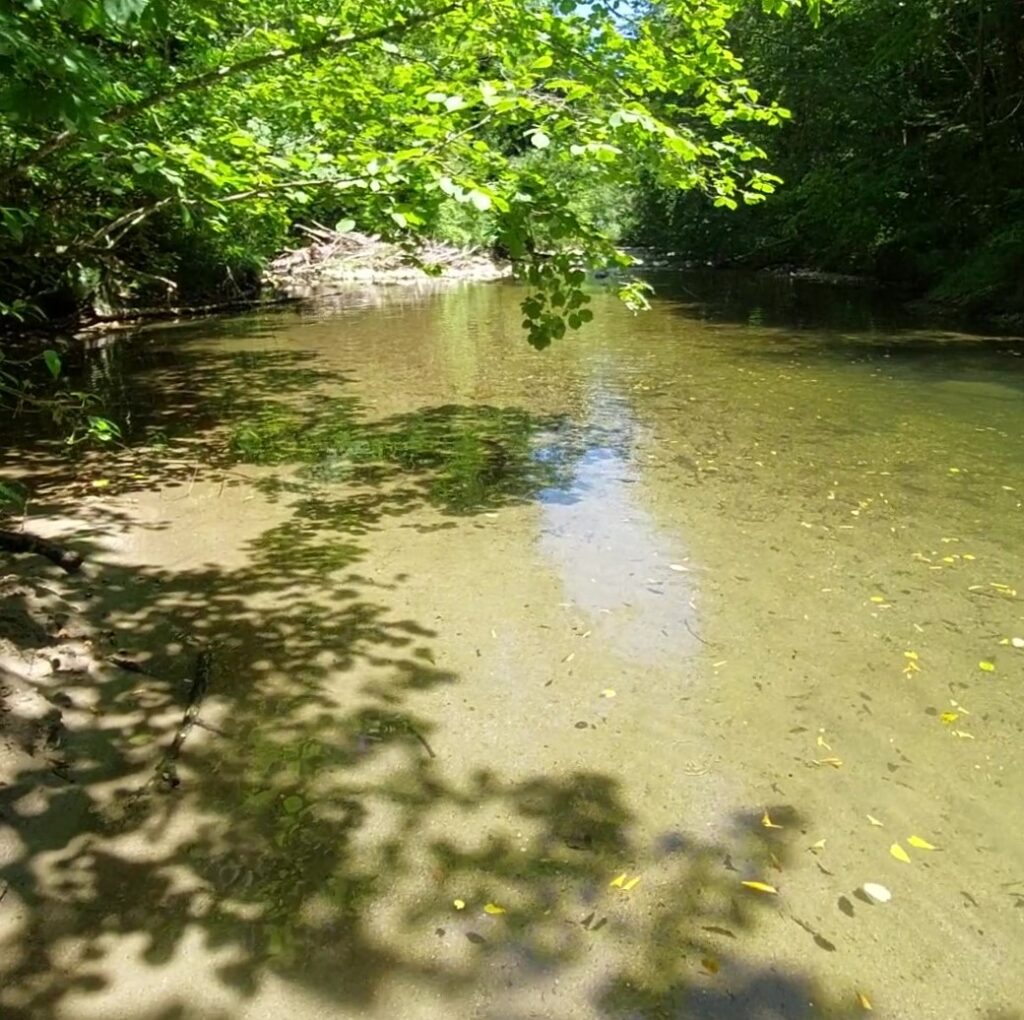

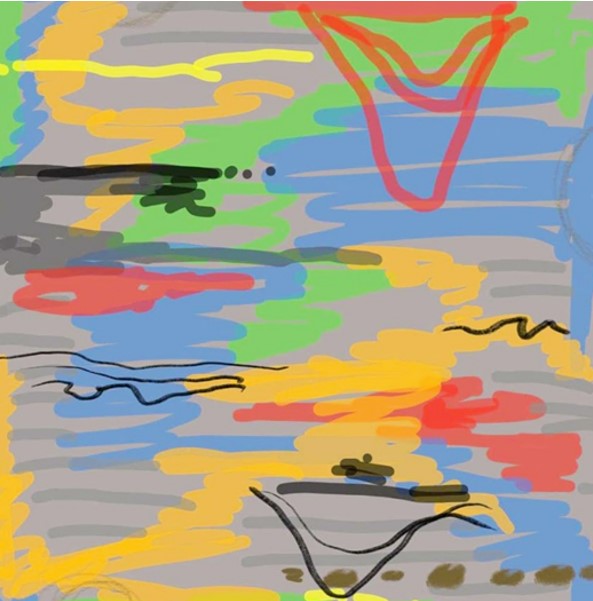


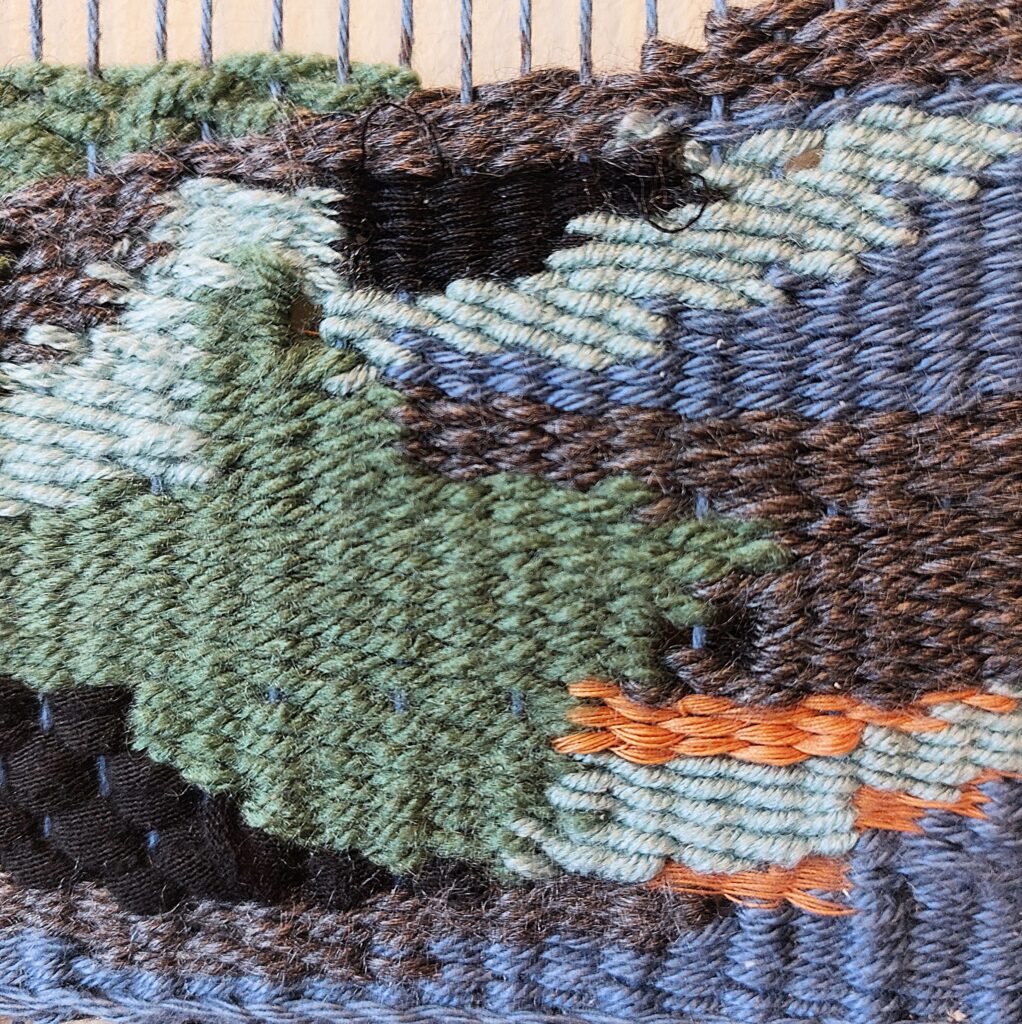
In addition, the research explored the experience, energy and narrative of space translated into rhythmic patterns. During the site explorations, abstract sketches were produced based on these locations, reflecting perceptions of particular spatial environments. These sketches were then structured according to the visual logic of weaving, with each piece encoding a distinct spatial experience through its pattern. Translating spatial perception into pattern, and subsequently into woven form, allows for an examination of the emotional qualities and visual associations of rhythm, shaped by the interplay of material attributes such as color, texture and thickness.

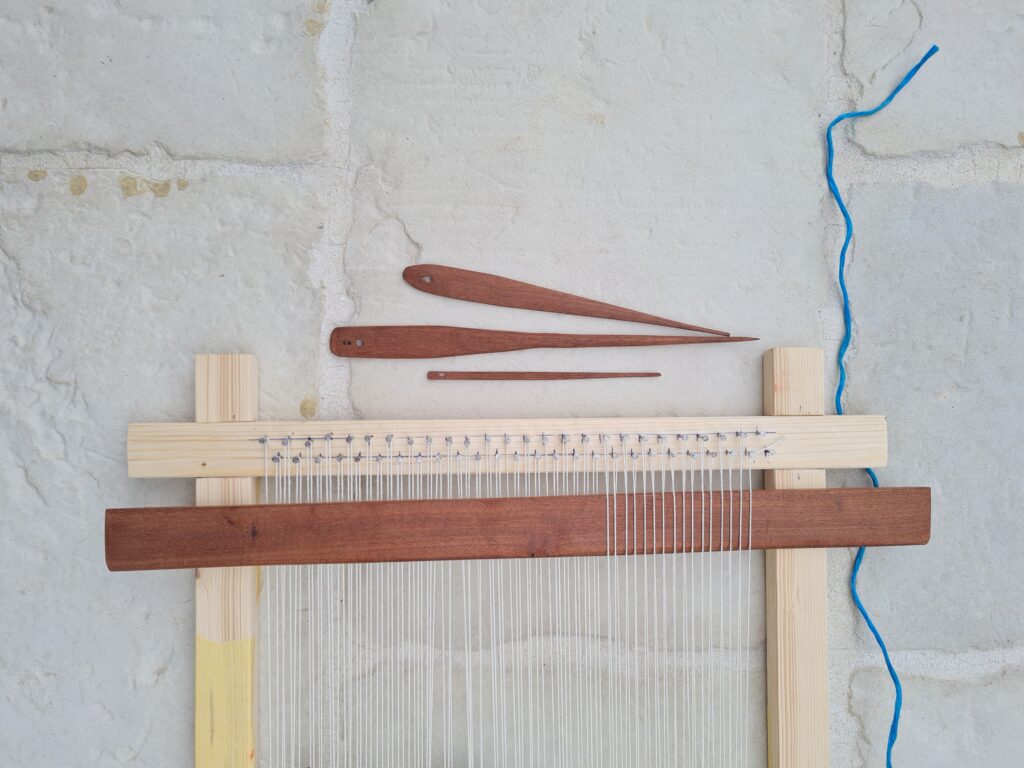

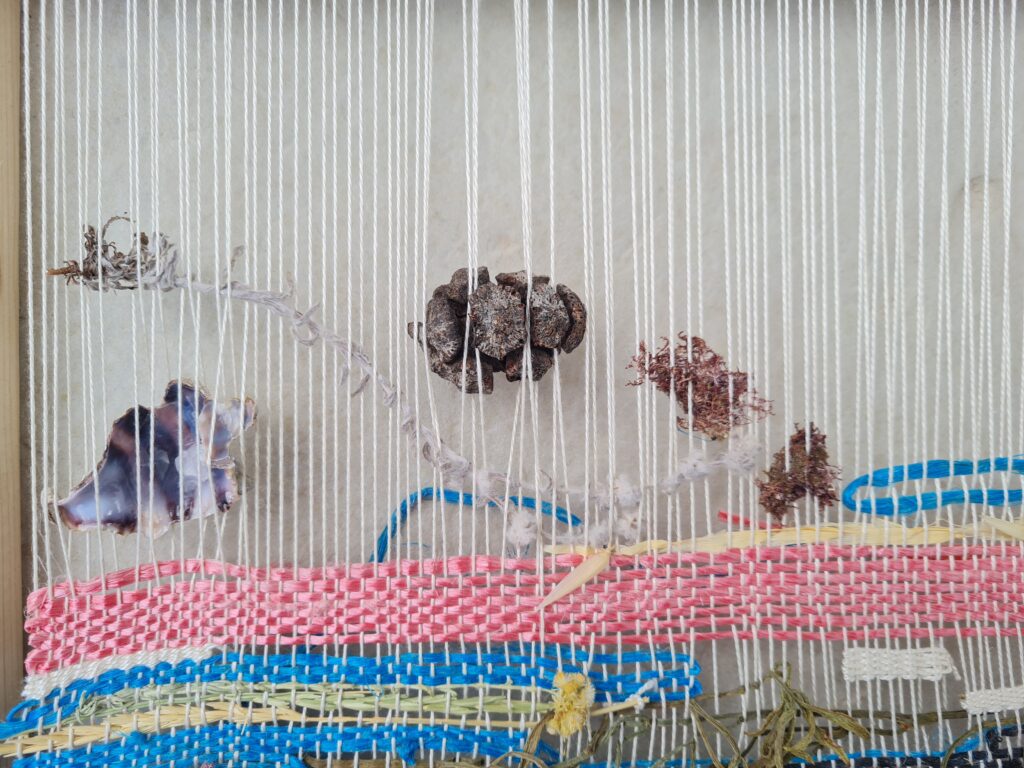
The weaving process itself developed as an experimental, self-taught practice, encompassing both artistic exploration with materials and the independent construction of a loom, including the setting of its warp.
Ultimately, the collected materials and weaving patterns come together to form a cohesive artistic-research work, resulting in an experimental practice that explores the affective and symbolic resonance of the explored sites. This process of interaction between materials and patterns generates a new context in which both remain stripped of their original meanings and associations. The initial paradigms of relationships between space, matter and perception are transformed and reinterpreted, while their core integrity and essence are only partially preserved. Weaving functions as a means of mapping spatial imprints, recording traces and intersecting the complex relationships between matter and environment.
Through the act of working on a hand-crafted loom, the two authors deepened their exploration of space, materiality, rhythm and experience, allowing the process itself to become an integral part of the research. The project examines the autonomy of materials and patterns to communicate their own significance while maintaining independence within the dialogue with human perception and intervention.
are second year MA students at the Academy of Fine Art, Zagreb