🕳️ Ecologies of absence: The pavement in front of my home
Editorial note: This work has been created in the context of the Bauhaus Open Studios programme by students from the Academy of Fine Arts in Zagreb (studio leads: Nikola Bojić, Ivan Skvrce, Marko Tadić) in October 2025. Engaging with selected objects from the collection of the Museum of Contemporary Art in Zagreb (MSU)—textile fragments by Otti Berger, Ivana Tomljenović’s experimental film, and the correspondence of Marie-Luise Betlheim and Lou Scheper—the student research group explored not only what is present and preserved, but also what is absent and lost. They ask whether fragments can become active models for learning, and whether forms such as friendships, memories, and gestures of care can guide us in thinking about ecology, responsibility, and shared futures. Collections thus are not static repositories, but learning environments—ecologies in which human and non-human, personal and collective, past and present, remain fragmented and incomplete, yet living and entangled.
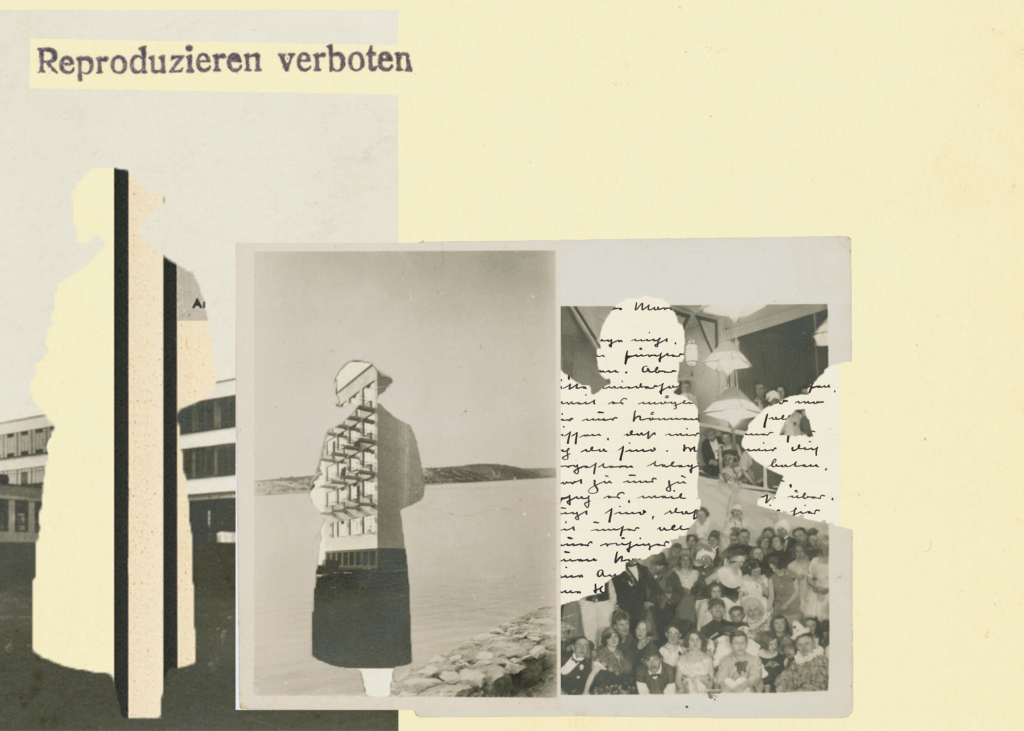
The questions Mihaela’s work raises with regards to the ambiguous status of archival objects, situated between the conflicting concepts of privacy and publicty, also needed to be considered when editing this entry: with Mihaela’s permission, we chose to blur the personal information visible on the found object that features prominently in her project in order to protect the privacy of its author.
How and who determines what is private or public and when does it change?
How do we perceive what is private or public?
Is there a different way of viewing it?
What do those terms mean in materiality of things?
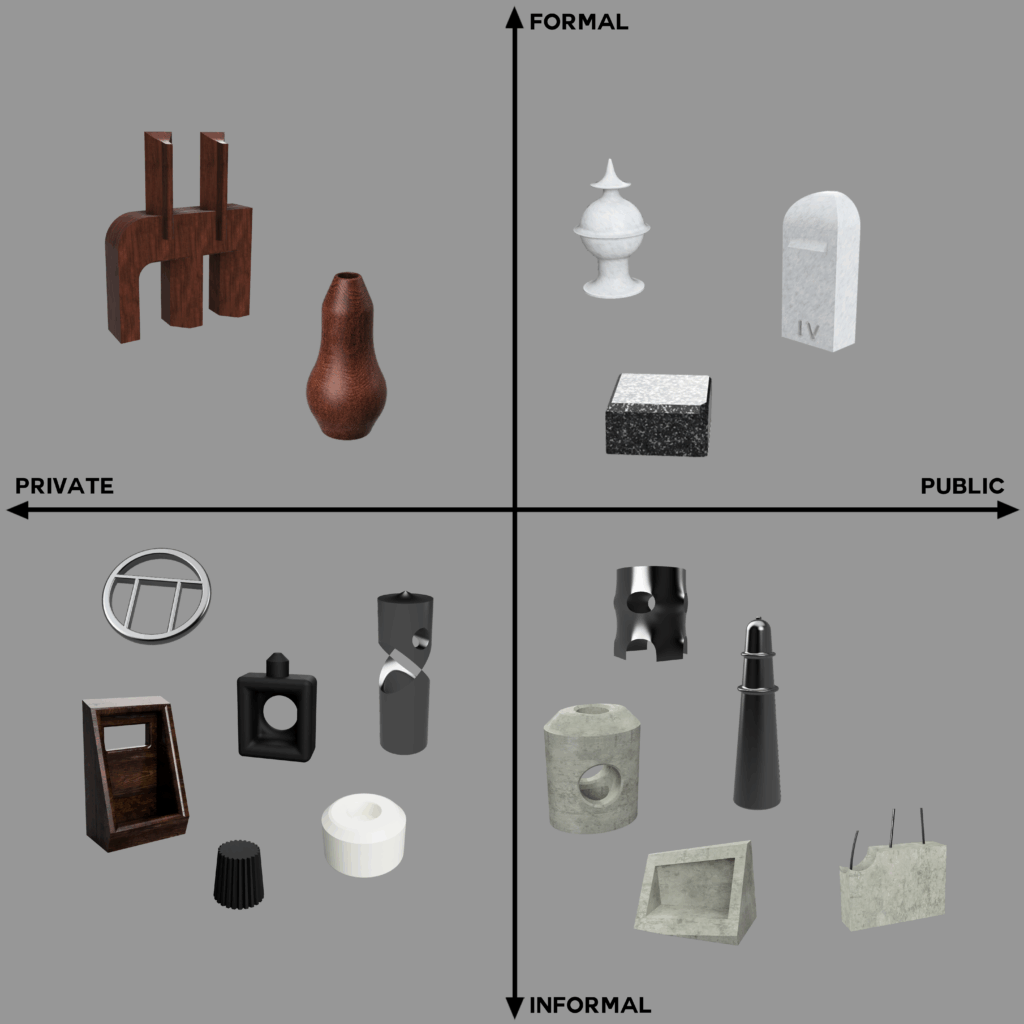
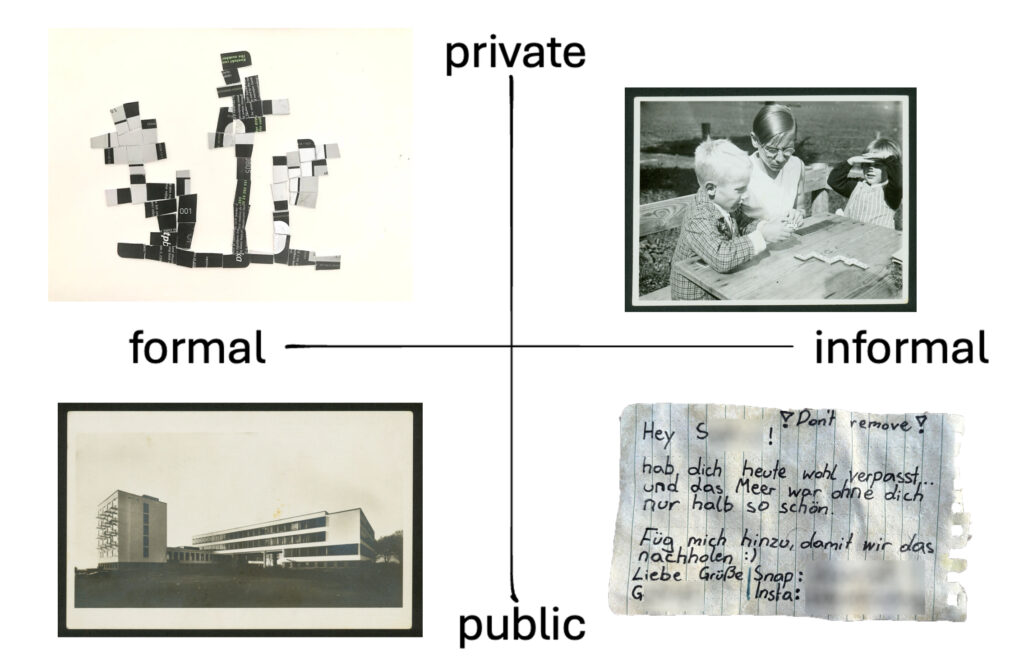
My project explores the concepts of public and private and attempts to visualize their fluidity through a graph. Although in language they appear as opposites, in everyday life they often intertwine and overlap.
Through my exploration of the archive I began to wonder how we perceive public and private belongings and space. That is where the idea for the name stems from, since it is a literal space that divides our homes and the road. Some people care for it, sweeping leaves and removing weeds, while others do not consider it their responsibility or space.
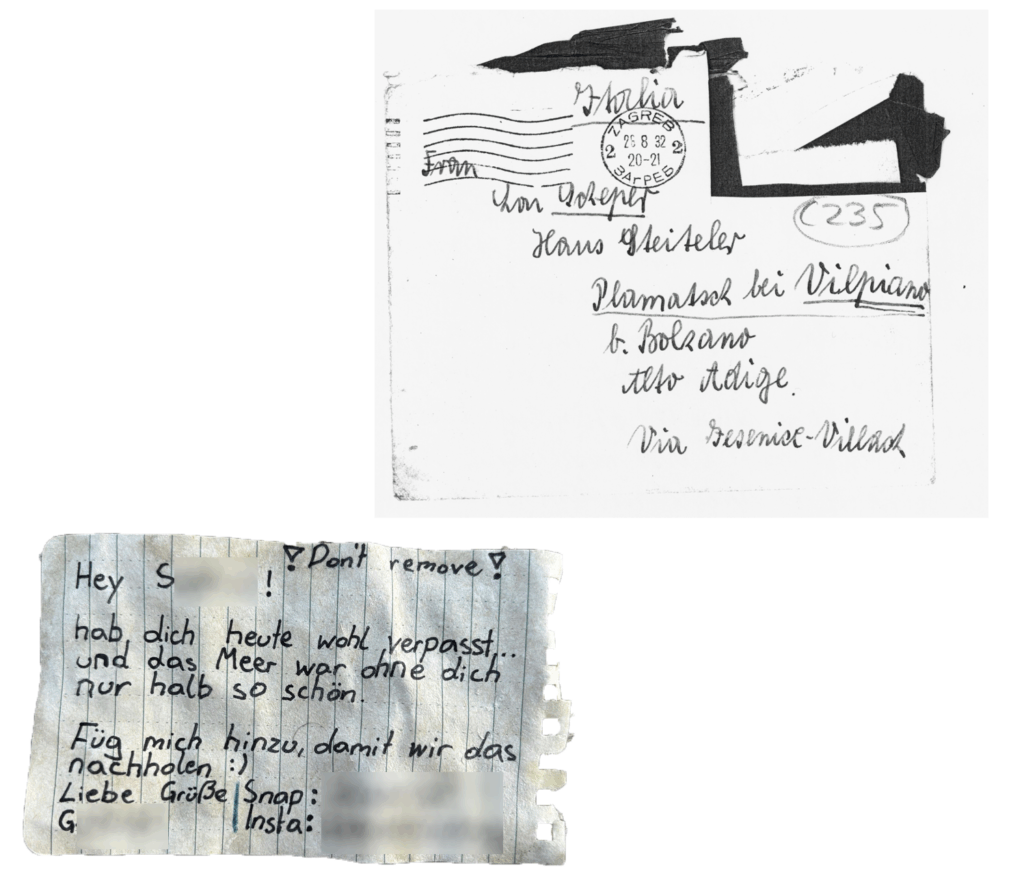
While working with the archive, I began to notice parallels between my own life and the fragments preserved there. To an outsider, the personal collections stored in the museum first appear as mere objects gathered under a shared intention. Only later do they acquire meaning and place. This raised another question: do we think in terms of public and private only when objects already carry a predetermined function or context? What if we were left only with material, form, and shape, detached from their stories?
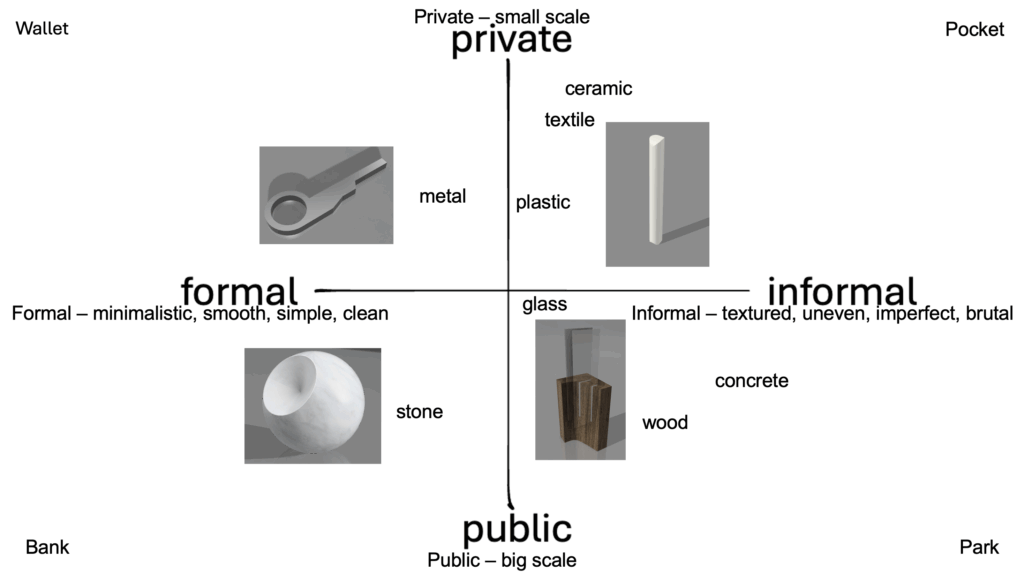
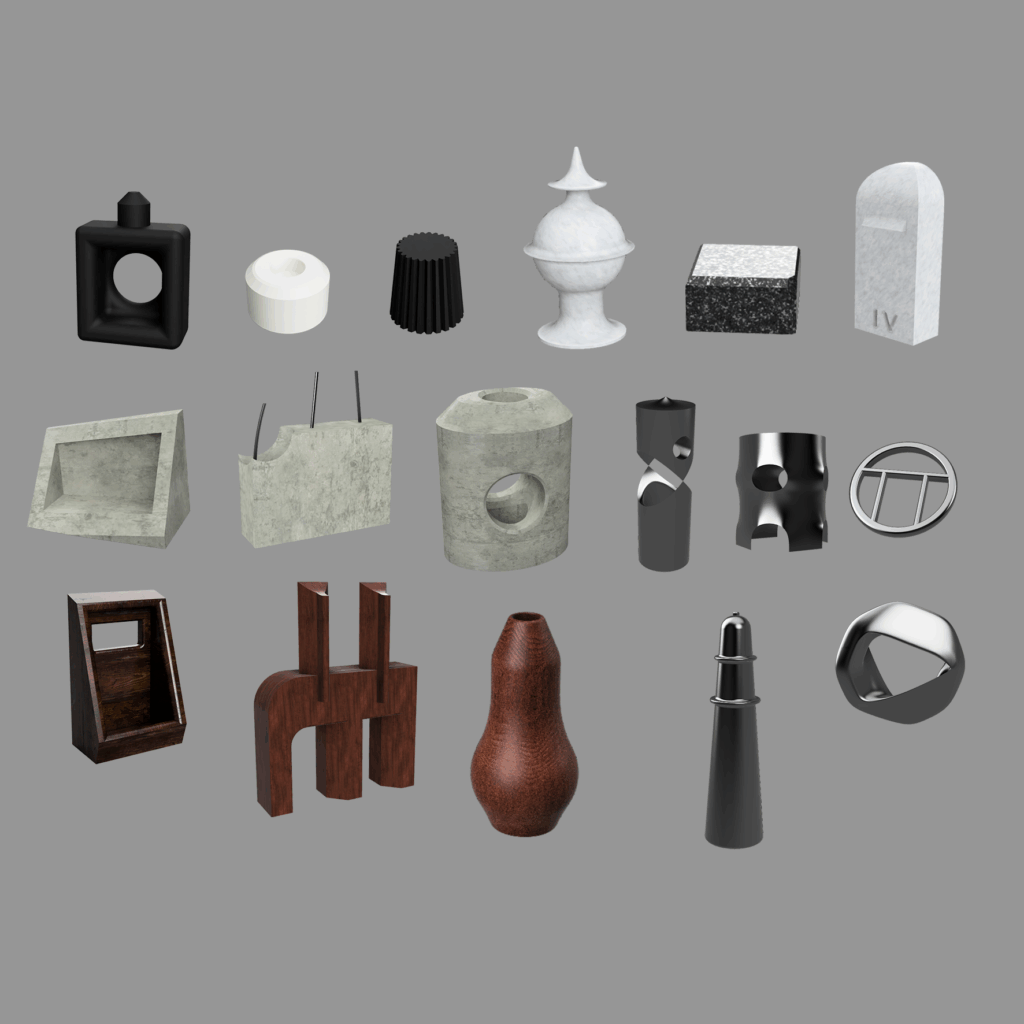
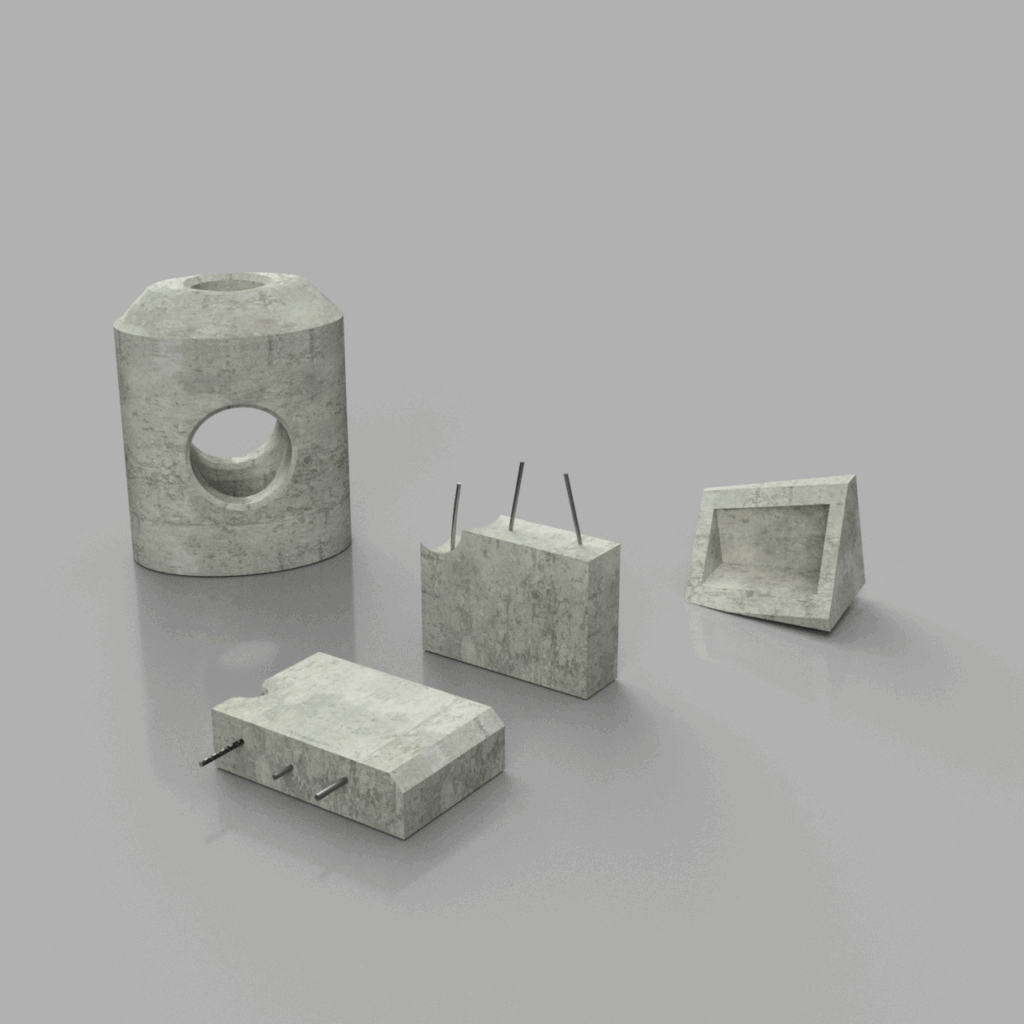
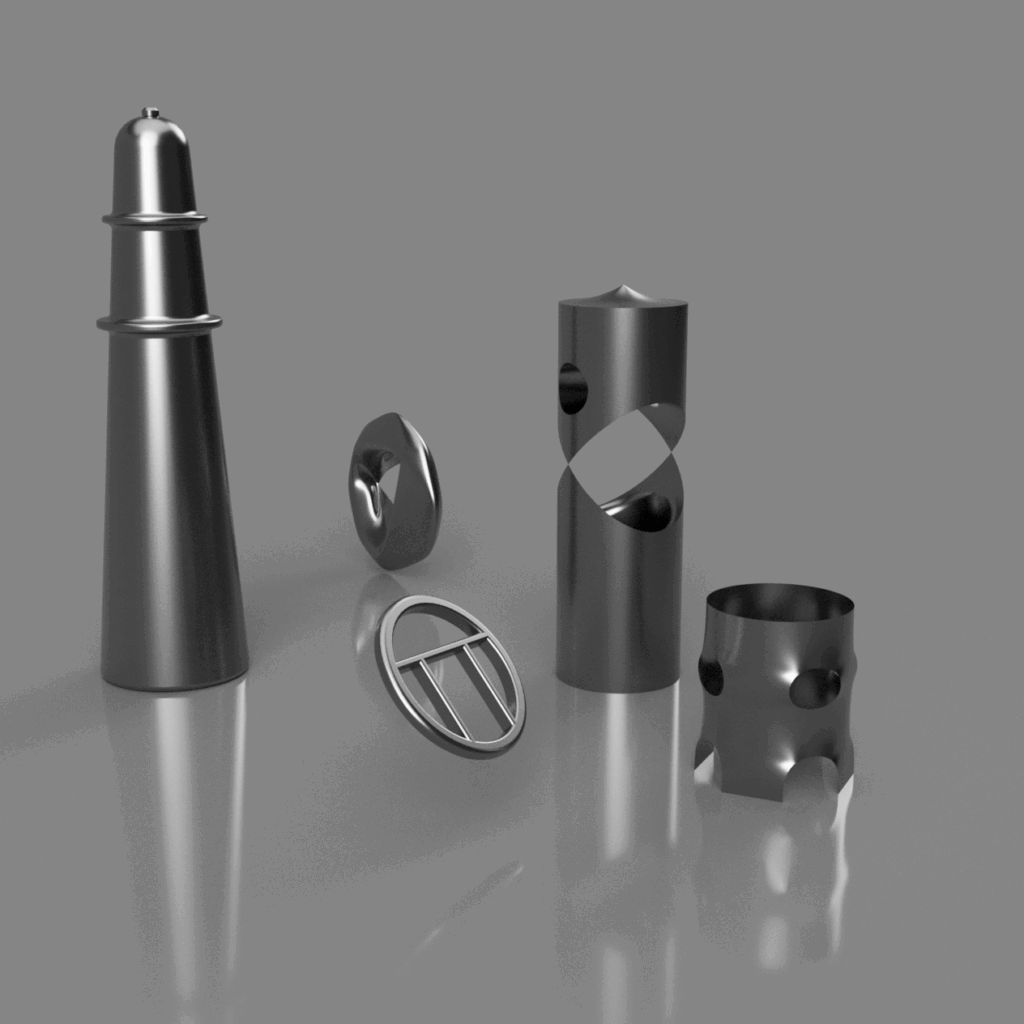
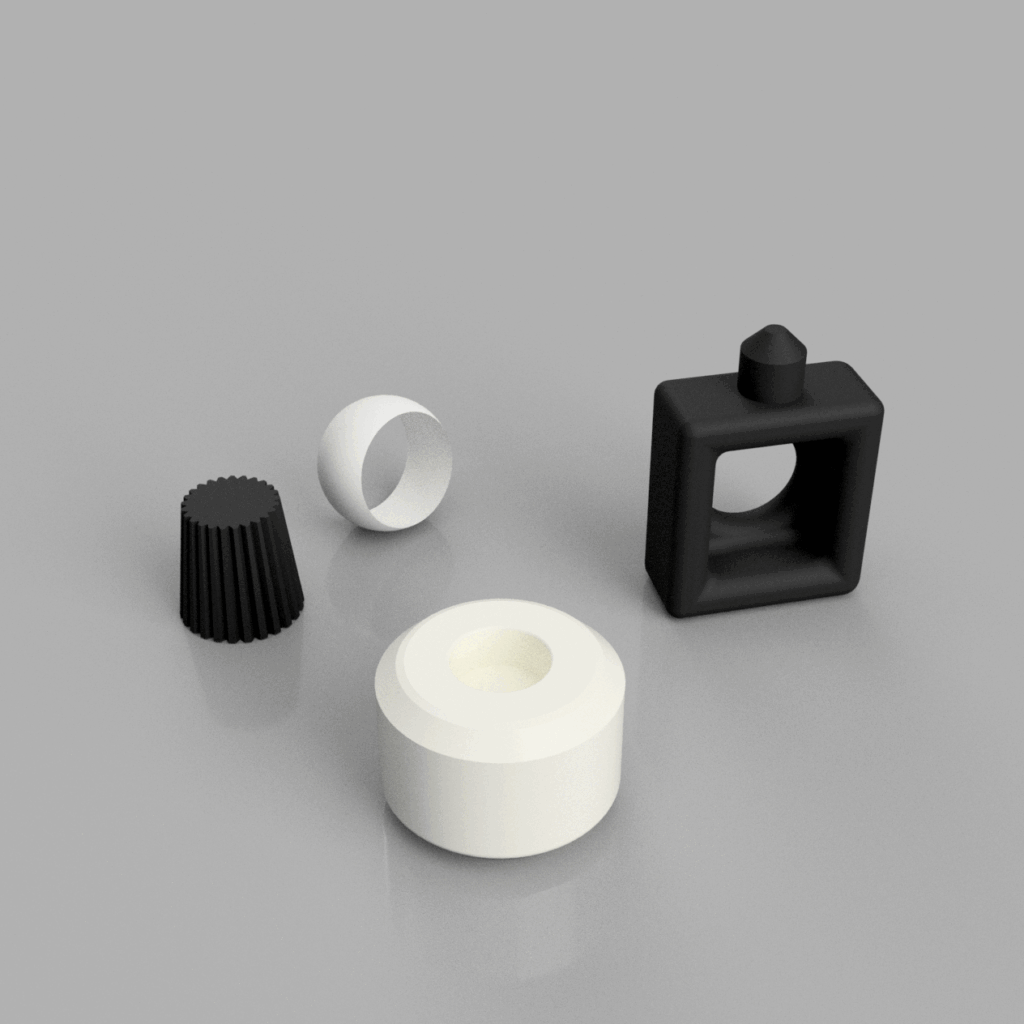
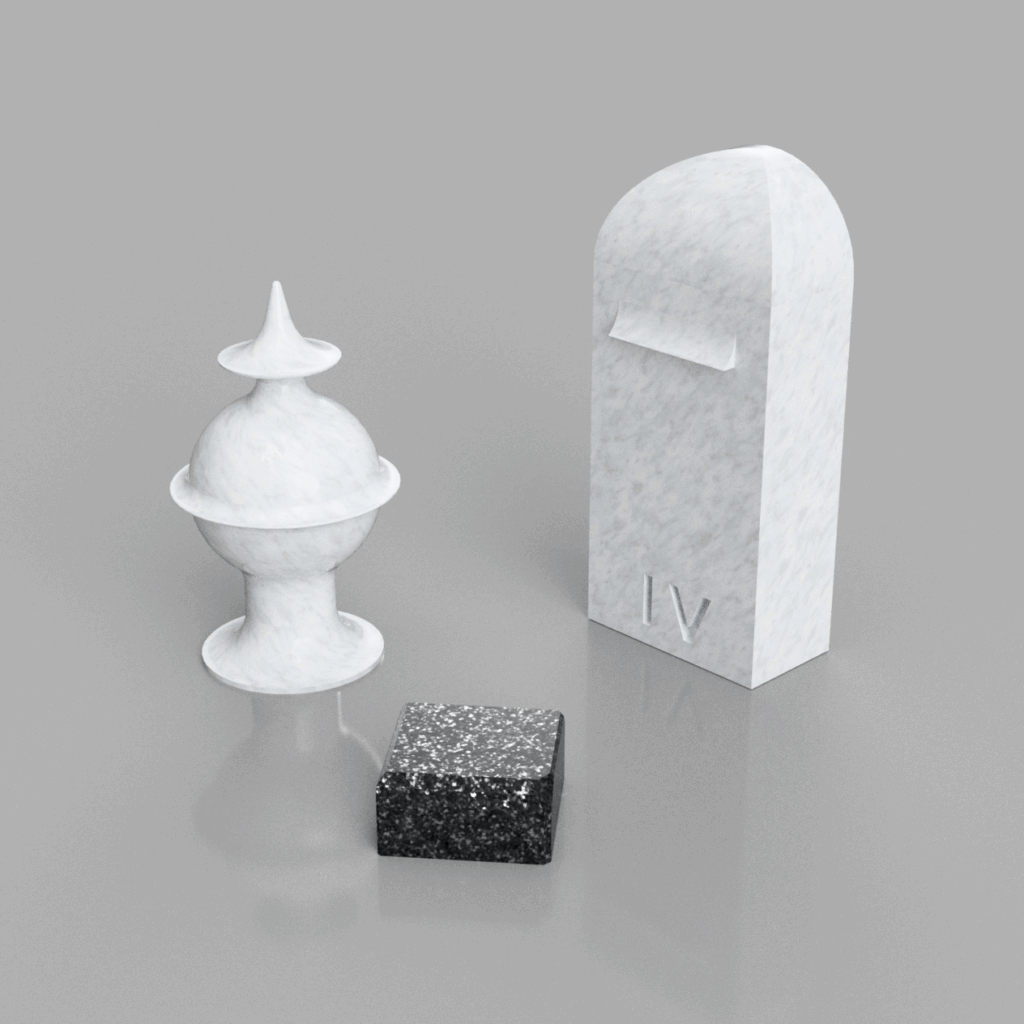
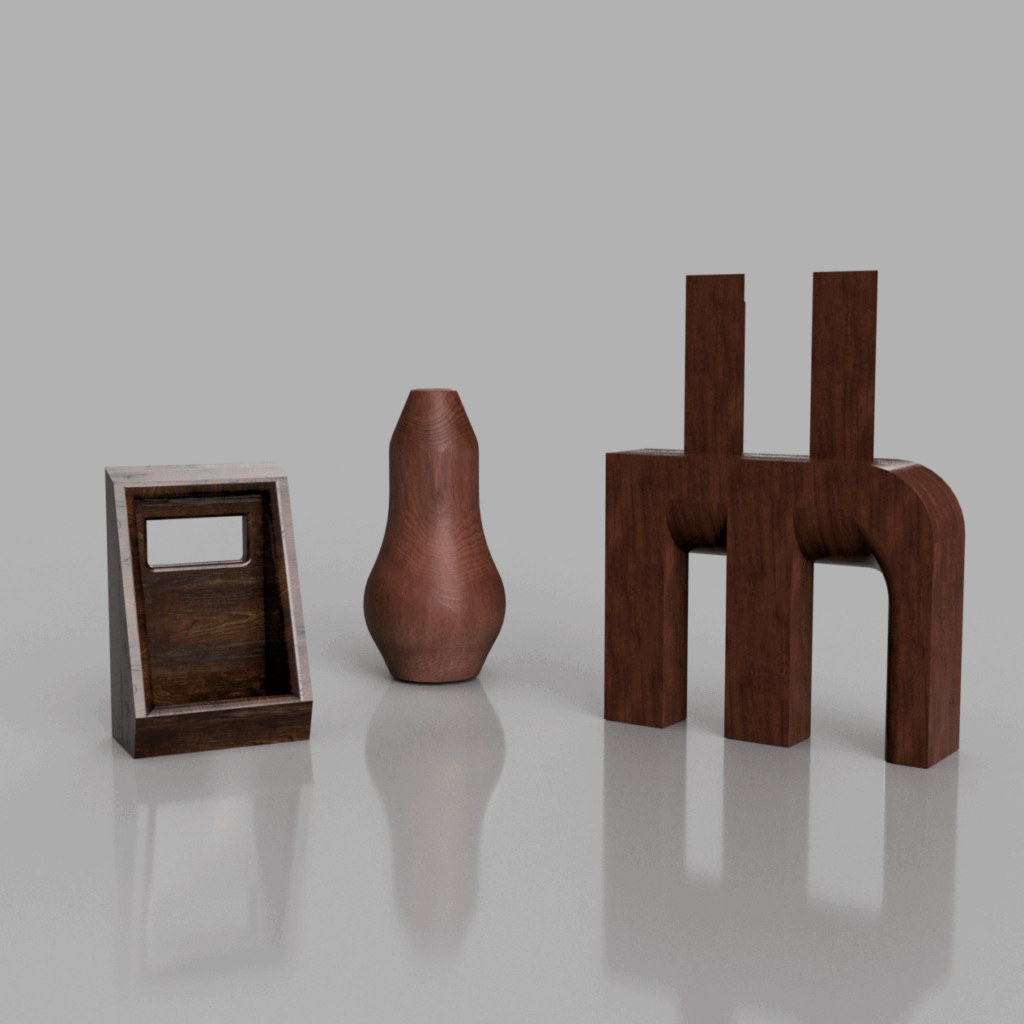
To explore these questions, I created objects stripped of function, defined only by their shapes, forms, and materials, and positioned them on the graph according to personal intuition. The graph does not end with my own sorting, but opens into a participatory process: an interactive, puzzle-like survey that gathers data on how others would perceive and categorize such objects. This creates a variety of visions and possibilities for comparison, revealing whether there are shared perceptions or irreducible differences in how we define public and private.