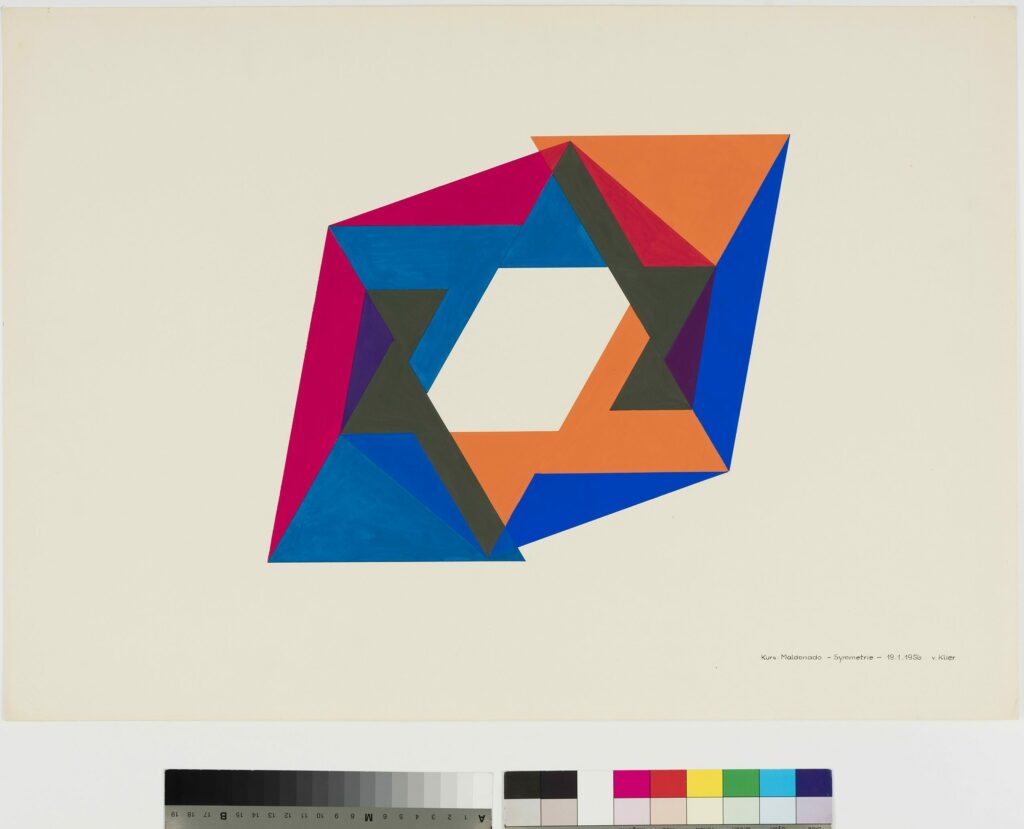
📐 Student work from the Maldonado basic course at HfG Ulm, 1955/56
Editorial note:
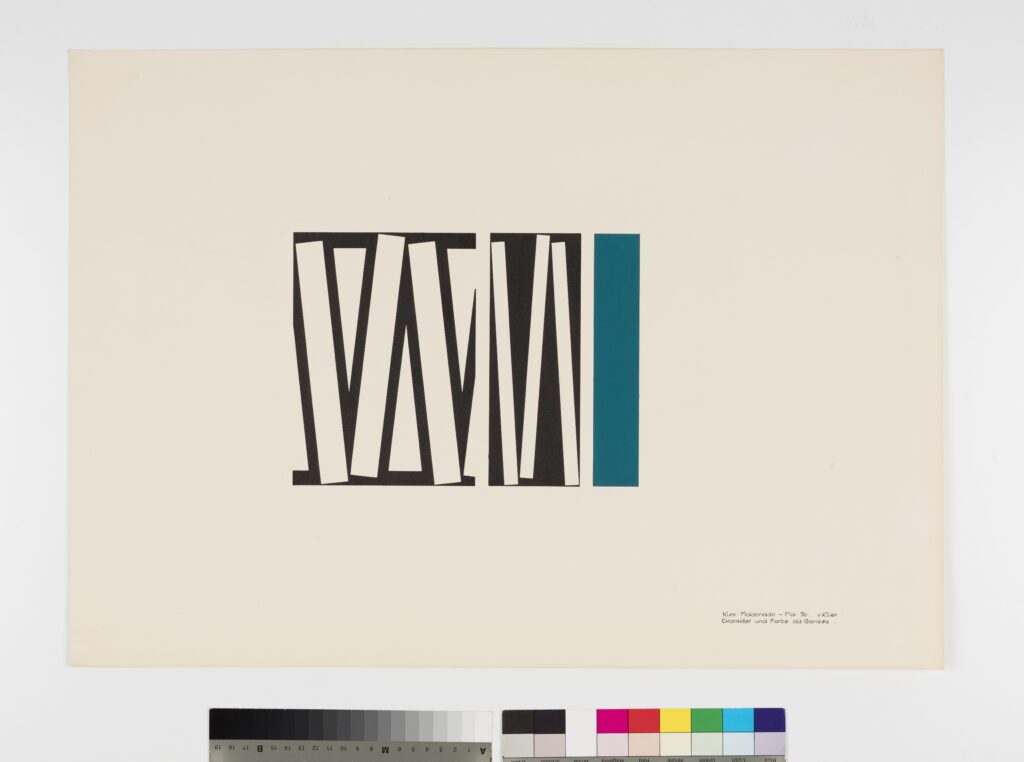
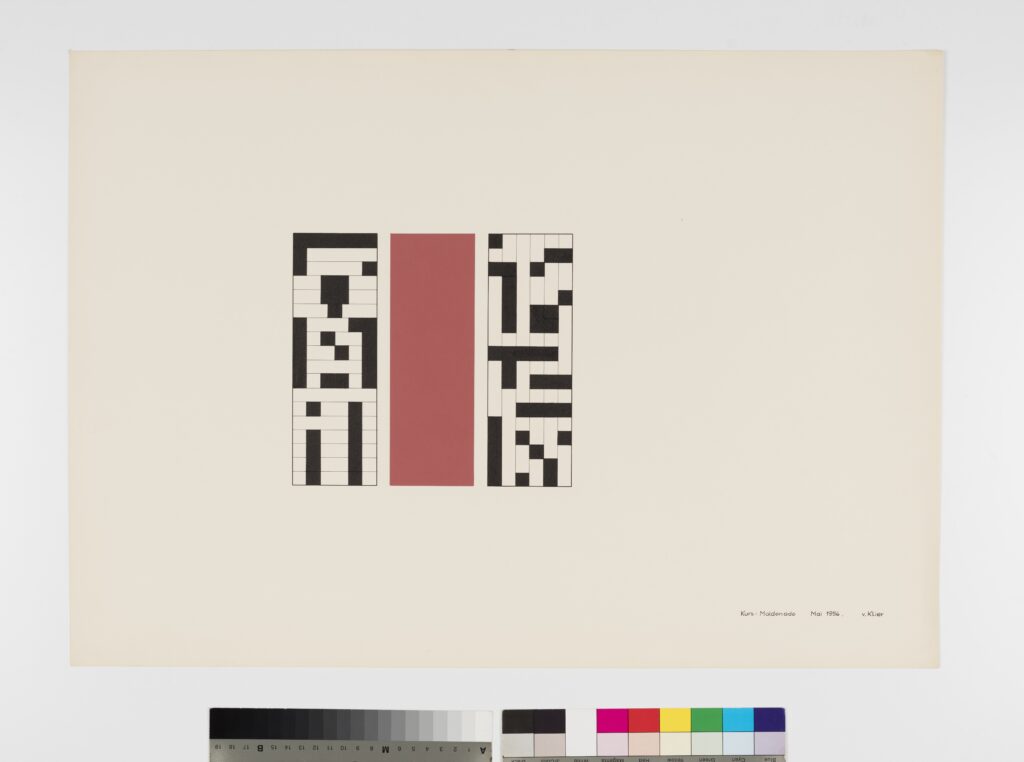
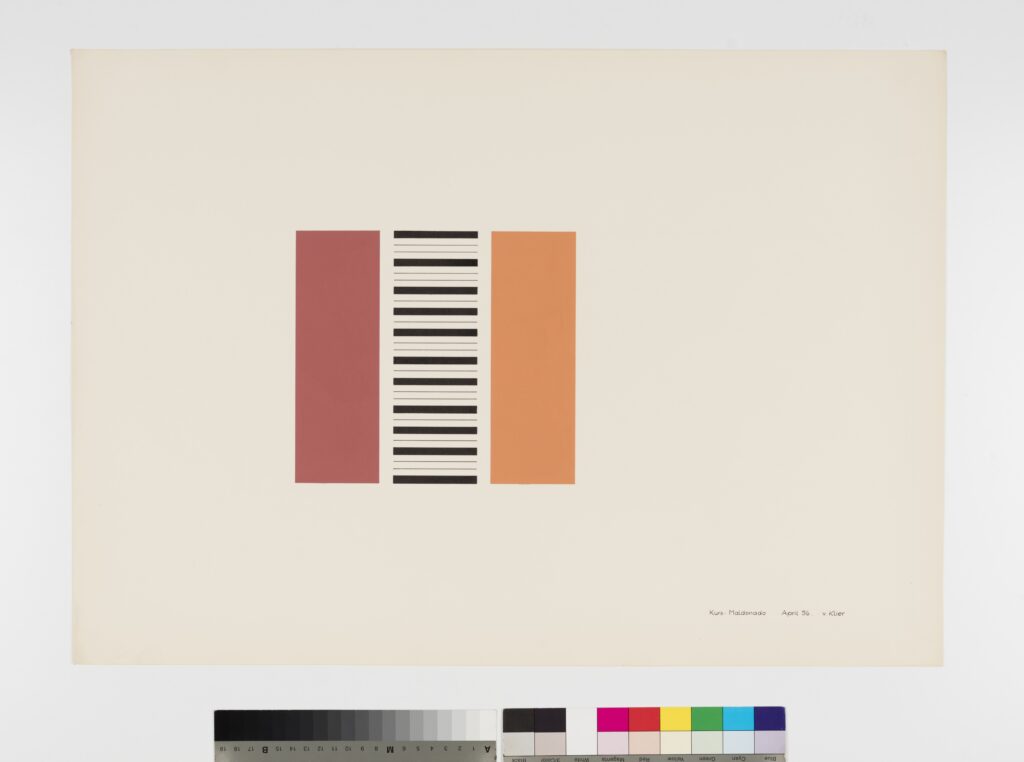
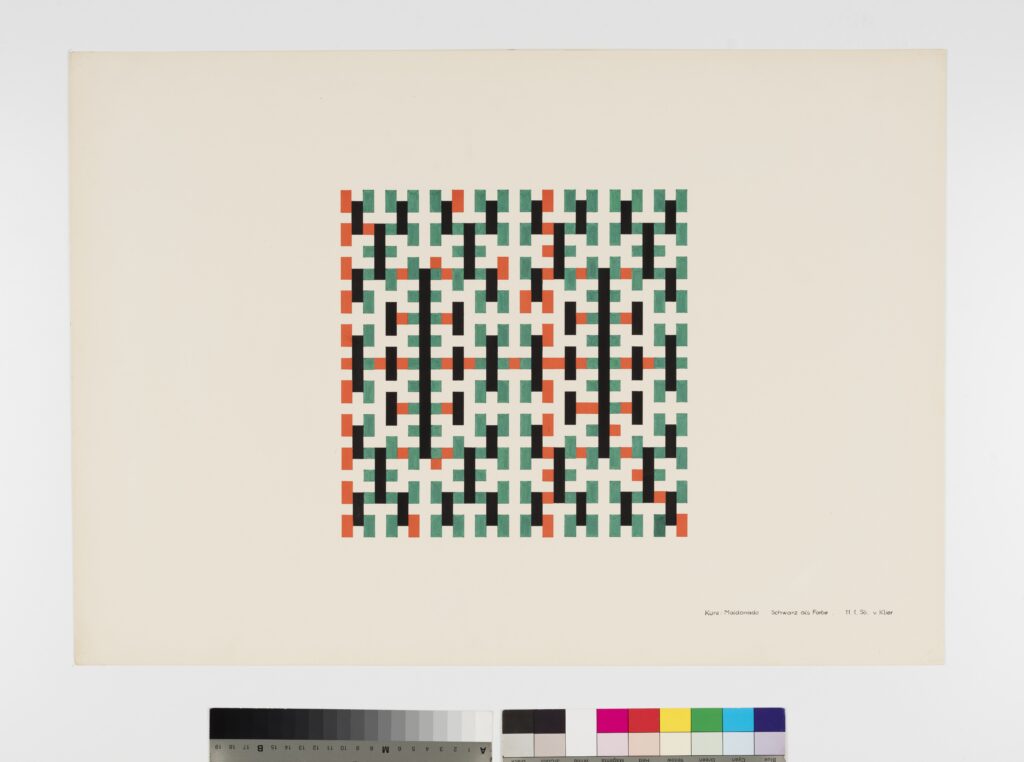
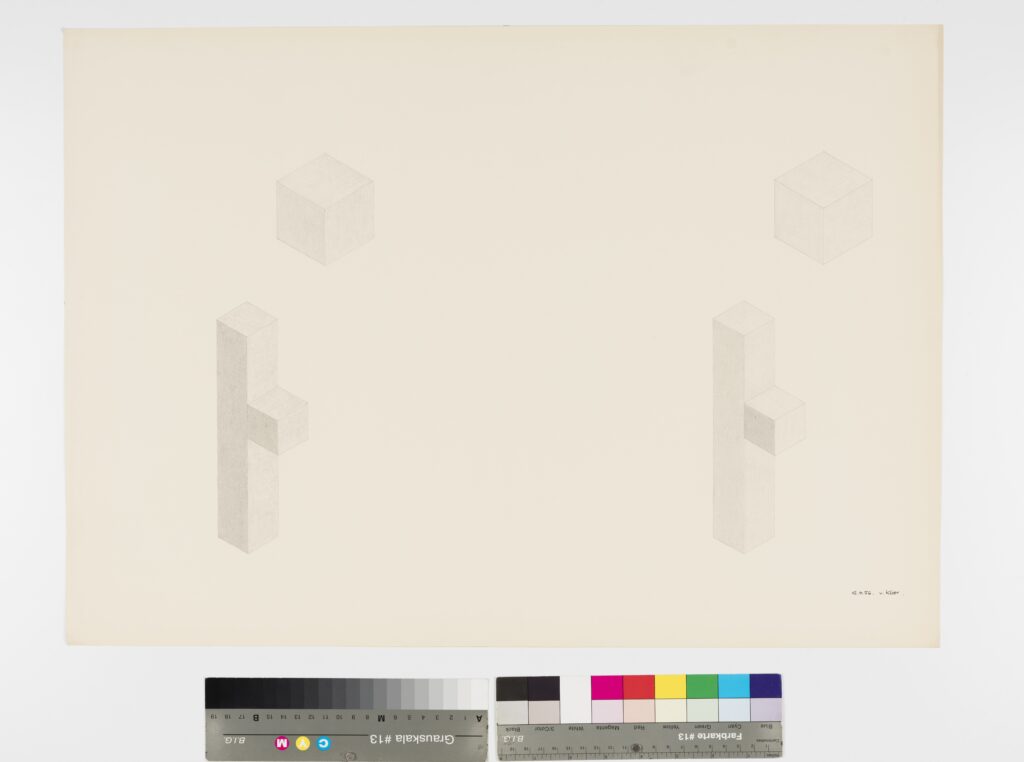
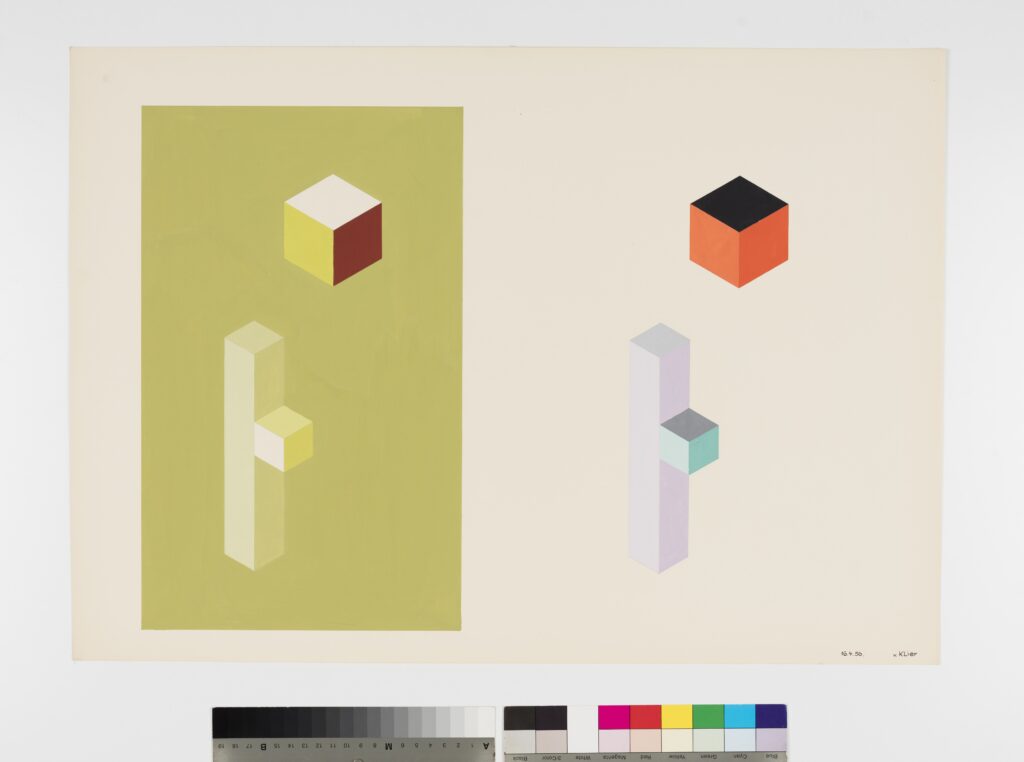
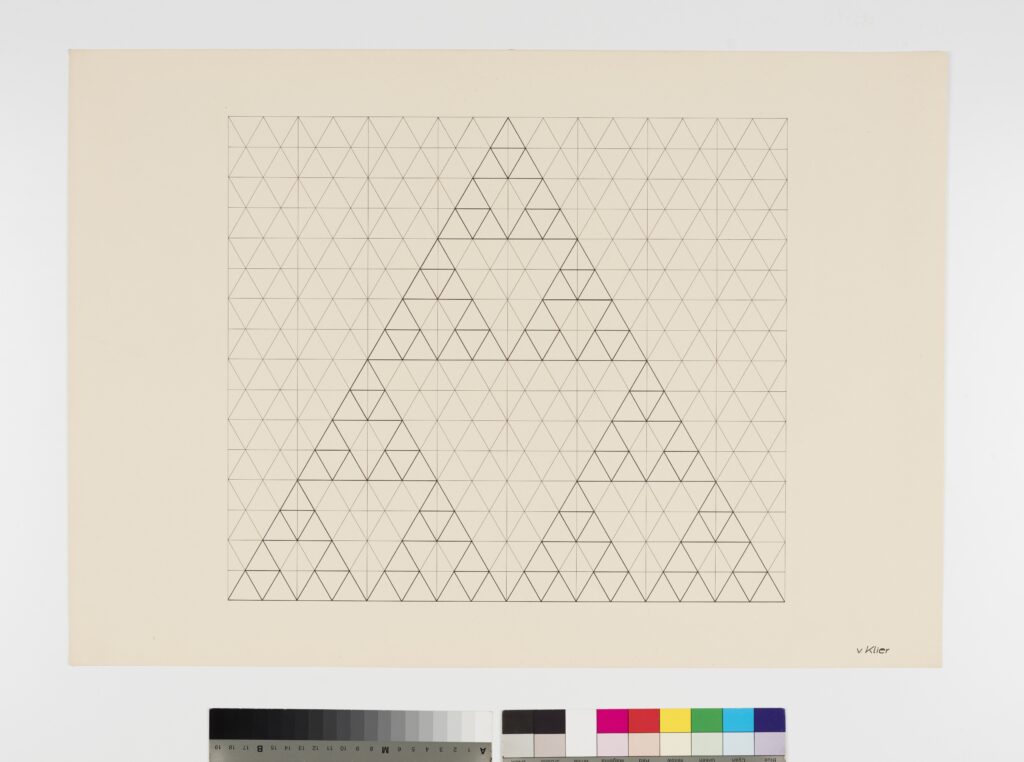
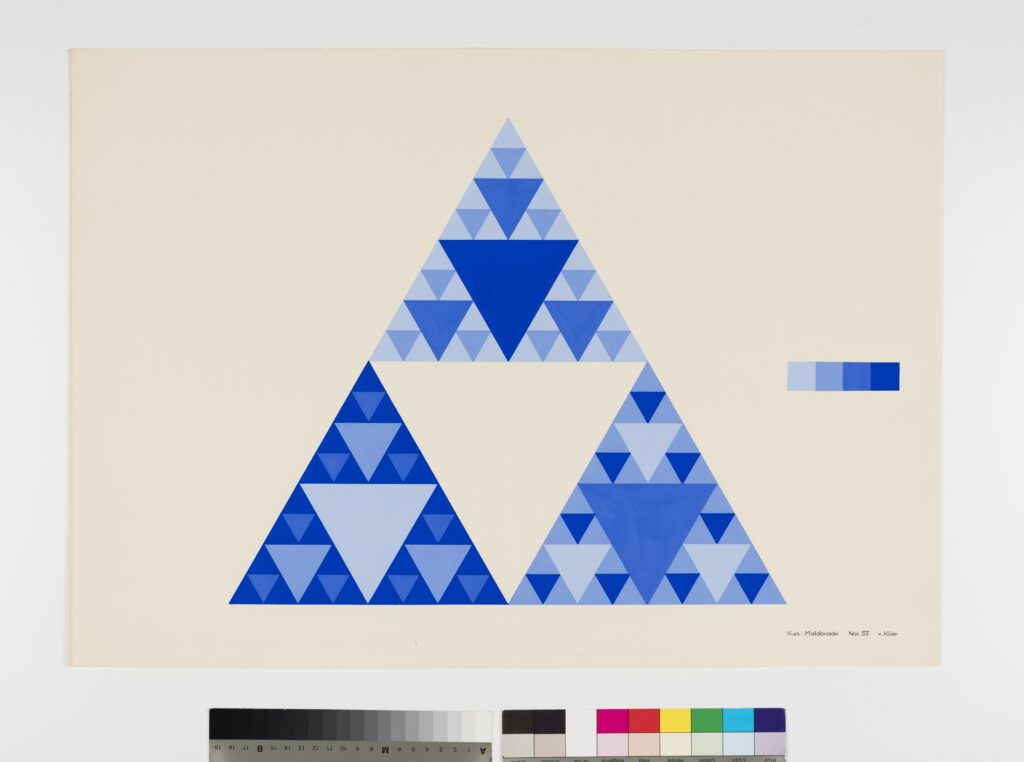
The following transcript by Klaus Franck and the drawings by Hans von Klier provide an insight into the kind of assignments Tomás Maldonado had his students at the HfG Ulm work on in the framework of the so-called basic course (’Grundlehre’). For further details on the structure of the course, see the journal essay by Martin Mäntele.
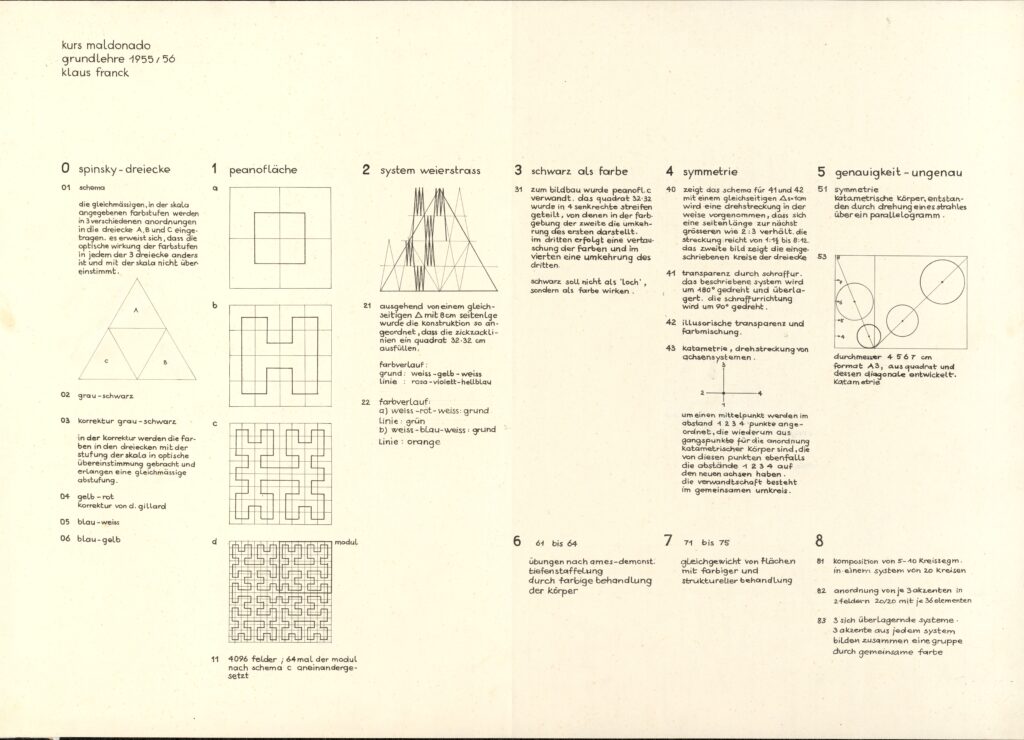
0
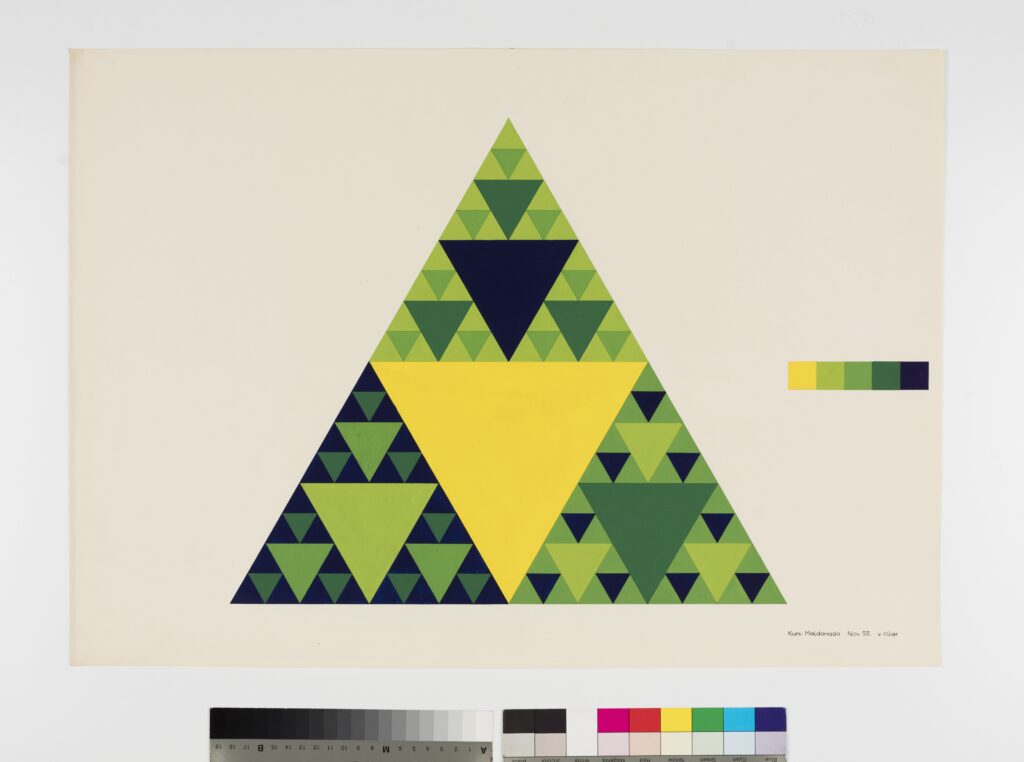
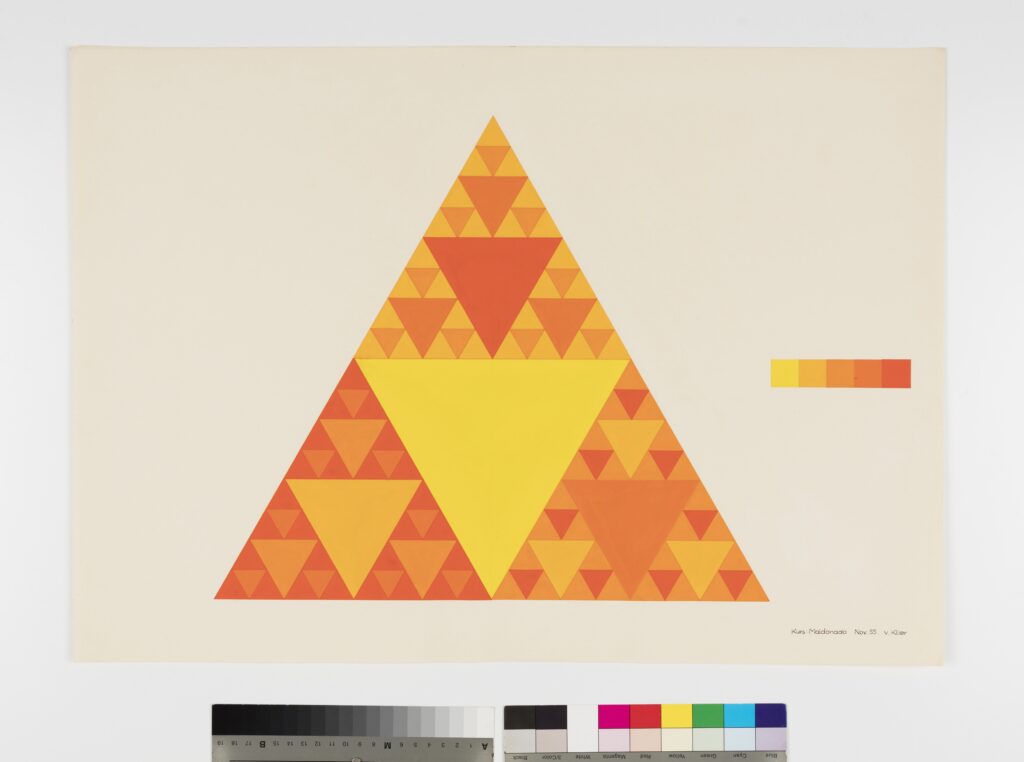
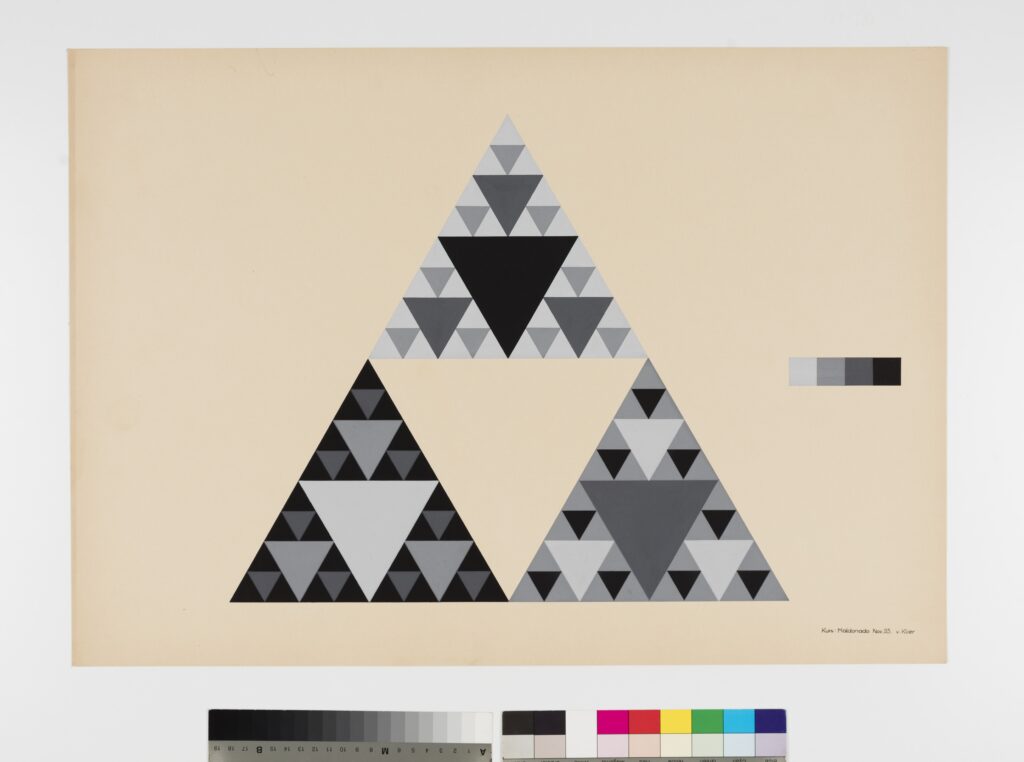
SPINSKY-TRIANGLES
— 01 schema: the uniform colour grades specified in the scale are entered in triangles A, B and C in 3 different configurations. it appears that the optical effect of the colour grades differs in each of the 3 triangles and does not correspond with the scale.
— 02 grey-black
— 03 rectification grey-black: in rectification, the colours in the triangles are optically aligned with the grades of the scale and obtain even increments.
— 04 yellow-red: rectification by d. gillard
— 05 blue-white
— 06 blue-yellow
1
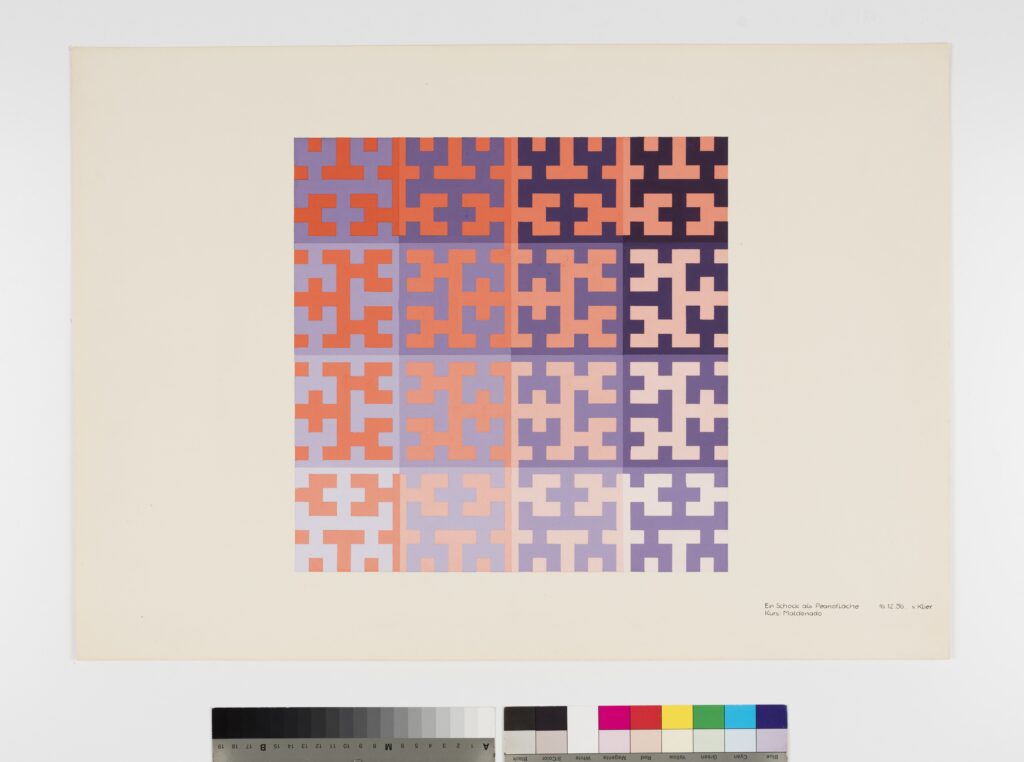
PEANO AREA
— 11 4096 areas; juxtaposed 64 times the module according to schema c
2
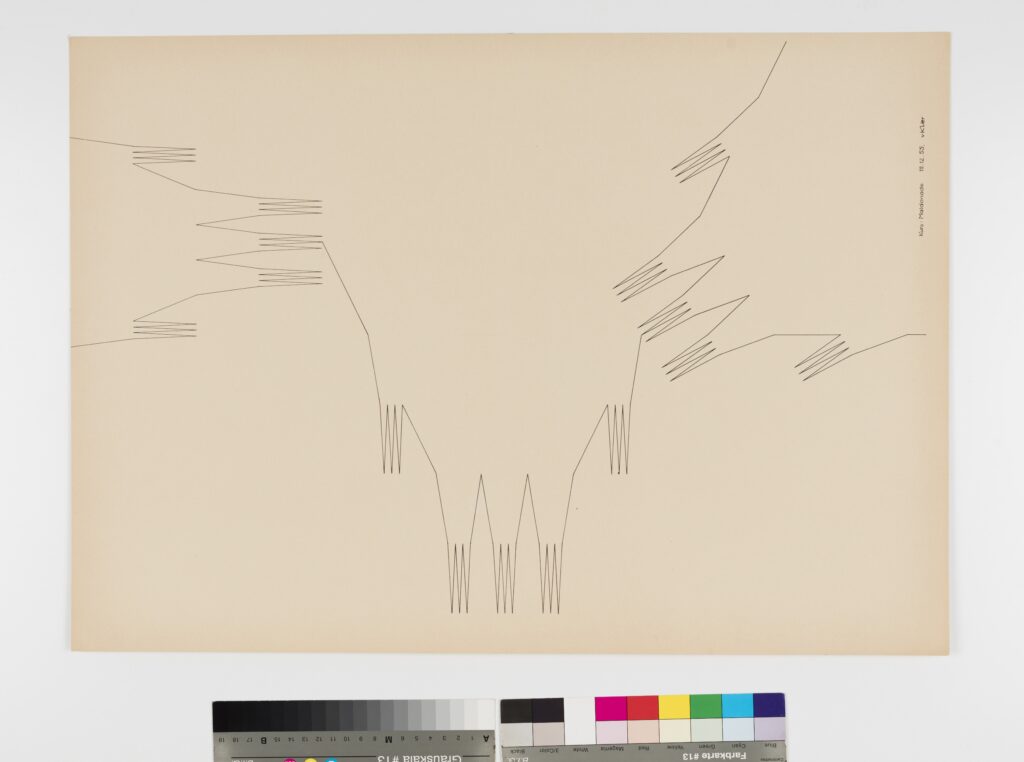
WEIERSTRASS SYSTEM
— 21 based on an equilateral △ with 8 cm side length [!] the construction was arranged so that the zig-zag lines fill a 32 • 32 cm square. colour gradient: background: white-yellow-white / line: pink-purple-light blue — 22 colour gradient: a) white-red-white: background / line: green; b) white-blue-white: background / line: orange
3
BLACK AS COLOUR
— 31 for composition, peano area was allied to c. the 32 • 32 square was divided into 4 vertical strips, the second of which is the inverse of the first in terms of colouration. The colours are interchanged in the third and the fourth is the inverse of the third. / Black should not seem like a ‘hole’ but have the effect of a colour.
4
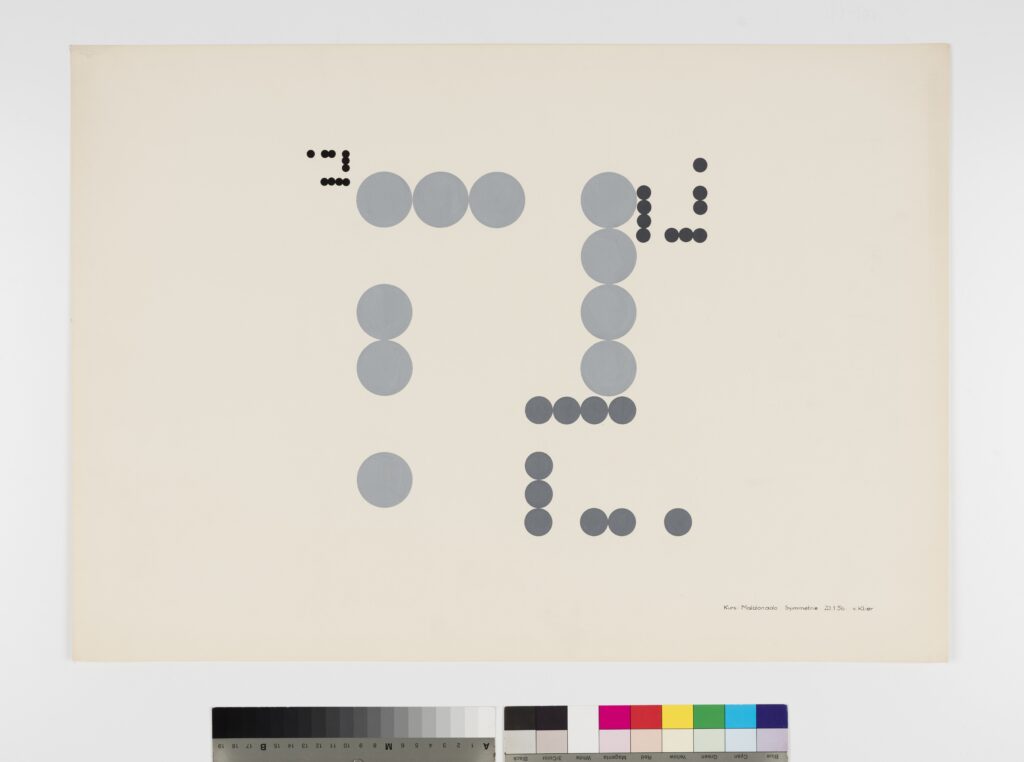
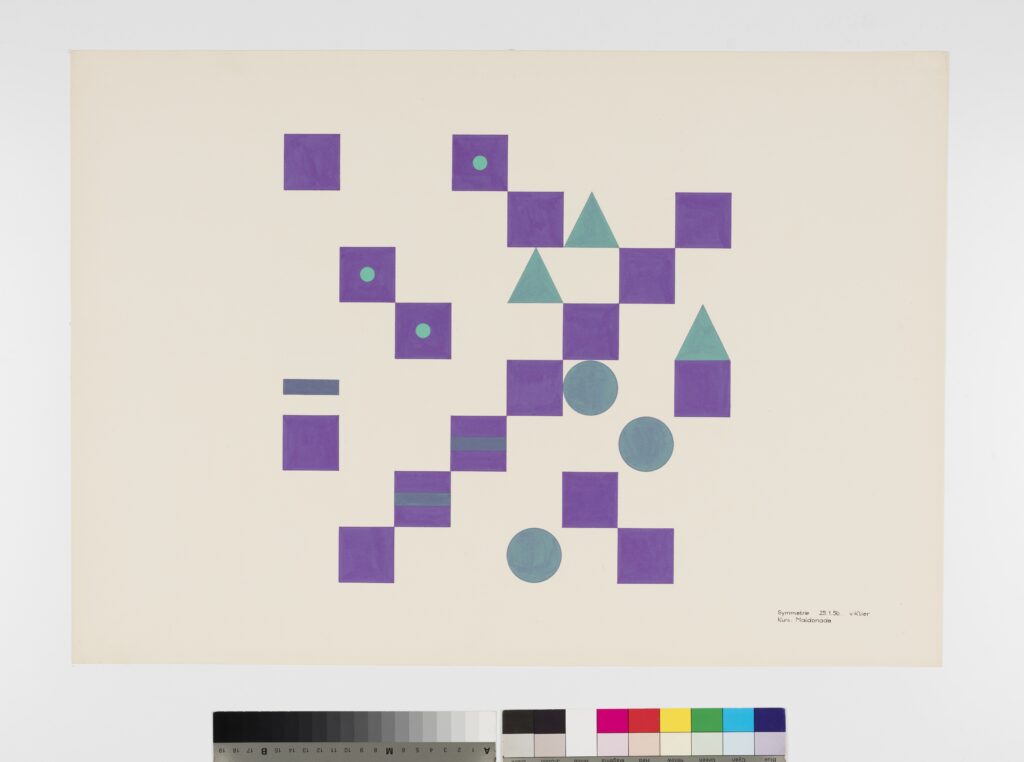
SYMMETRY
— 40 shows the schema for 41 and 42 with an equilateral △ s = 1 cm a similarity transformation is executed in such a way that one side length has a ratio of 2:3 against the next biggest. The transformation ranges from 1:1½ to 8:12. the second picture shows the inscribed circles of the triangles — 41 transparency through crosshatching. The described system is rotated by 180° and overlapped. the direction of crosshatching is rotated by 90°. — 42 illusory transparency and colour mixing. — 43 katametry, similarity transformation of axis systems. [Schema drawing]
around a central point, dots arranged at distances 1 2 3 4 are themselves starting points for the configuration of katametric figures, which from these points likewise have the distances 1 2 3 4 on the new axes. the connection consists of the common circumcircle.
5
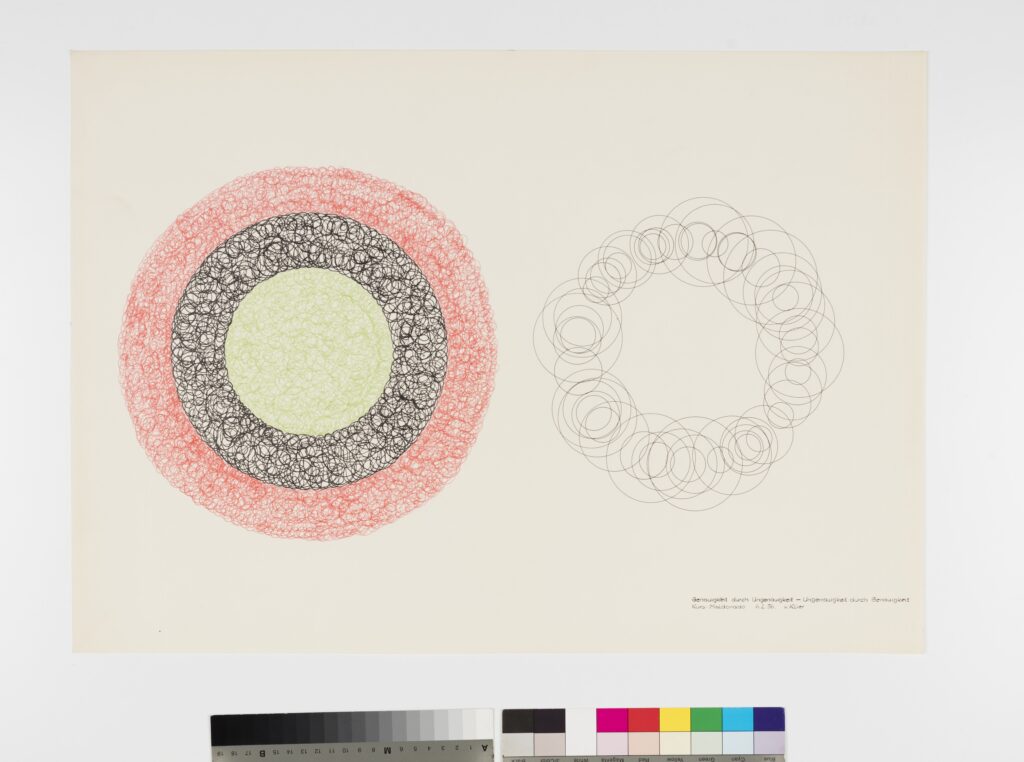
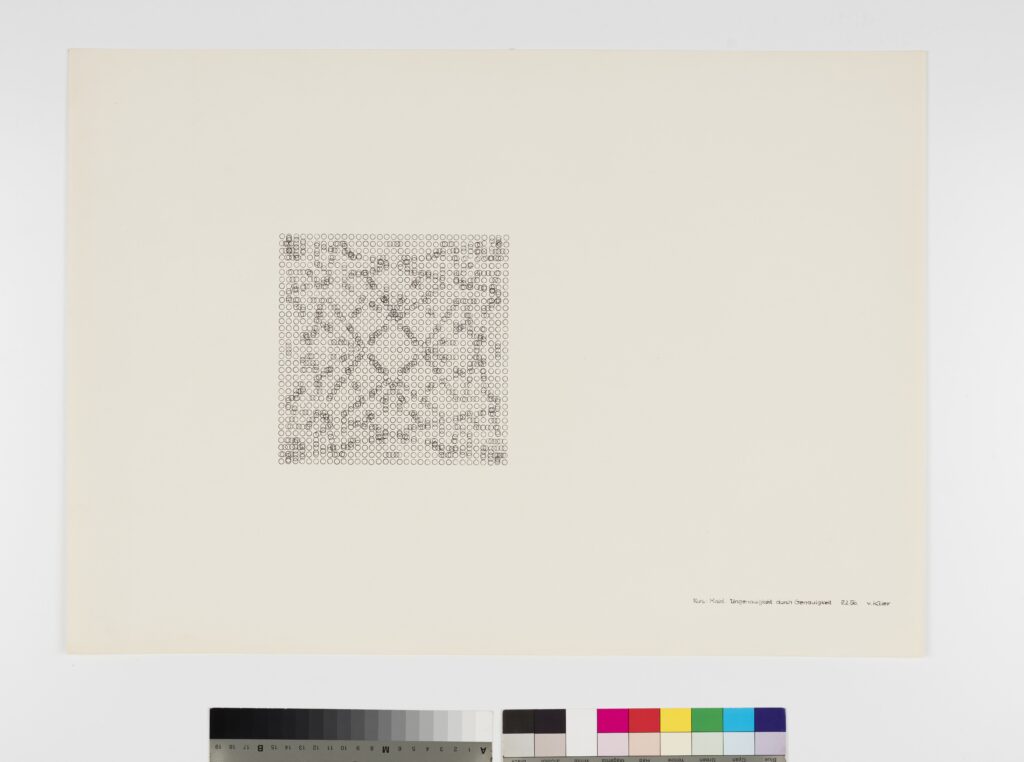
PRECISION – IMPRECISE
— 51 symmetry: katametric figures, created by turning a ray over a parallelogram.
— 53 [Schema drawing]: diameter 4 5 6 7 cm A3 format, developed from a square and its dialogues. Katametry
6 61 TO 64
exercises after ames demonstration
depth graduation through colour treatment of planes
7 71 TO 75
harmonisation of planes through colour and structural changes
8
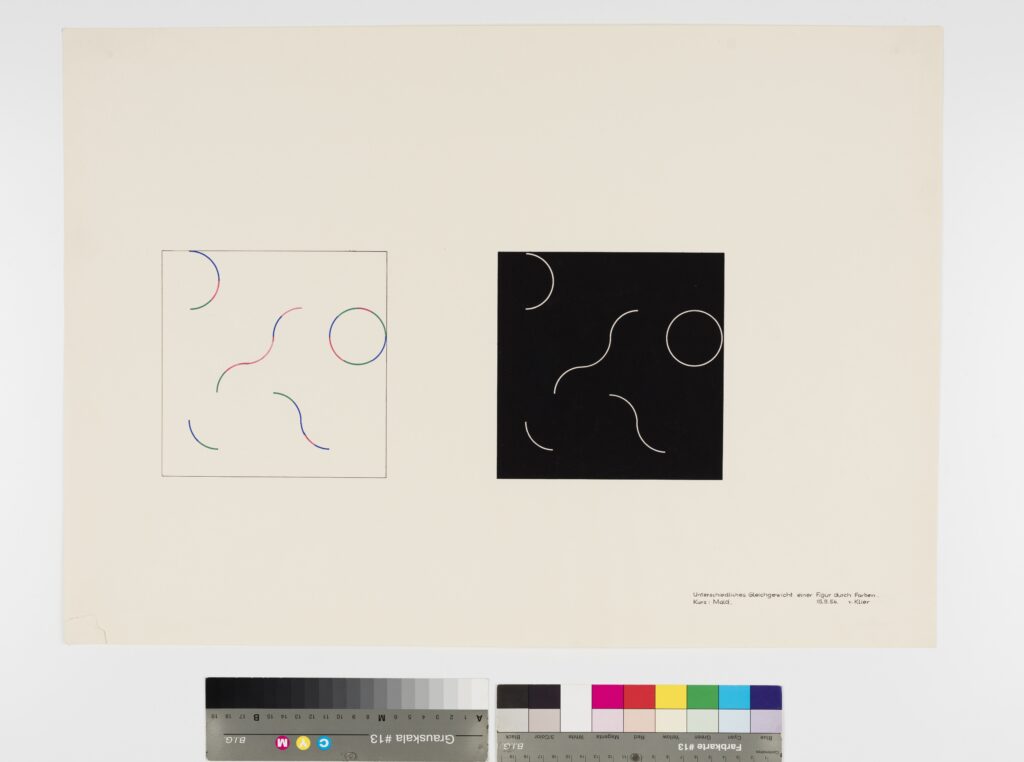
— 81 composition of 5-10 circle segments in a system of 20 circles
— 82 arrangement of 3 accents in each of 2 planes 20/20 each with 36 elements
— 83 3 overlapping systems 3 accents from each system form together a group by way of mutual colour
(*1965 in Meßkirch, FRG) has been head of the HfG Archive since 2013. He studied art history and modern German literature in Tübingen, Newcastle (GB) and Hamburg from 1984. In 1999, he completed his doctorate at the University of Tübingen. He is involved in numerous exhibition and publication projects. Since 2003, he has repeatedly taught design history at the universities of Ulm, Würzburg, Schwäbisch Gmünd and Biberach.