💼 The Design Student’s Bag: Projects
Editorial note: Participants in the digital Bauhaus Open Studio are currently reflecting on what it means to be a design student in Türkiye today. In the studio, students are tasked to design their own “design student bag.” These bags embody their routines, tools, and needs and serve both as a mobile studio and a reflective diary. The first online session focused on material exercises and special documents from the historical collection.
The project is led by Katja Klaus and Philipp Sack from the Bauhaus Dessau Foundation, in collaboration with Koray Gelmez, Pelin Efilti, and Ali Cankat Alan from Istanbul Technical University. This initiative offers twenty design students from various Turkish universities the opportunity to exchange ideas in an international context. The highlight of the program is a visit to the Bauhaus in Dessau in April 2026.
To read more about the collaboration in general, check out the interview with Koray Gelmez in this note 💼💼💼
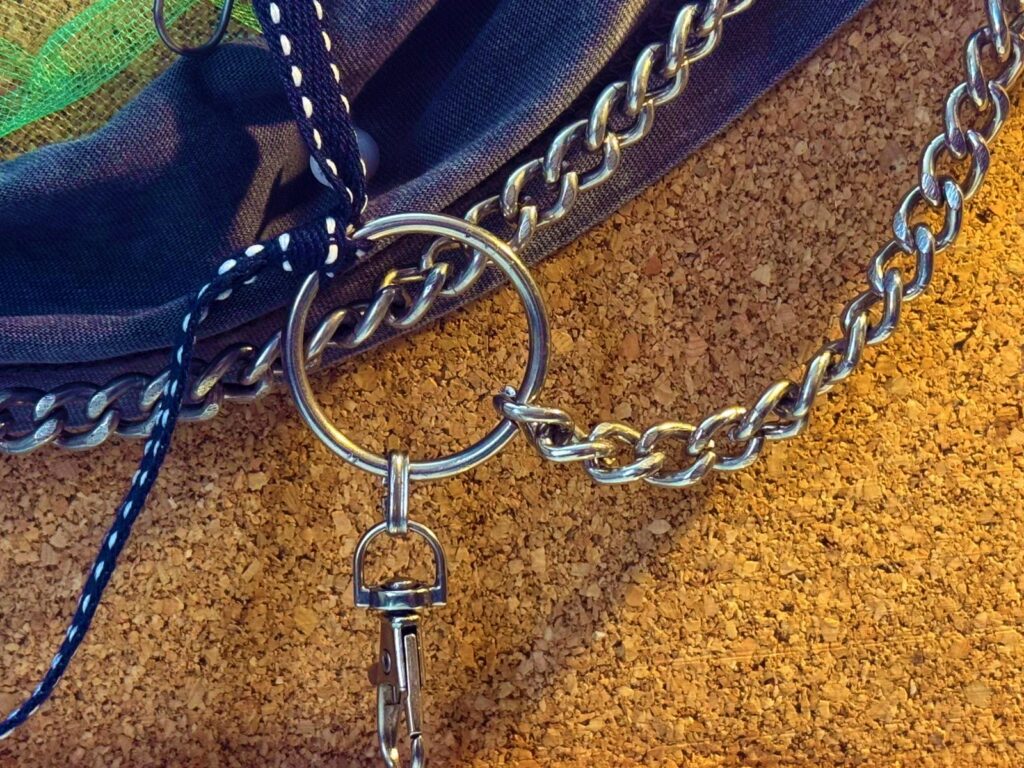
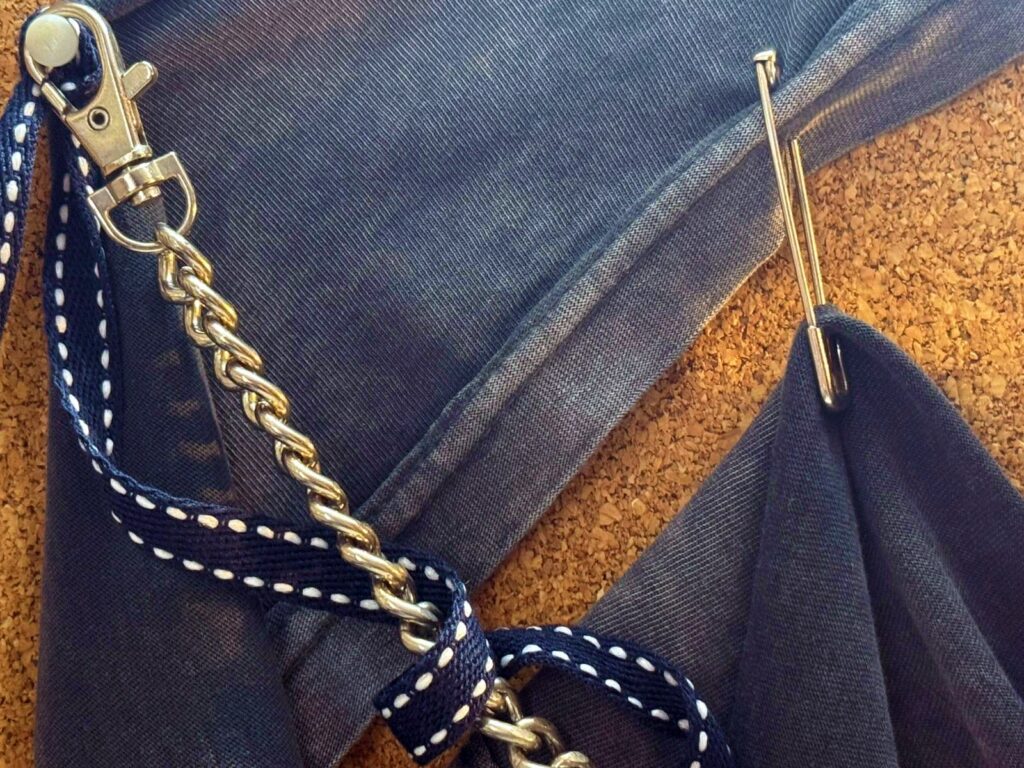
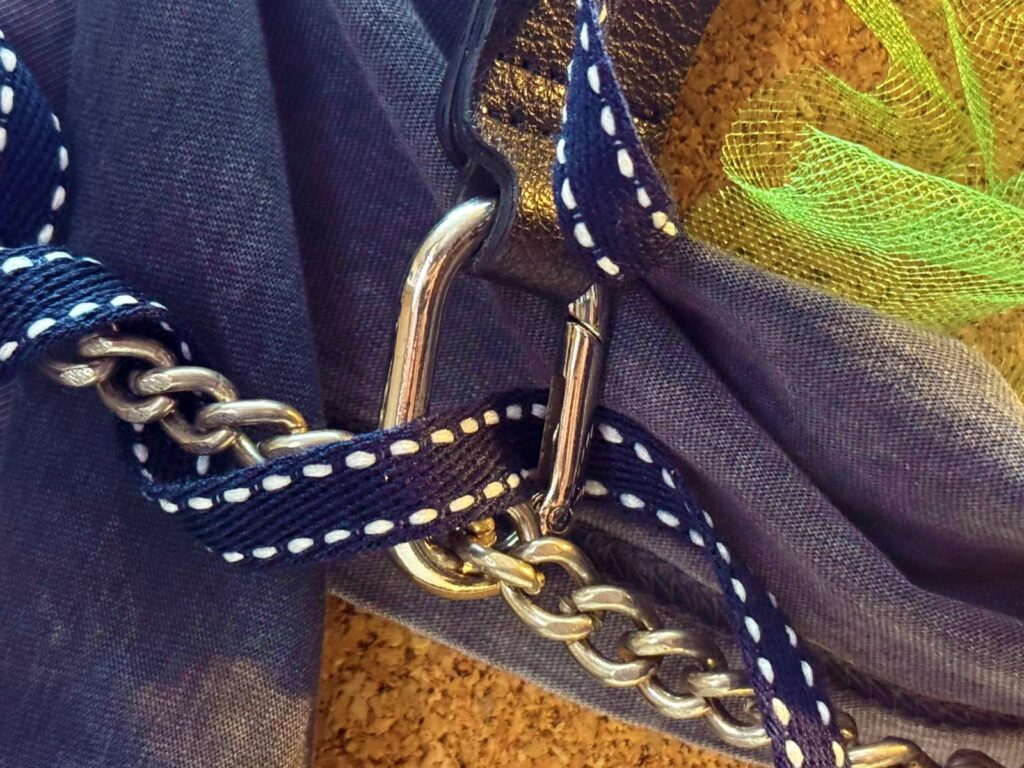
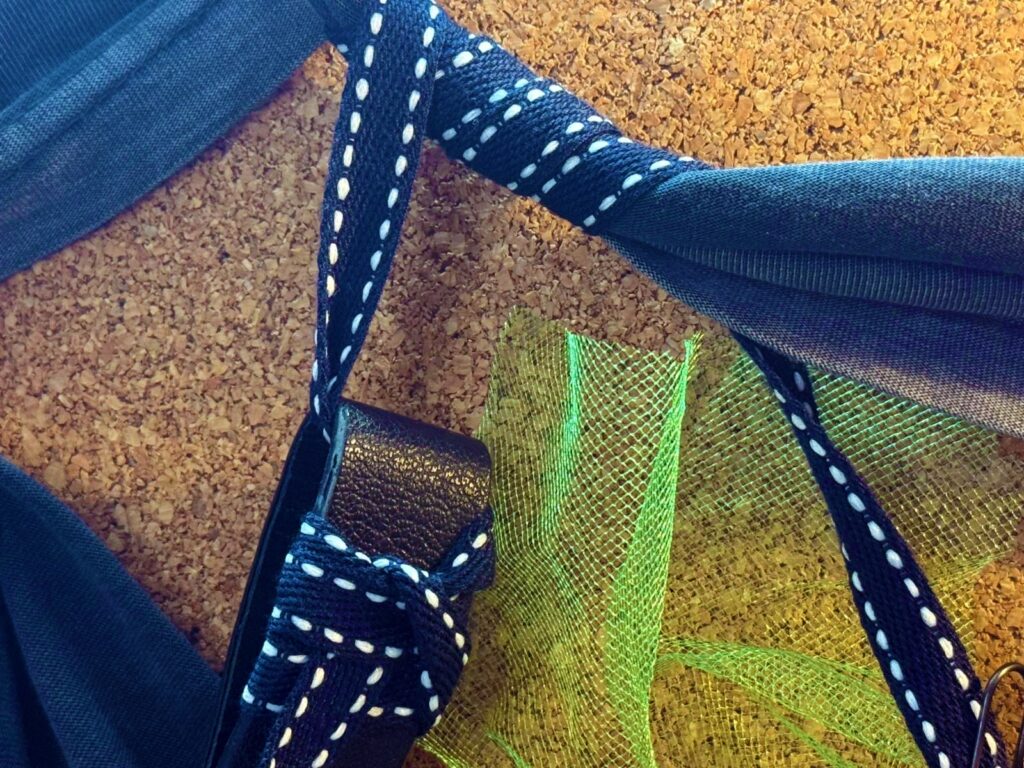
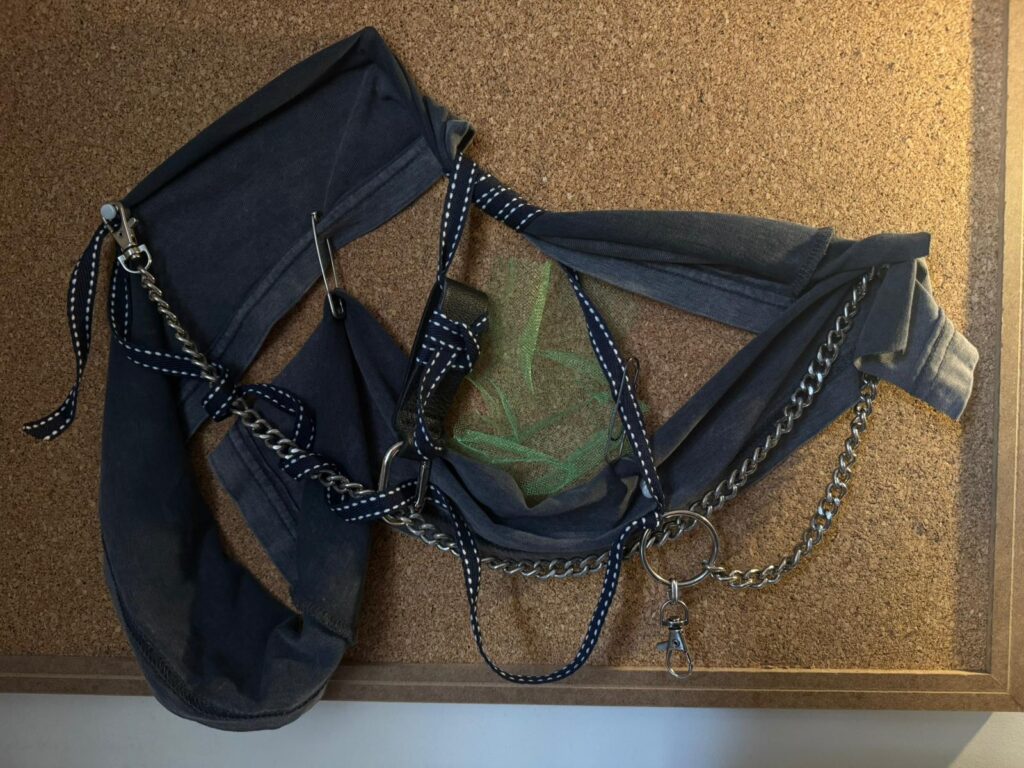
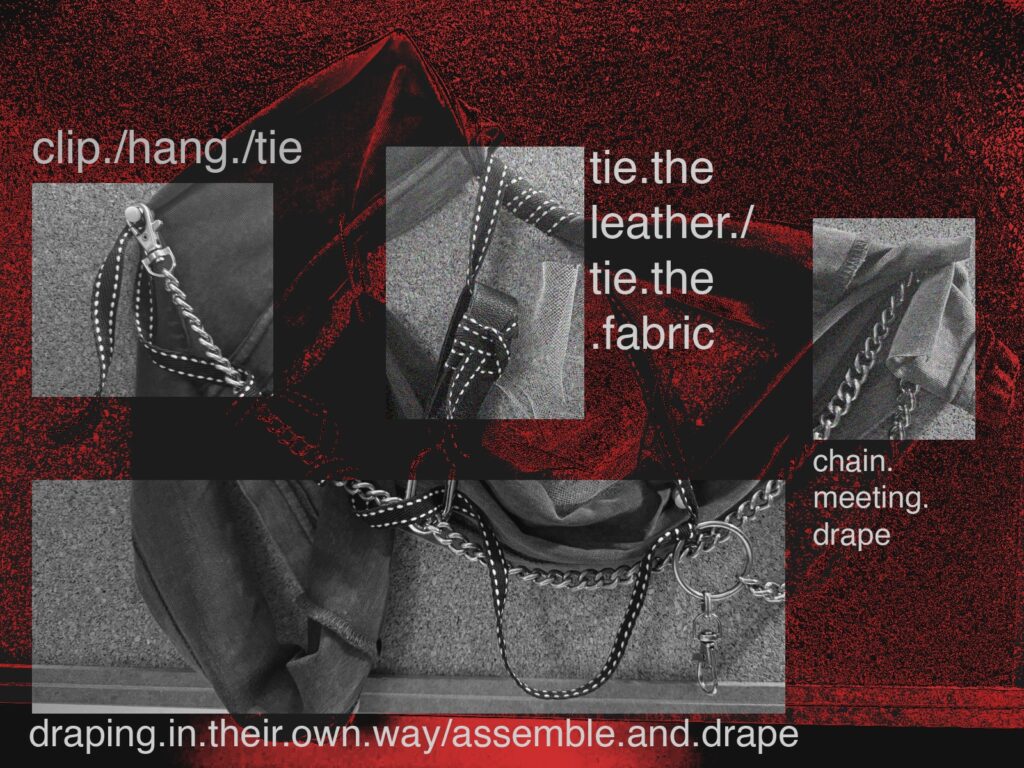
“Exploring the flow, assembly, interaction and mainly the draping of different materials. How their various interactions affect their form, their layering and the draping. Chains, strings, pins, fabrics, leather, metal; some of the materials that can be tested through their flowing and draping capabilities. Allowing for observations on form, assembly and haptic qualities of them.”
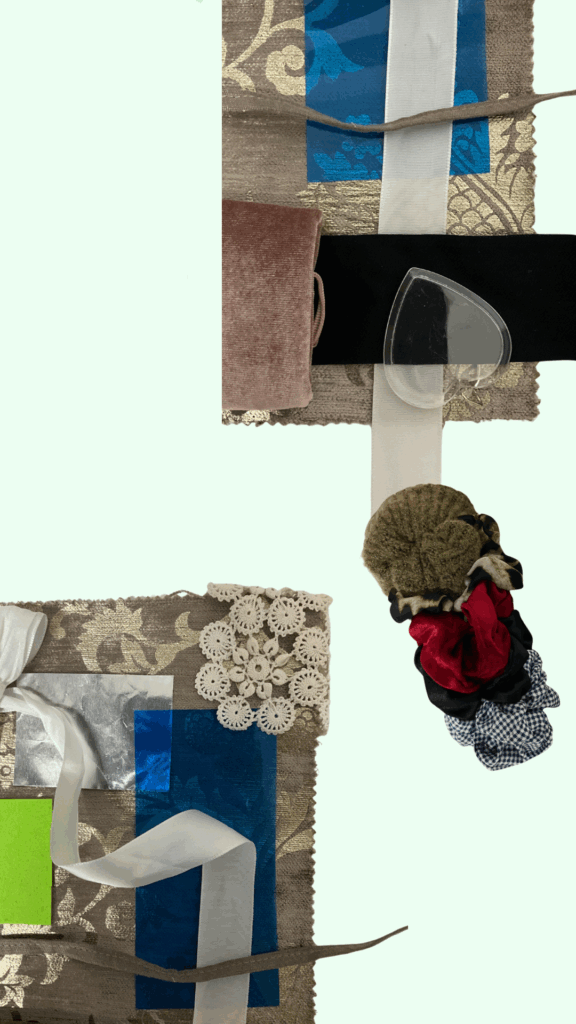
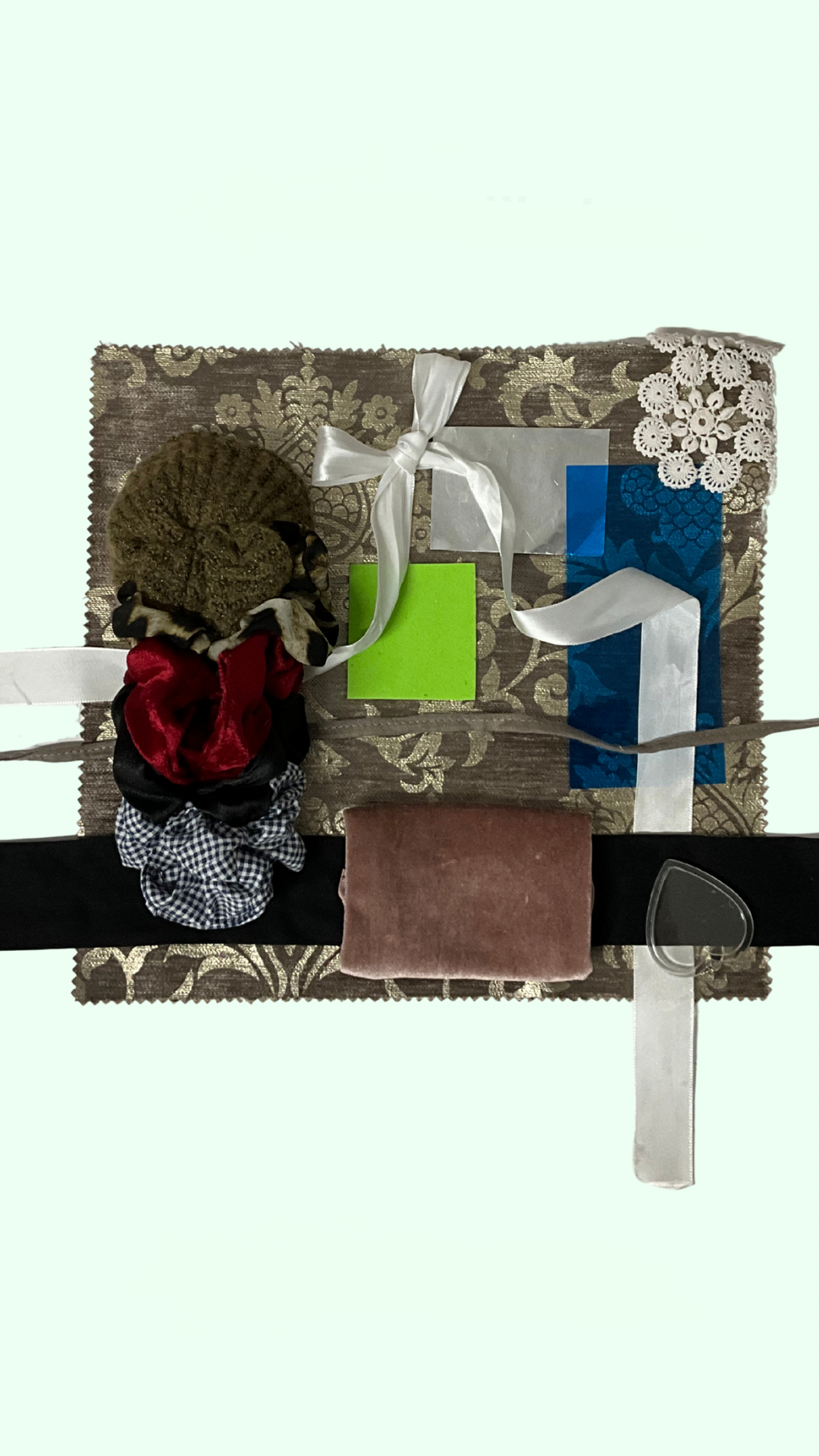
“In creating this touchboard, I aimed to gather materials with different sensitivities and intended uses that I saw around me, to observe and experimentally explore their relationships. Some were materials I quite liked and preferred in my daily life, while others were less relevant and less knowledgeable. Within the scope of the project, I had the opportunity to examine and evaluate all of them. I observed how the potential of a material on its own could be impacted when combined with other materials. I categorized them by considering the possibilities its texture offers in production and its adaptability to the bag.”
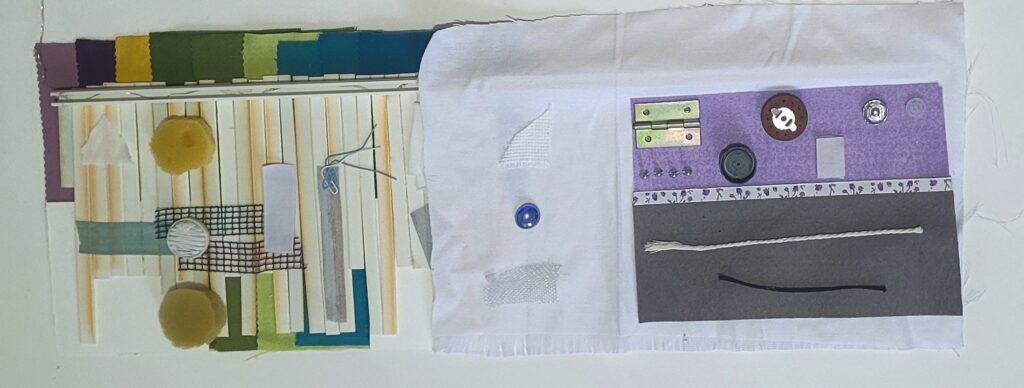
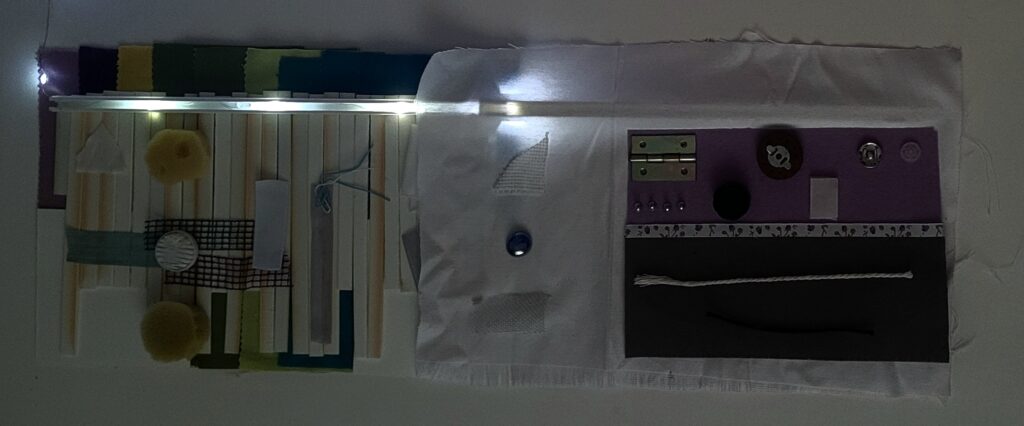
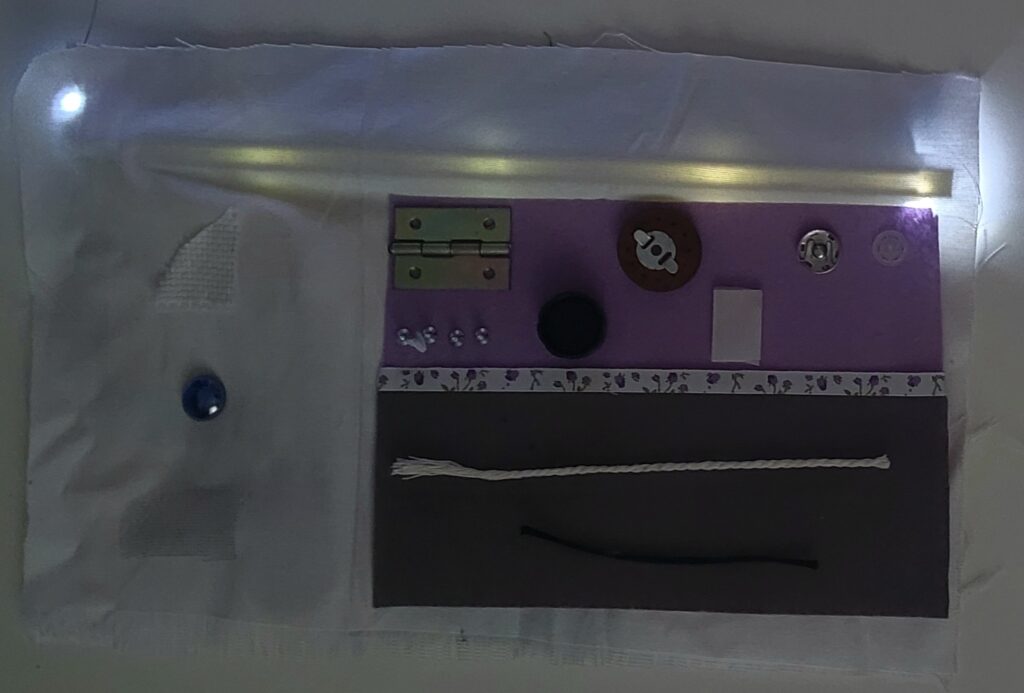
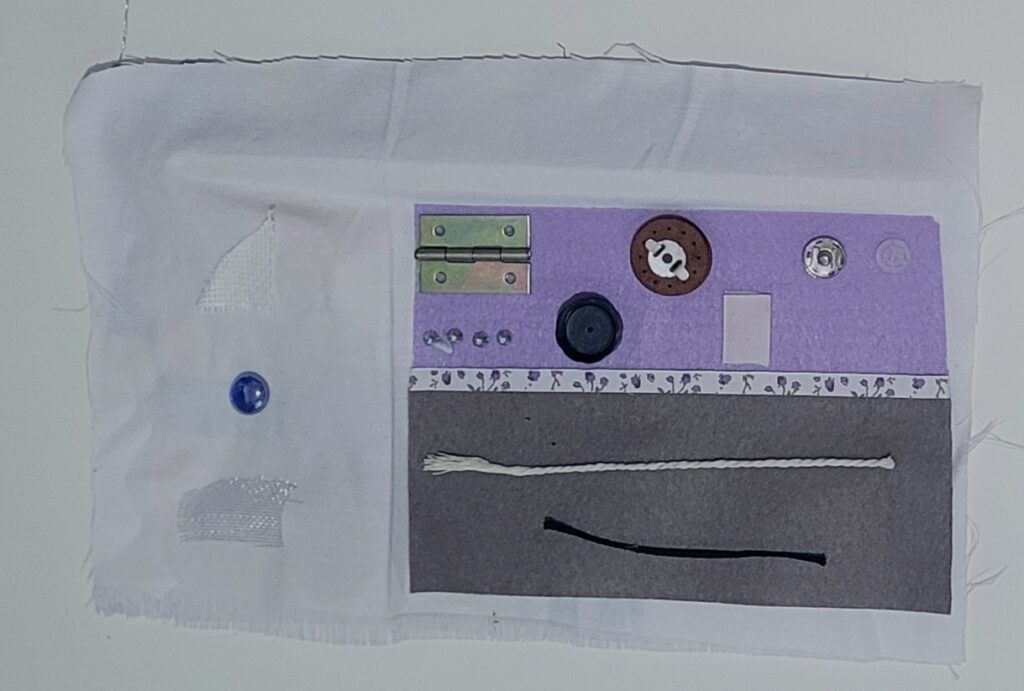
“In industrial design, nothing we learn or use goes to waste. If we see a box, we say, “Keep it, we’ll transform it.” I still use the cardboard from my first year; now, in my fourth, I design with it. Design is not a single stage: at every stage, we learn and build. I adopted the same approach in this bag idea. I built my touchboard around flexibility and layering — the qualities a designer needs. Inside the bag, the same material can reappear later; a wooden stick from second year may find new purpose in fourth. For this reason, I wanted to understand what each material is by touching, seeing, and holding it up to the light, because if we don’t know the material, we can’t correctly define its function. When brought together, they can become a conceptually cohesive bag and support spot decisions. I deliberately chose the lower layer’s materials: linen for a sense of strength; stretch suede to evoke “fixed when decided, stretchable when needed” behaviour; elastic bands, ribbons, and silk/cotton threads to show the continuity of connection. Foam and leftover 3D-printed parts can always be used as support elements. My favourite detail is light: it guides in low light and lets us test “how does this material behave under light/backlighting?” Interactions of the upper layer; in some areas of the bag, blind interaction should be safe and quick; in other areas, this interaction should be limited to prevent unintended opening. In short, the design is inclusive yet customizable; it shifts with perspective. My touchboard reflects one state of my bag, and the bag will become holistic through these interactions and materials.”
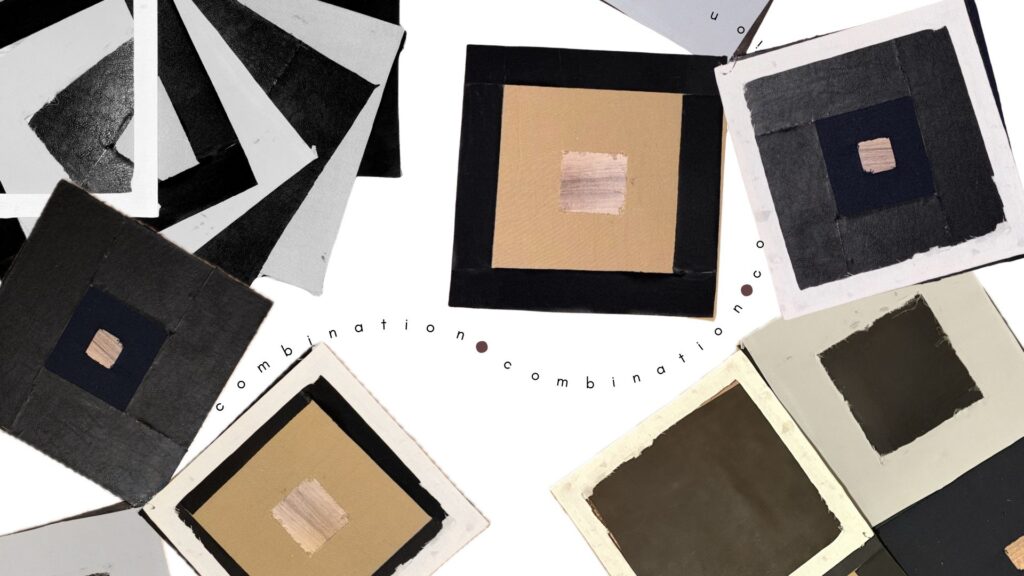
“I created my touchboard to show how important combinations are in the design process. I wanted to focus on the idea of touching fabrics and experiencing their different variations by direct interaction. On my touchboard, I placed seven different fabric samples. These include materials such as artificial leather, viscose, and polyester. Each fabric has its own surface and feeling, so when we touch them, we can notice how different they are from each other. The board can also be changed easily, because we can replace or add new fabrics. By doing this, it becomes possible to explore new variations of both fabric types and colors. This creates many new options, which can sometimes make the design process more confusing, but also more creative. Having more choices pushes the designer to think more deeply and make careful decisions. Another important point is that this idea does not have to be limited only to fabrics. For example, when creating a bag design, we can also use other materials such as metal pieces, zippers, or plastic parts to build another combination board. In this way, we can see not only how fabrics work together, but also how different materials can be combined in one product. My touchboard is therefore not just a simple fabric card, but a tool to experiment, to feel, and to think about design in many ways. Among the samples, my personal favorite combination is the brown leather and the gray polyester with a blue undertone.”
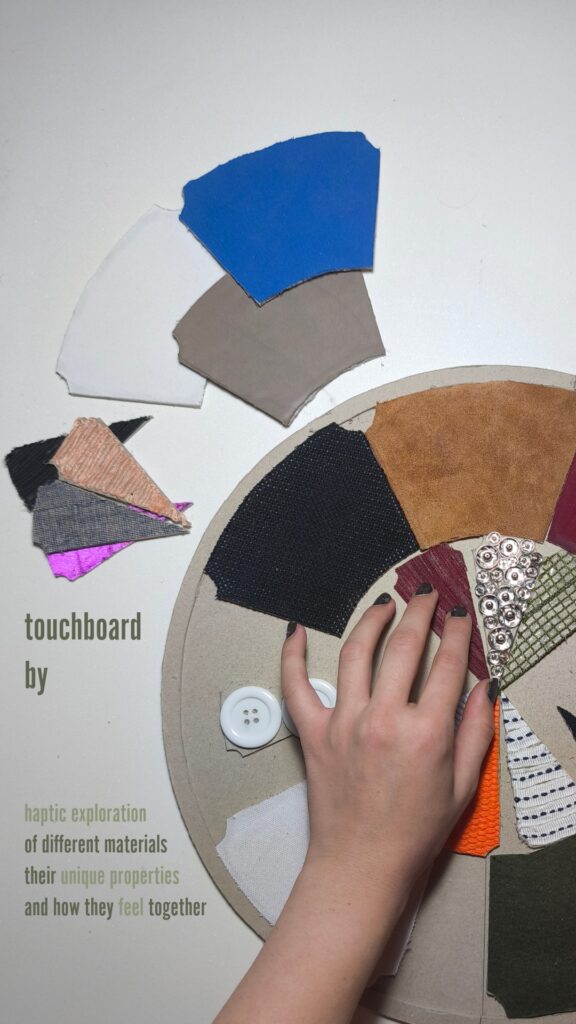
“The material selection process was mostly focused on finding samples with unique textures, and then color variety in said samples. Most of the materials that have been picked were left over from previous projects from design studio classes, samples collected during my internships, or craft materials for my hobbies. Around a third of materials are ones I have purchased to match or clash with the ones already at hand. In order to better visualise the compatibility of materials in terms of physical features, I have decided to create a circular board. This form allows to easily slide parts along a circle, in turn, making it easier to do quick changes between materials instead of taking pieces out and switching their places everytime. Pieces can still be taken out and placed wherever depending on their size. The aim was finding the balance between different textures by not only seeing, but also interacting with the material. The experience of touching pieces one by one, seeing how different fabrics reflect light, scratching and tapping materials to hear the noises they make, and feeling how they conduct heat to my hand was a real sensory rollercoaster.”

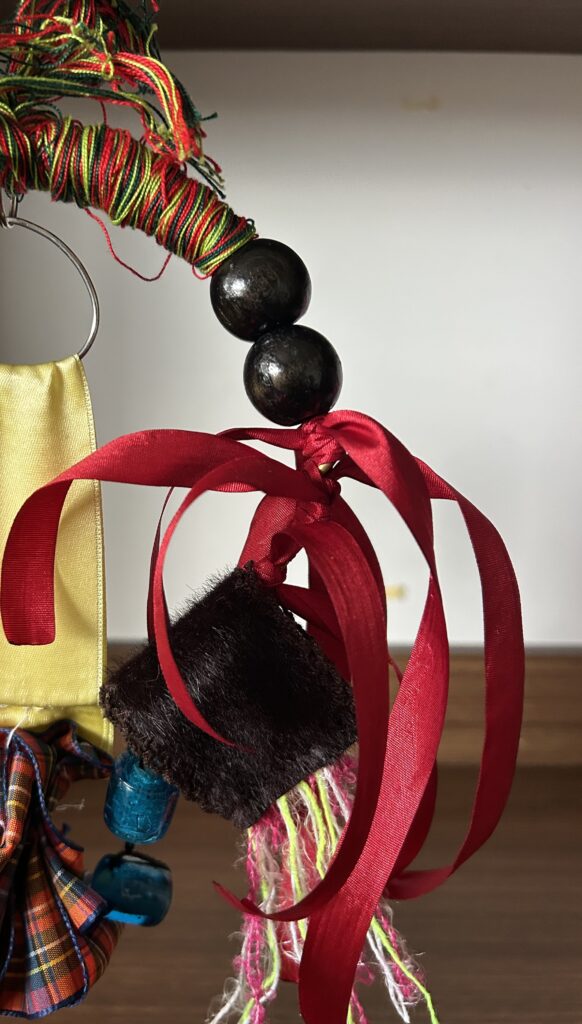
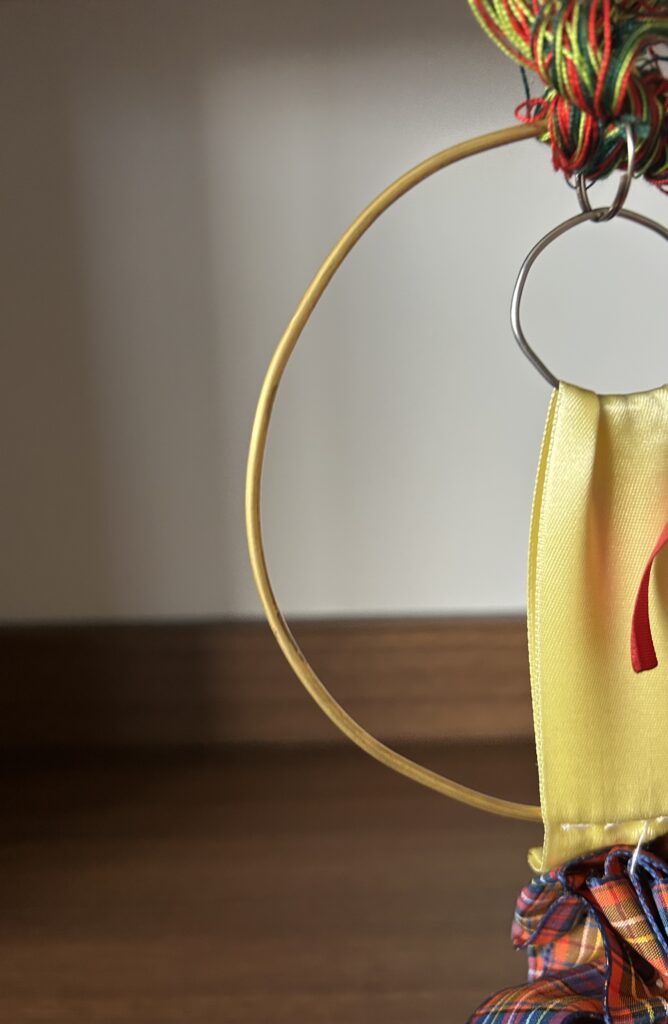
“My board is a circle structure, with a circle within a circle and an intermediate circle that allows it to remain on the same plane. The tightly sewn fabric piece, due to its tension, remains firmly in place on the central body. It also serves as a separator between the void and fullness of the circle. I used wire, fabric, and beads as materials. I dimensioned the fabric using various techniques. While the elements create an order within themselves, they also create a complex appearance overall.”
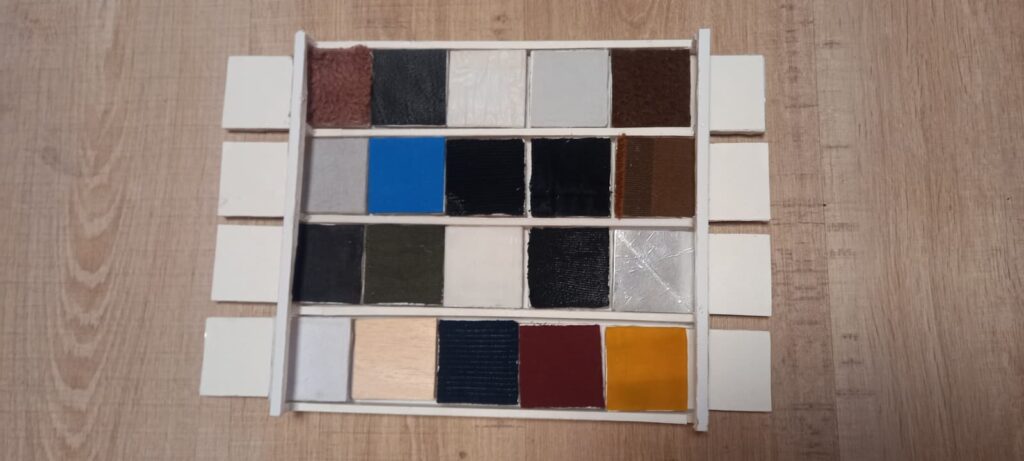
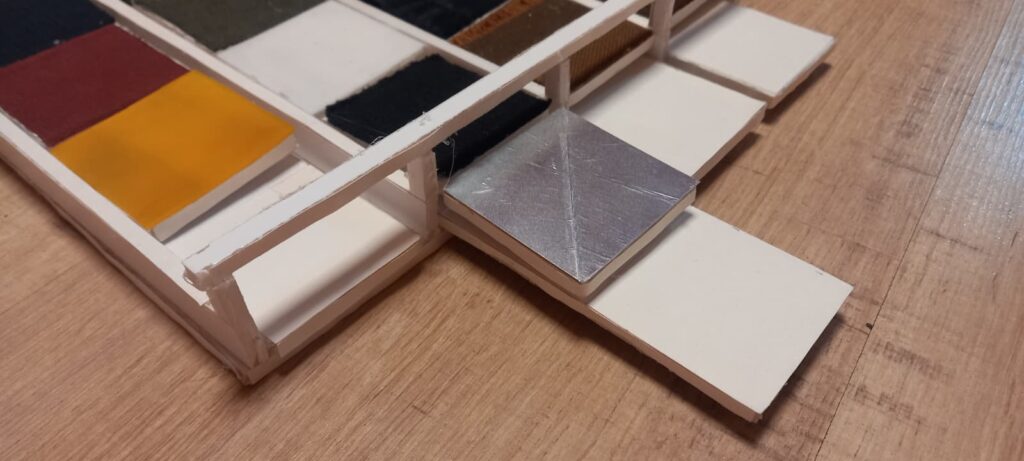
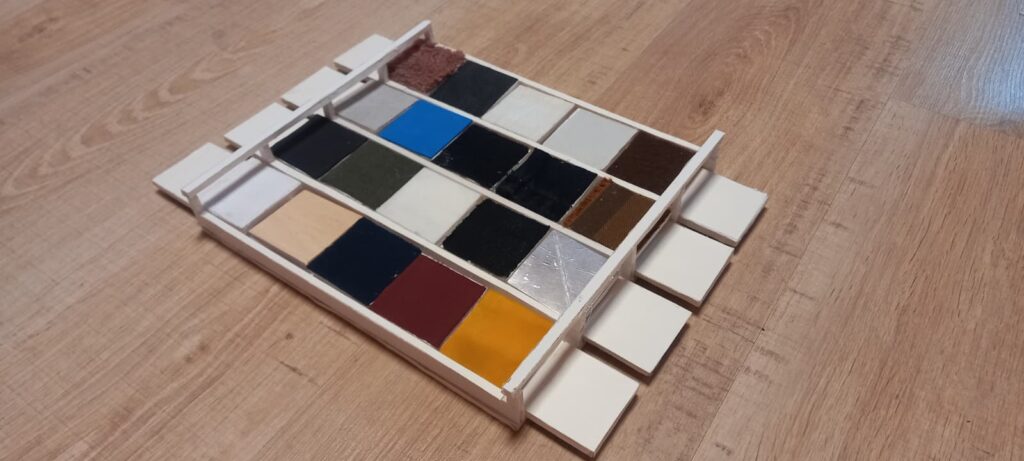
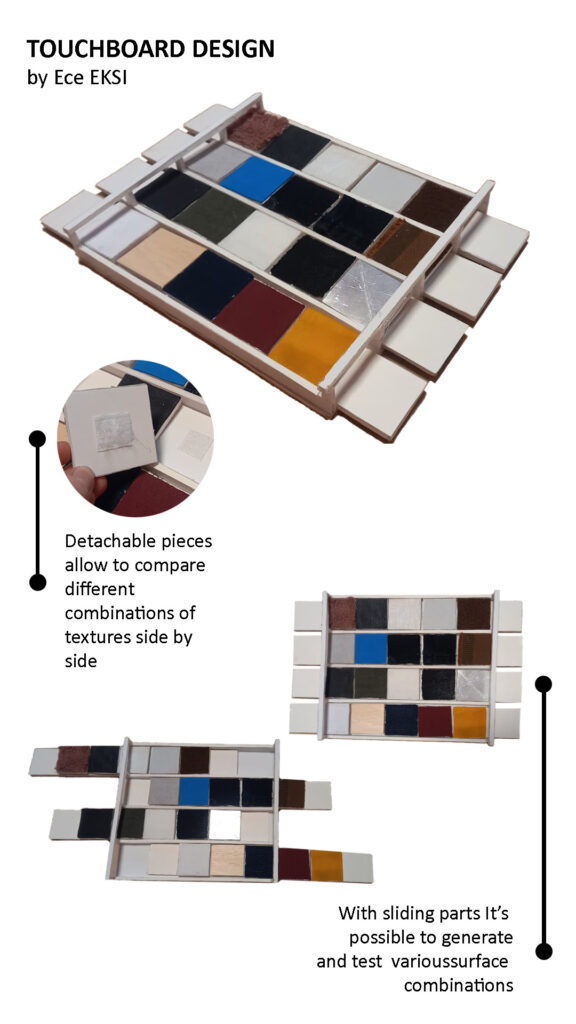
“The touchboard I created was mostly assembled with leftover materials that I used in my previous design projects. To be honest, I had already forgotten some of these materials existed under my bed, and I re-discovered them. But unlike before, I believe I comprehended these materials’ qualities and features better through this board duty. And it was fun to test different combinations of different surface frictions. I used various materials such as wood and aluminum, but most of them can be grouped into two: fabric and plastic. For fabric, I used: denim, plush, parachute, felt, linen, cotton, polyester. For plastic, I used: LDPE (plastic bag), PET (a 3D-printed piece), polyurethane, imitation leather, EVA. The touchboard constructed from sliding and detachable parts, which makes it possible to generate various arrangements of textures.”
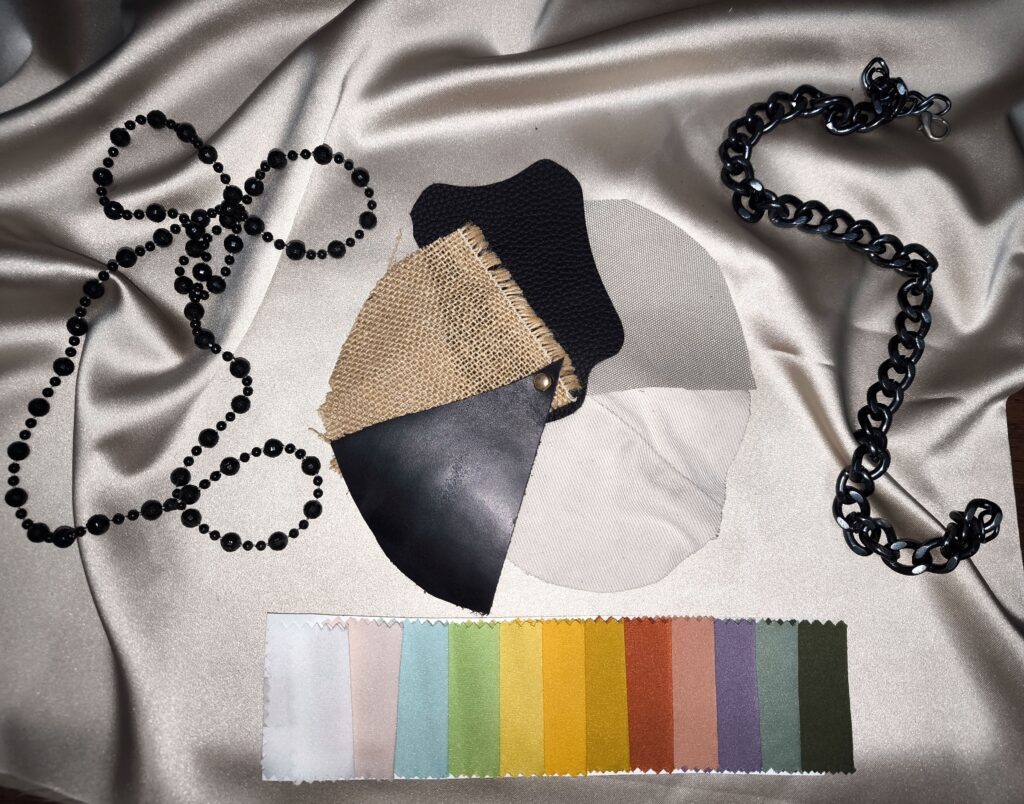
“The quest for the perfect materials was the starting point for this creation. My goal was to produce a real, durable, and fashionable bag that could withstand years of use, deliberately avoiding the look and feel of a simple arts and crafts project. To achieve this level of quality, I sought out a humble atelier that specializes in crafting unique bags, carefully observing their methods. I was able to borrow some extra fabric and materials they were currently using in their production.
Our market offers two distinct promises of lifetime durability. The first comes from %100 synthetic products, made from materials practically engineered to defy decay. The second uses authentic materials that have been utilized by people for millions of years. On my touchboard, I placed a circle of these contrasting elements: cowhide leather and straw canvas (authentic) alongside imitation leather and nylon waterproof fabric (synthetic). A piece of jean fabric sits between them, acting as the transition between the two worlds. All these materials are set against a satin lining, a deliberate choice to provide a soft, pliant contrast to their rougher textures.”
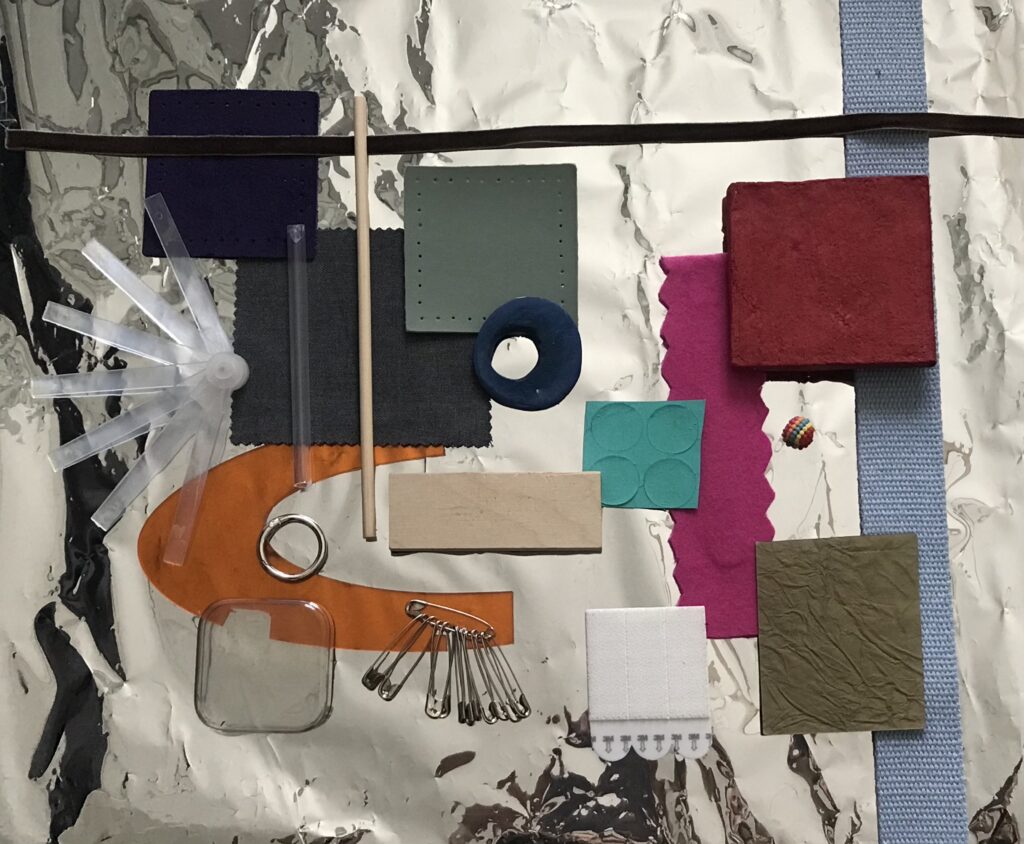
“I created the touchboard using materials I’ve worked with in my past projects. I think that while observing a design student’s education process, seeing how our use of materials evolves over time and also how it changes depending on the product category could be a fitting starting point for this project. My main filtering qualities for the board were temperature and texture, but I also considered other sensory aspects such as sound, friction, and smell. I arranged the materials from warm to cold (top to bottom), and from smooth to textured (left to right). I chose materials while thinking about possible parts of a bag, which also made me consider the sound they produce; the clink of metal or the silence of velvet. The materials I used include velvet, synthetic leather, suede, ceramics, felt, paper, paint, wood, metal, plexiglass, plastic, and a variety of weaving patterns, fabric types, and shapes to create various experiences.”

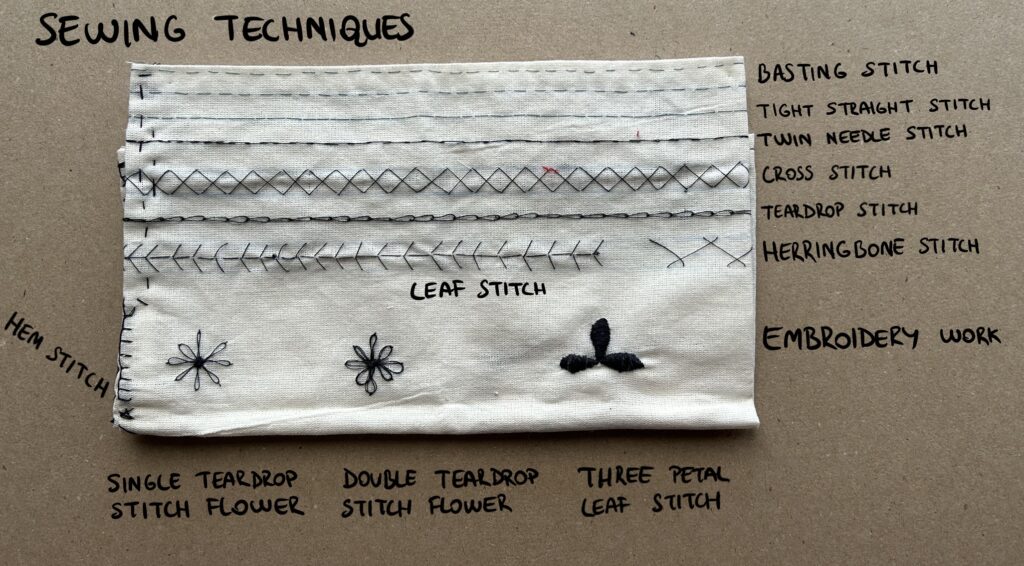
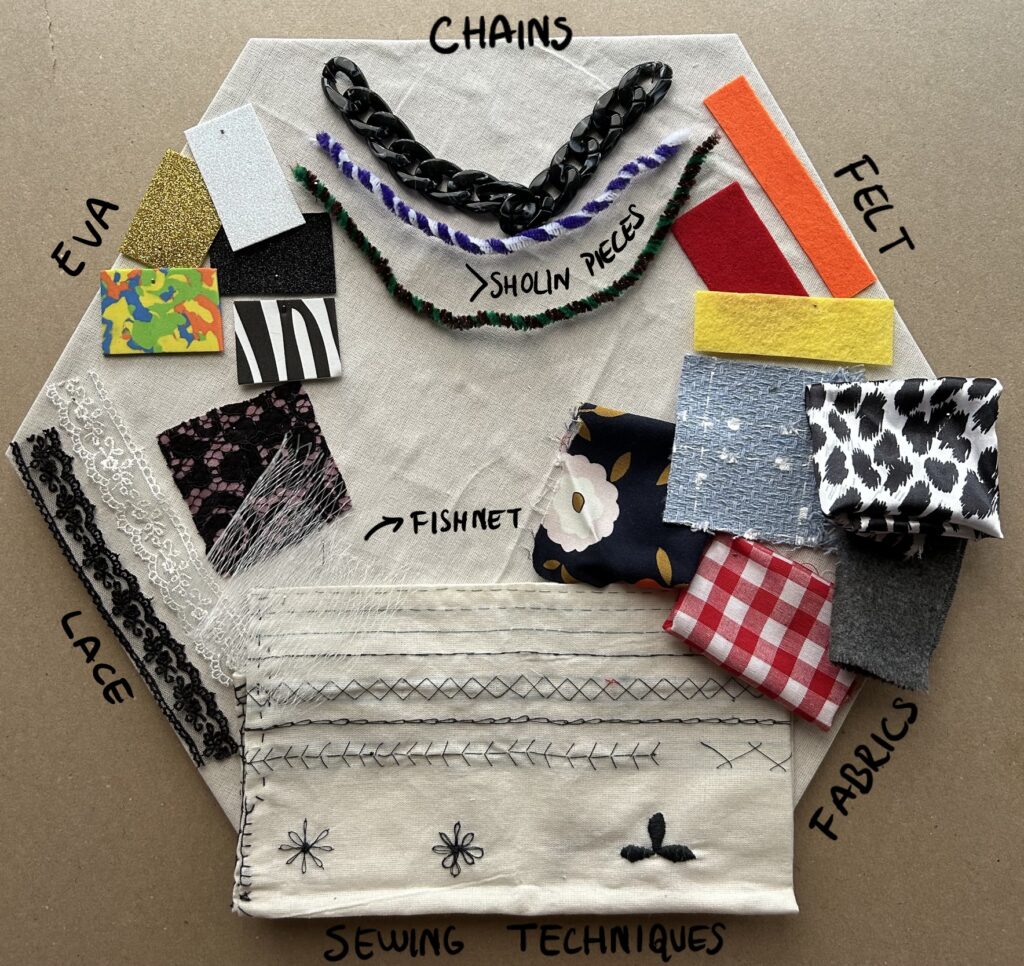
“I created this touchboard by revisiting the materials and techniques I had used in my previous projects. My aim was to combine and explore different types of textures and structures. This included fabrics, EVA, felt, lace, chains, and sholin pieces. When selecting fabrics, I paid attention to texture, elasticity, and yarn structure. I used stretch-printed fabric, cashmere fabric, woven fabric, poplin, and polyester. For a wider variety of fabric and texture samples, I also collected leftover fabric pieces from my school’s workshop room. While working with fabrics, I also explored different types of patterns. To better visualize how the materials would look together, I pinned them onto the board so they can easily be removed and compared side by side. For the lace, I wanted to experiment with various textures, so I combined lace with fabric in one piece and also added a fishnet-like texture. For felt, I focused on textures ranging from soft to hard as well as opacity. With EVA, I explored different surface glosses, shimmers and patterns. Among the chain options, I included a multicolored chain from an unused dress that I found suitable. To create softer textures, I also combined different sholin pieces. In addition, I experimented with different stitching techniques for thread details, which I used to connect fabrics or apply as surface patterns, and incorporated these into my board.”

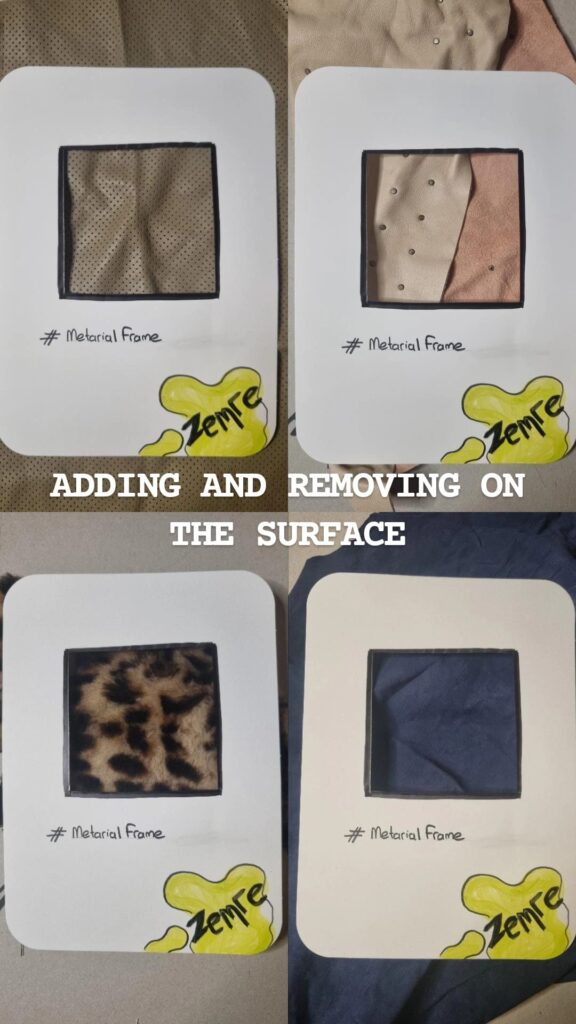
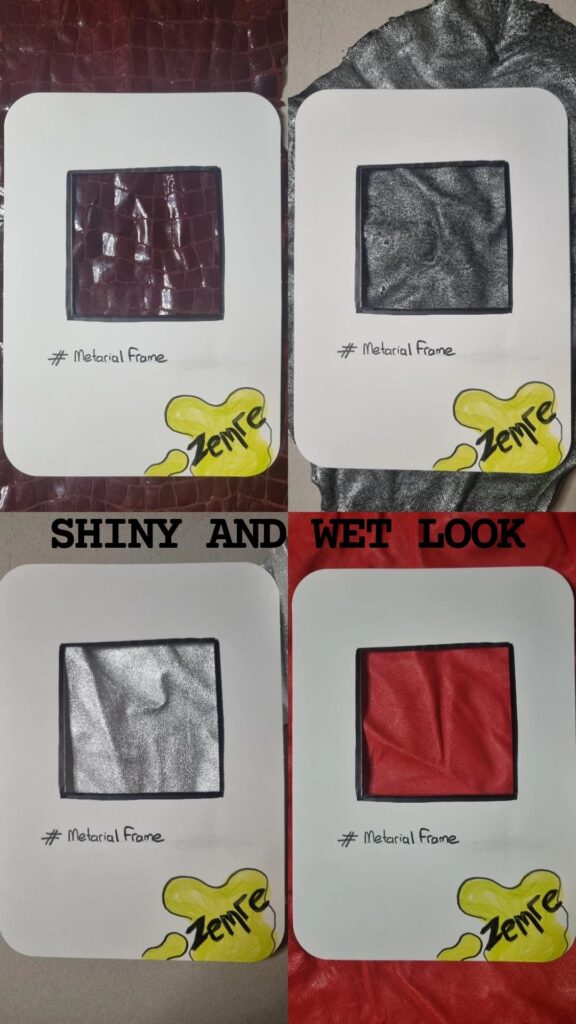

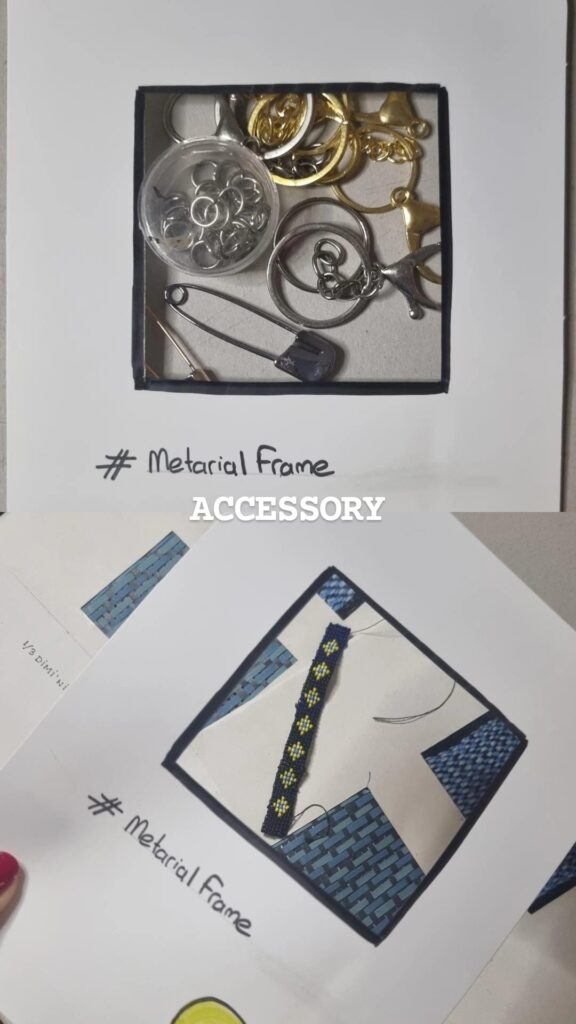
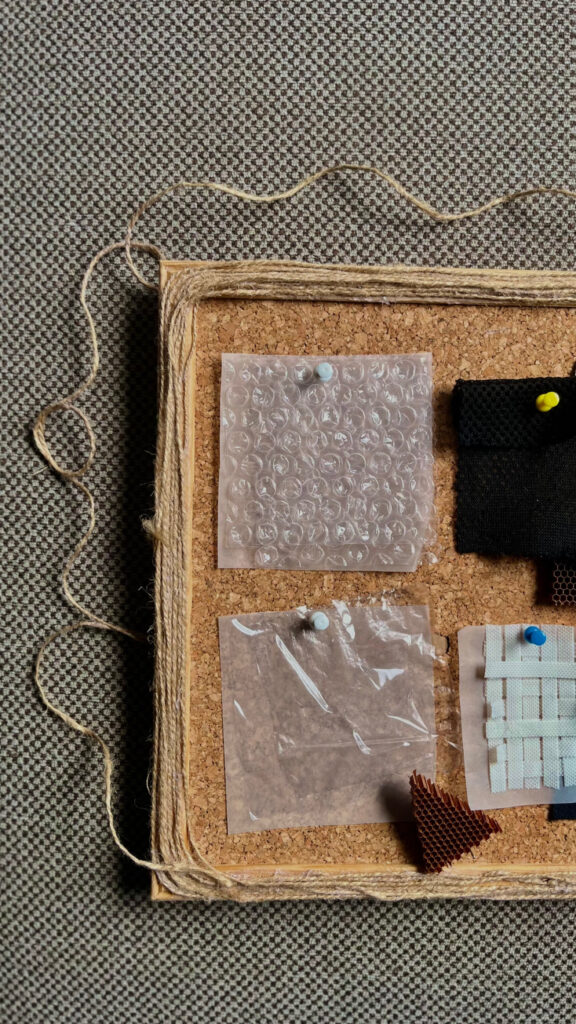
“I designed the material board in the form of a frame, allowing the collected materials from different places to be observed and touched through it. The initial categories I created were divided into shiny surfaces, fragmented surfaces, traditional textures, and accessories.”

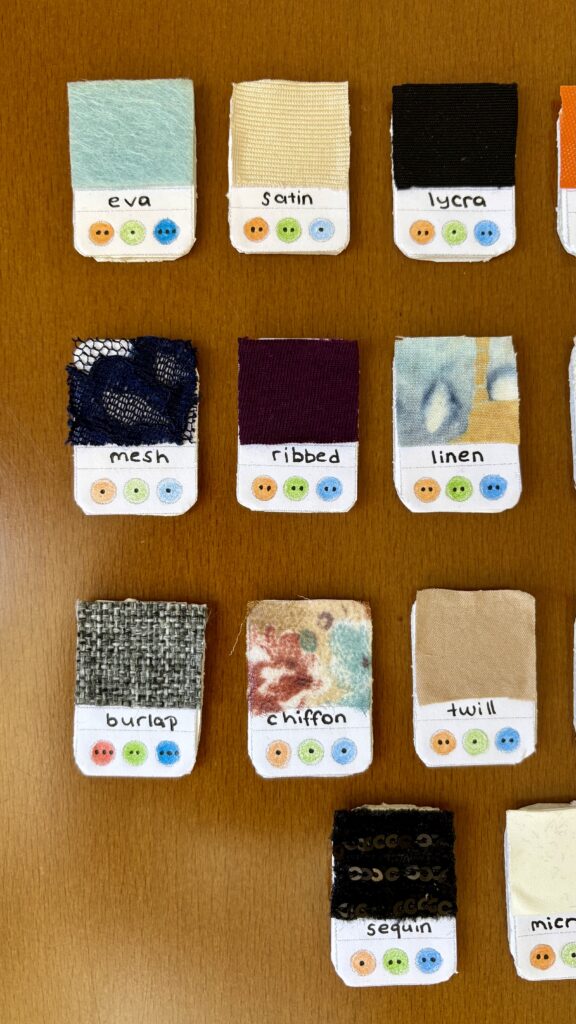
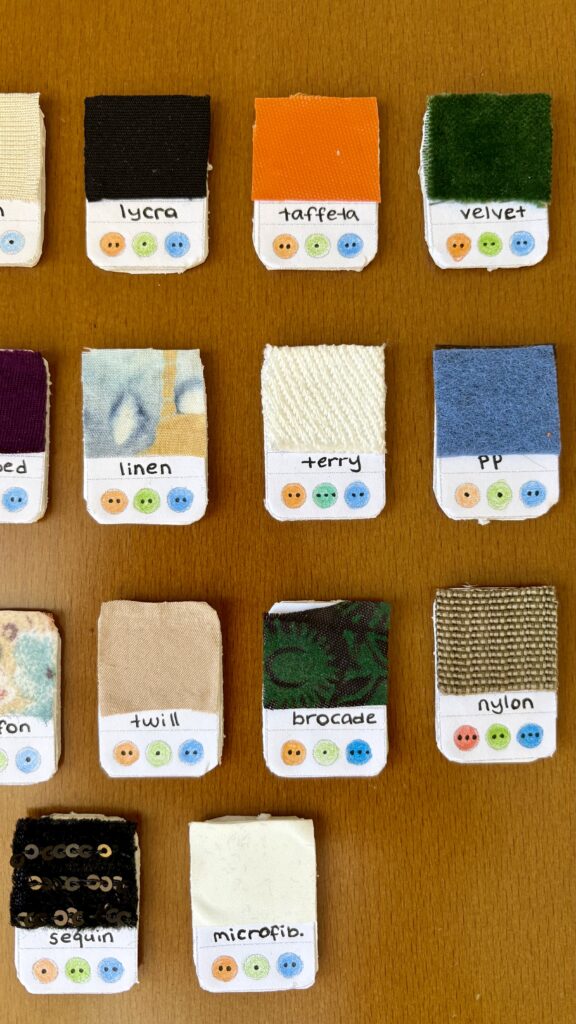

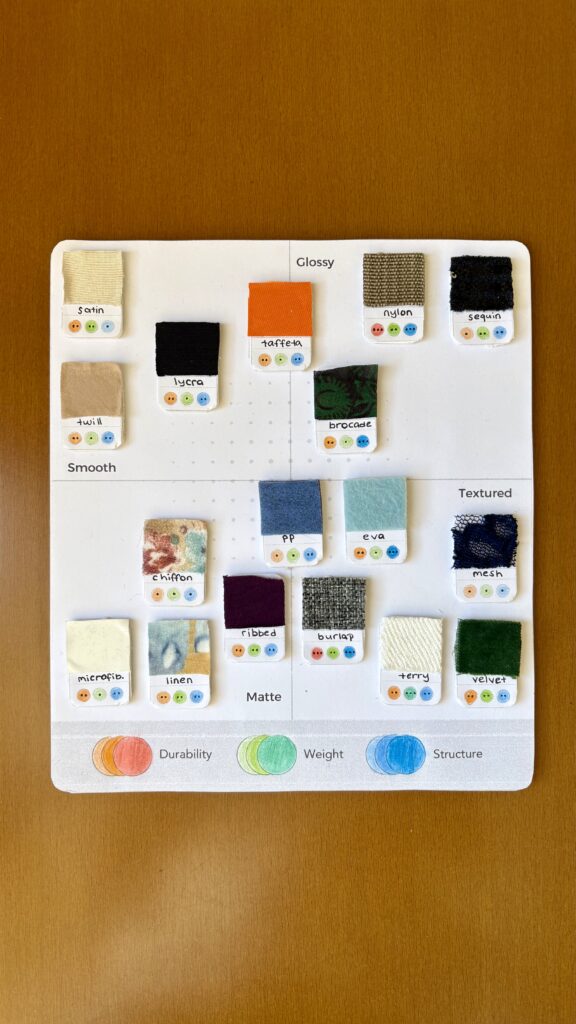
“This material touchboard i created explores the tactile and visual qualities of diverse fabrics while simultaneously evaluating their functional properties for potential use in bag design. The diagram is organized along two main axes: Glossy – Matte on the horizontal and Smooth – Textured on the vertical. This layout allows for a clear comparative reading of how materials behave visually and sensorially. Each fabric sample is labeled with its name and evaluated according to three key criteria: Durability, Weight, and Structure. These criteria are represented with colored button icons, creating a simple and accessible coding system that helps to quickly identify the strengths and weaknesses of each material. For example, nylon webbing scores high in durability and structure, making it ideal for straps, while chiffon is positioned as lightweight and decorative, suited only for accent details.”
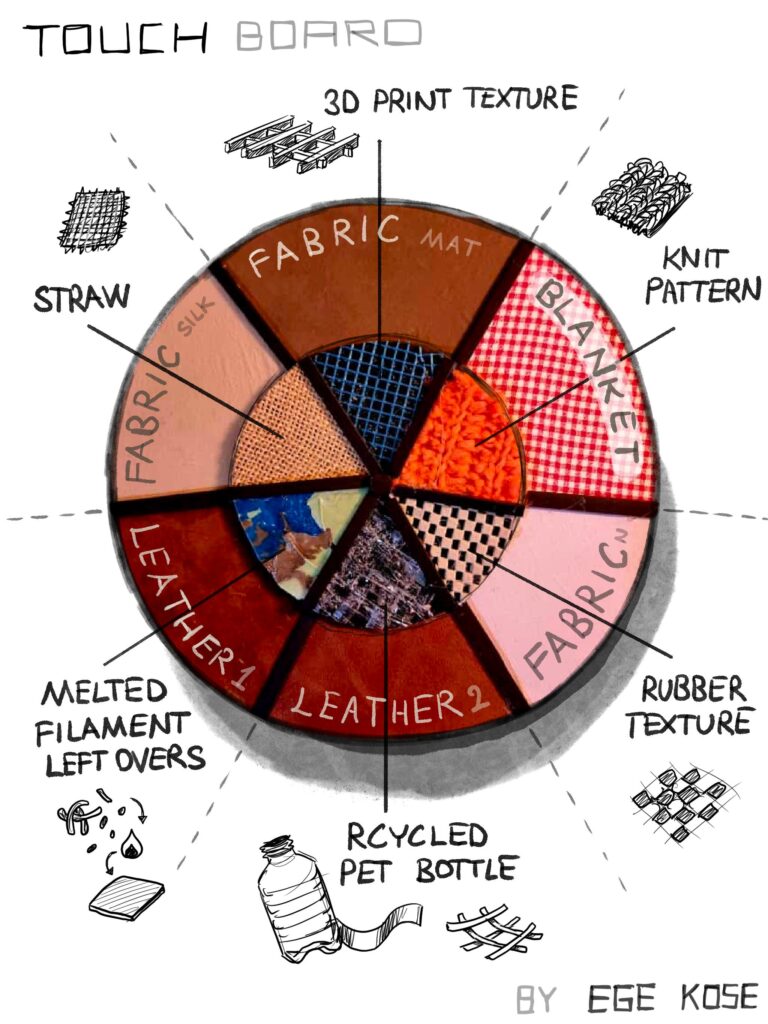
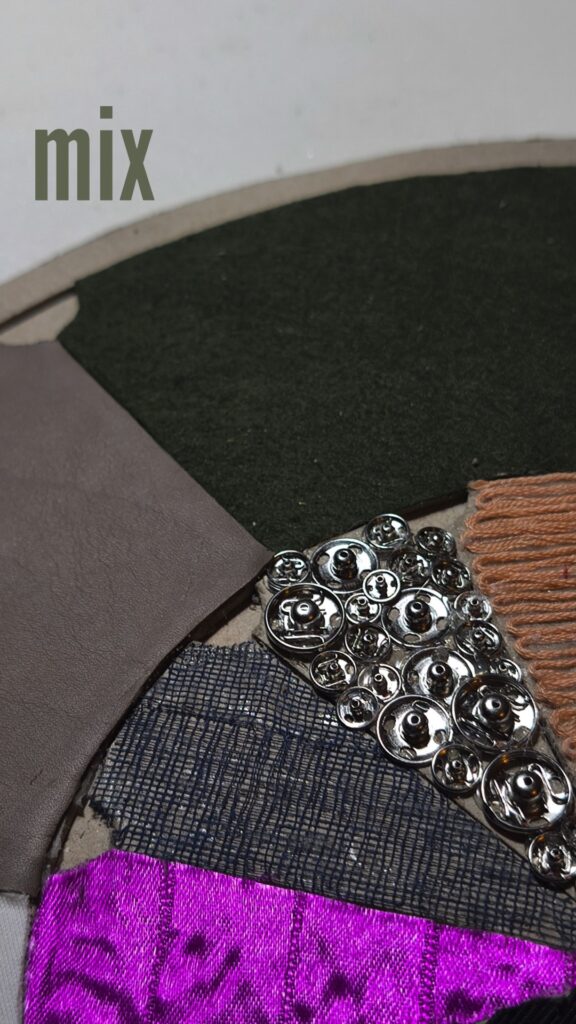
“I tried to create new materials by reusing items I found at home, such as PET water bottles, 3D printed objects, and leftover filaments. I shredded the PET bottles to make PET filaments and then glued them together. For the 3D printed objects, I melted my leftover prints using a hot air gun and then ironed them to make them flat. In this way, I crafted two new materials from what would otherwise be trash. I wanted to explore how these new materials could combine with common materials I found at home. I found some types of fabric, but I wanted more variation, so I visited craft makers in Kadıköy. Some craftsmen gave me leftover leather that they hadn’t used. After collecting the materials, I designed a touchboard to easily visualize every combination. A rotational design allowed me to see all possibilities. I cut two circles of different sizes from cardboard and glued all the materials onto the circles. I preferred placing the common materials on the bottom and the new materials on top to create a new–old fashioned contrast.”
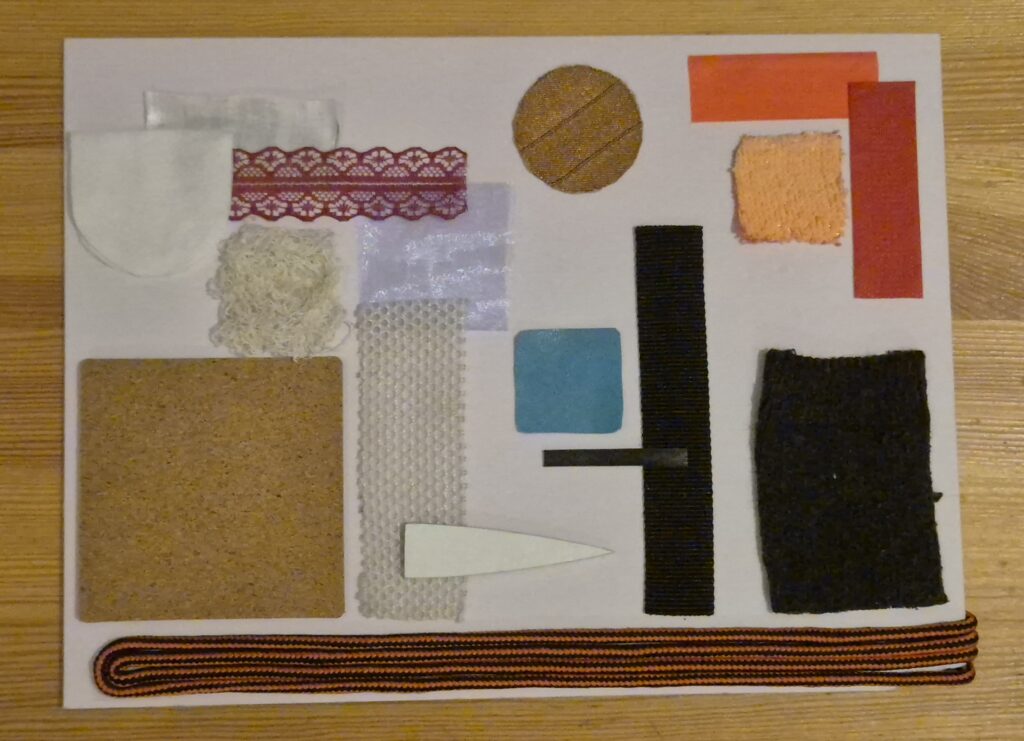

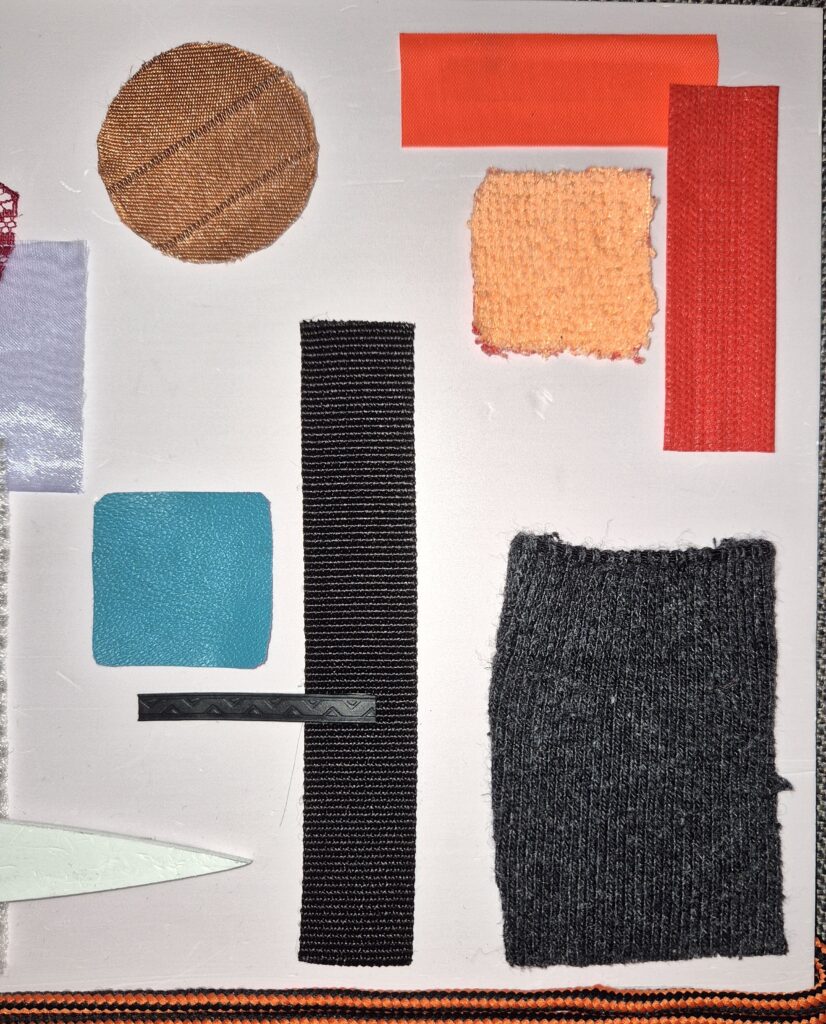
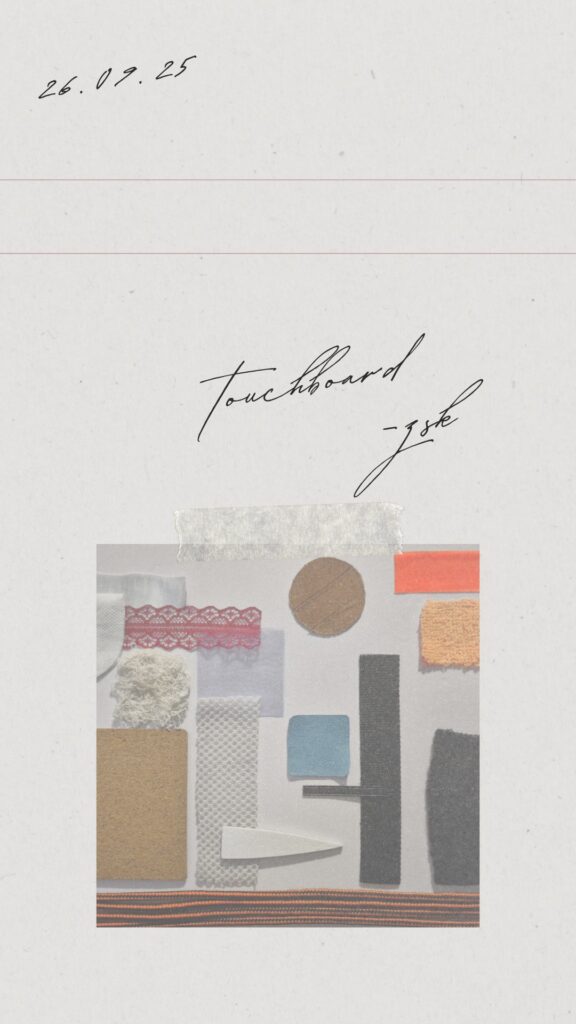
“Touch is frequently the first way that people connect with a bag. Thus, characteristics like surface feel, hardness, flexibility, roughness, or softness have a direct impact on the design’s personality. Three primary categories may be used to evaluate the materials that are on the board. Warm and organic textures are represented by the first group. Cork, felt-like white surfaces, and thread features, for example, enhance the sense of sustainability and naturalness. This part reinforces the bag’s reputation as being accessible and eco-friendly. The textures in the second group inspire refinement and luxury. Velvety texture, satin, lace, and shiny translucent cloth give the consumer a feeling of elegance and quality. These components turn the bag into a fashionable accessory in addition to a useful item. Sporty and practical materials form the third category. Rigid plastic accents, braided straps, and mesh fabric emphasize strength and movement. This guarantees that the design offers comfort and durability for daily usage. These three categories have perceptual, tactile, and functional similarities while being classified differently. As a result, rather than existing as distinct categories, they are positioned along a path where their similarities and differences occasionally converge to form a multifaceted design story.”
“For my touch board I began by exploring what I already had at home. I first focused on fabrics, collecting pieces from different garments such as a soft jersey from an old T shirt, crisp poplin from a shirt, a section of corduroy, and a strip of linen cut from worn trousers. Each fabric offered a different personality, some elastic and flowing, others firm and structured. I observed not only their surface textures but also how they behaved: how they folded, how they caught light, and how well they held their form. Bending, layering, and viewing them under different angles became part of the discovery. As I progressed I realized I did not need to limit myself to textiles. I began adding materials that speak with other senses such as a piece of mosquito net mesh, a length of straw rope, a spare bag handle, EVA foam, a knitted fragment, and even a square of bubble wrap. While searching for a way to present these samples I found a check patterned cloth at home. Its grid inspired me to mount each fragment within its squares. As a student who moves between dorms and travels frequently I am always aware of the need for portability and compact storage. Using fabric instead of a rigid board reflects that reality. The cloth can be folded, packed, and carried easily, turning the touch board itself into an example of adaptable design.”
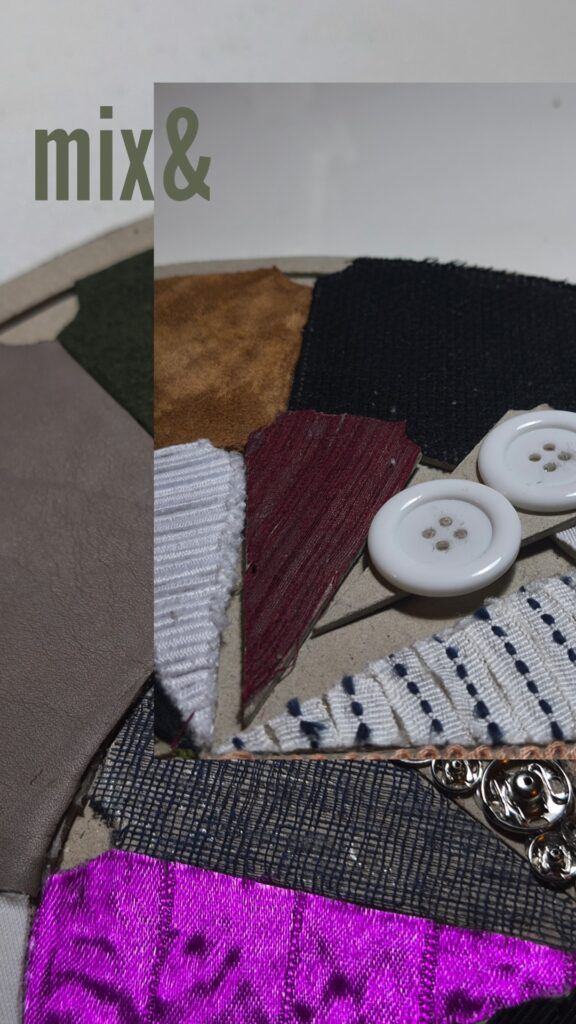
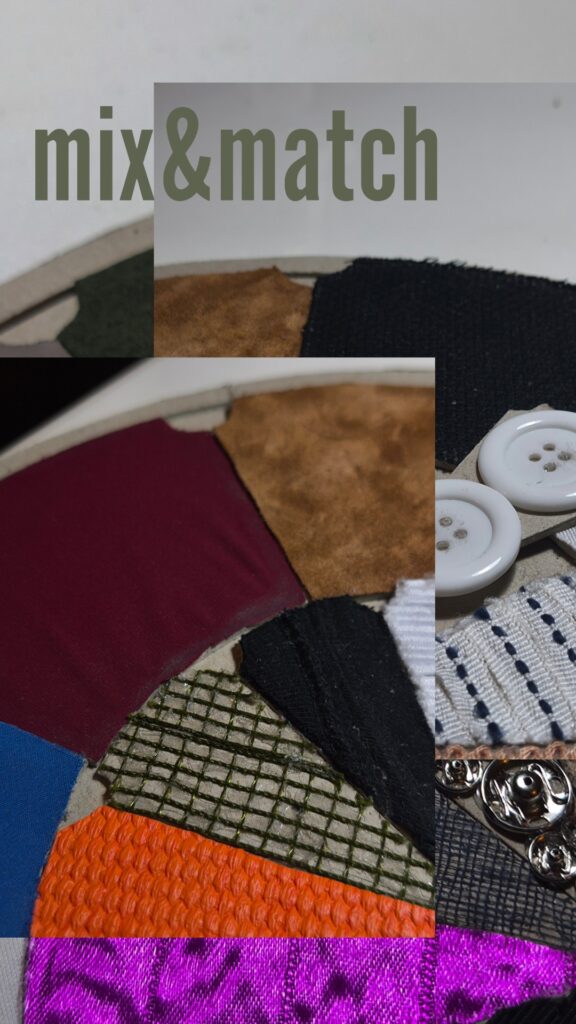
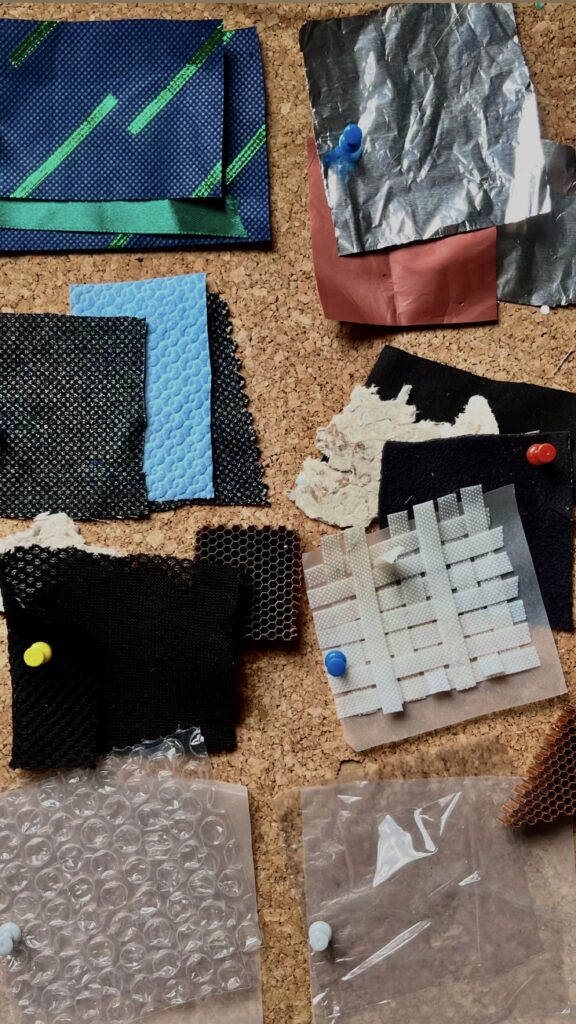
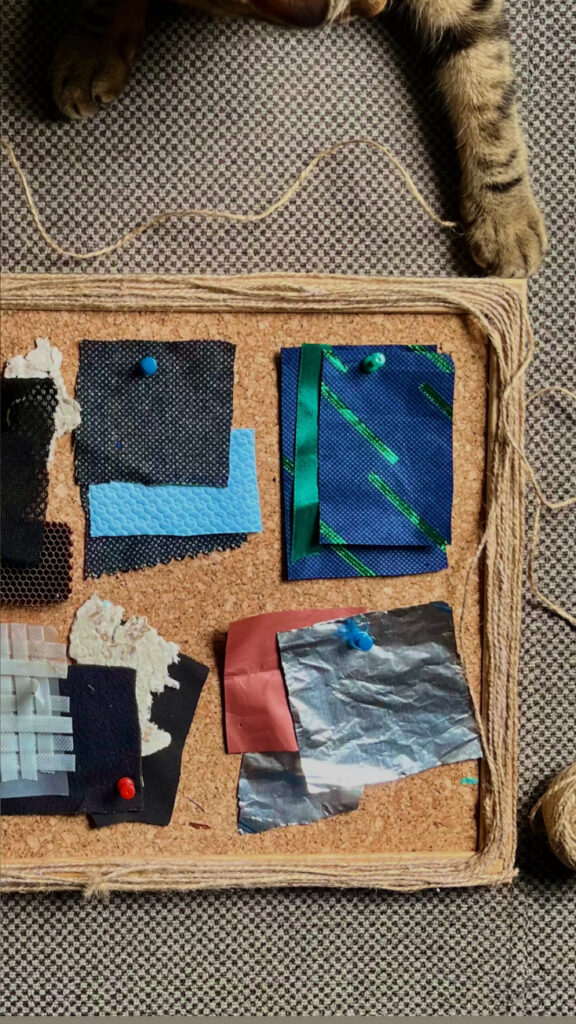
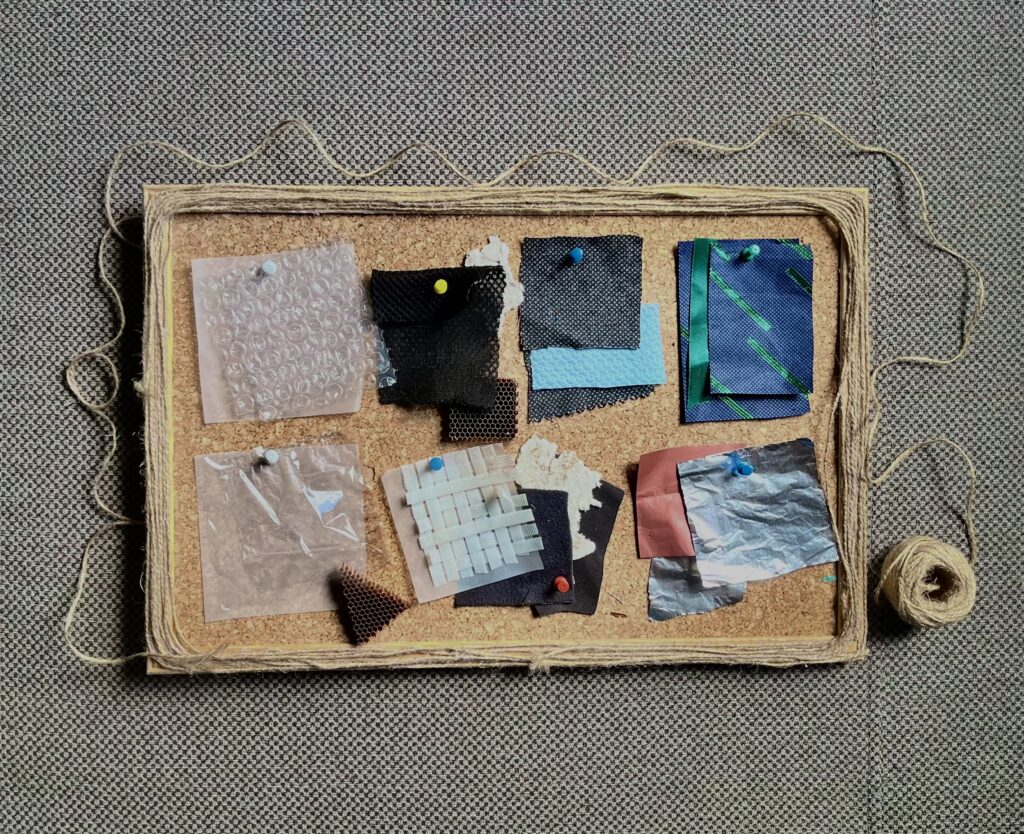
“For my touchboard, I selected materials that stimulate the senses and invite exploration. I began on the far left with fully transparent elements. The idea was not only to explore each material on its own, but also to create a sequence where one sensation naturally leads into the next. So I began by placing Bubble Wrap beside a semi-transparent fabric with a textured surface. This transition continues with a fully opaque fabric of similar texture, to see how light transmission changes our tactile and visual experience of the same structure. Building on the three-dimensional, flexible quality of bubble wrap, I included hexagonal patterned material and ridged adhesive tapes, which amplify the sense of touch through both form and flexibility. To emphasize contrasts, I positioned clear plastic next to a soft plastic bag, encouraging comparison between rigidity, elasticity, and their different sensory effects. I also paired a polar fleece, which evokes warmth, with a smoother fabric, and placed these beside a recycled paper made from waste pulp. This rough, irregular surface introduces the idea of material continuity while also highlighting stark textural opposition. On the far right, I arranged those that primarily engage sight. Moving downward, their metallic sheen and crinkling properties grow stronger, thus also activating the auditory sense. This progression demonstrates how different materials can overlap in their sensory impact, combining vision, touch, and sound in a single interactive board.”


“This material touchboard is a thoughtfully designed tactile tool aimed at exploring and understanding the diverse haptic qualities of materials that could be considered in bag design. It serves as both an educational reference and a creative inspiration for designers, students, and professionals in the field of fashion and accessory development.By incorporating a wide variety of accessible material swatches such as microfiber cloth, cotton, denim, plastic, glittery and reflective surfaces, sandpaper, mesh fabrics, microfiber cloth, and more—the board showcases a comprehensive range of sensory characteristics. These include differences in texture, roughness, smoothness, flexibility, reflectivity, opacity, elasticity, rigidity, weight, and dullness. Each material sample is carefully selected and arranged in individual square texture windows, allowing users to interact directly with and compare the tactile differences.The board is organized to highlight specific material attributes, making it easy to evaluate how each one might influence the aesthetics, functionality, and user experience of a bag. This hands-on sensory tool is invaluable in design development stages, assisting in material selection, user testing, and prototyping. Whether used in academic settings, design studios, or material libraries, the touchboard enhances sensory awareness and supports more informed, human-centered design decisions in bag and accessory creation.”


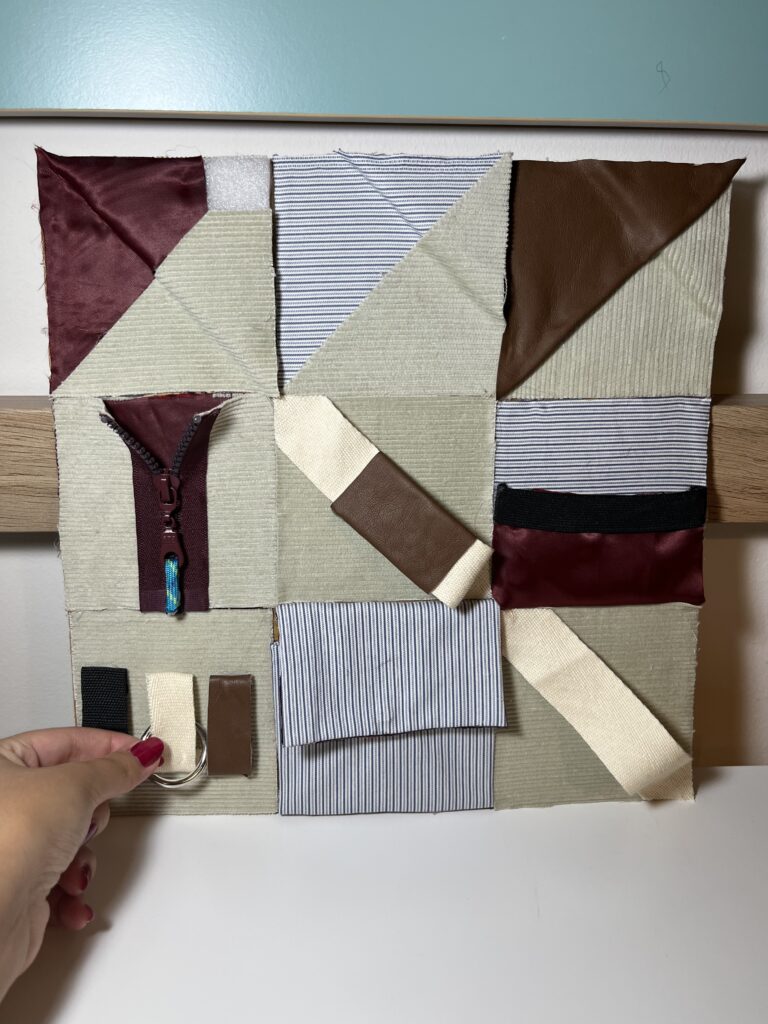


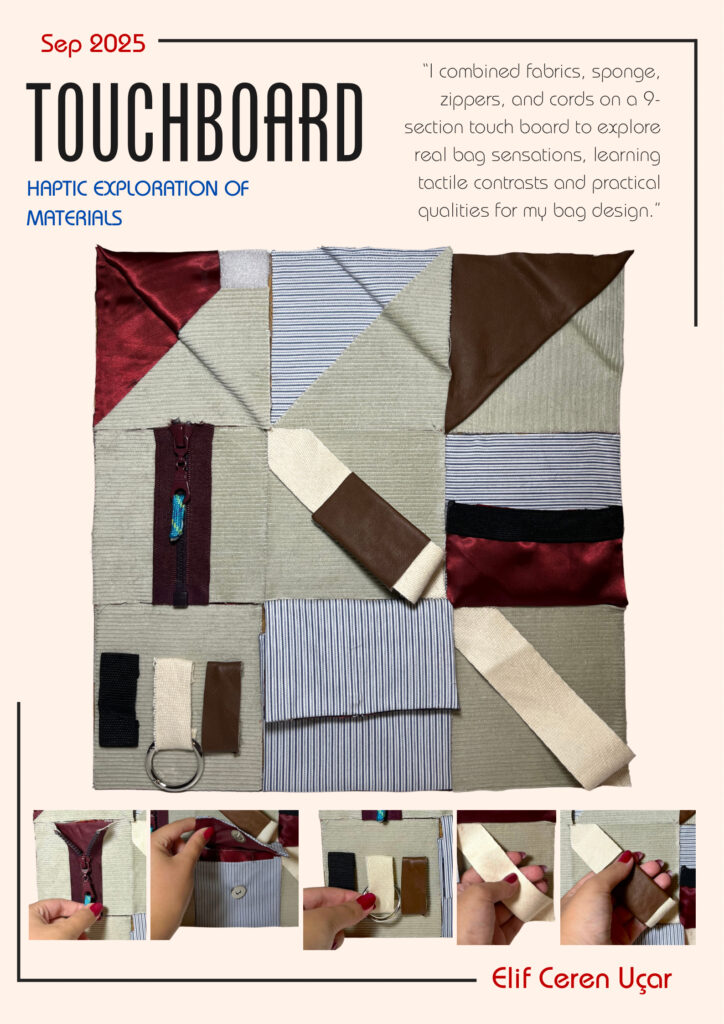
“For this project, I began by looking at my own collection of bags at home, together with those of my family, to understand which ones felt most functional, appealing, or flawed. This analysis guided me toward the tactile qualities I wanted to explore for my own design. I selected four main materials: a stiff yet soft header fabric, a shirting-like woven fabric, a soft nylon lining, and leather for exterior details. To enrich the experiment, I also added sponge, zippers, cotton rope, elastic, and metal accessories. I created a 30 cm square touch board divided into nine equal squares, and in each I combined different textures to simulate the layered experience of using a bag, since in reality we rarely touch only one material at a time. For example, I layered velvet with nylon lining over sponge to test the feeling of a protective laptop compartment, placed a zipper on velvet with lining underneath to recreate the impression of opening a bag, and wrapped cotton rope with leather to test how grip could be improved on a handle. I also experimented with elastic pockets, snaps, and charms attached to strips of nylon, cotton, and leather to observe how small details influence haptic interaction. Beyond contrasting textures, the process taught me which fabrics are easier to cut, which adhesives work better, and how materials behave together. As someone with limited sewing experience, this became an instructive way to evaluate both tactile and construction qualities, directly informing the material choices for my bag design.”

“The feeling materials evoke within us often shape our experience & thinking within a time period. For example, plastics signal a time of efficiency, available goods & neo-liberal world; metal & concrete signal a time after war, with transformed ideas. For my touchboard, I thought about the growth and maturing of the industrial design practice. While mass production of goods is one aspect of our profession; how it transformed us and our human ecosystem is another result of our practice. For this reason, when I went out to search for materials in passages of Ankara, I looked for materials that signified the last stages of modernity: the in-between state of mass consumption and traditional goods. The old-fashioned fabrics I chose were once so trendy before their return in 2020s as vintage disposables. I picked out patches to weave; they awoke in me a sense of layering and an option to repair the product. Repairing; as an act of respect to the makers of the product who are designers and workers; instead of buying new, cheap, disposables. I picked out leather; so that the notebooks wouldn’t get wet through those endless Ankara rains. I put a packaging of Mesir sweets from my hometown with a bright red color and a transparent post-it note, so that local and day-to-day materials would also be a part of it. Finally, the background of the touchboard is a beige open to weave fabric: and underneath it is a cardboard I found at home.”
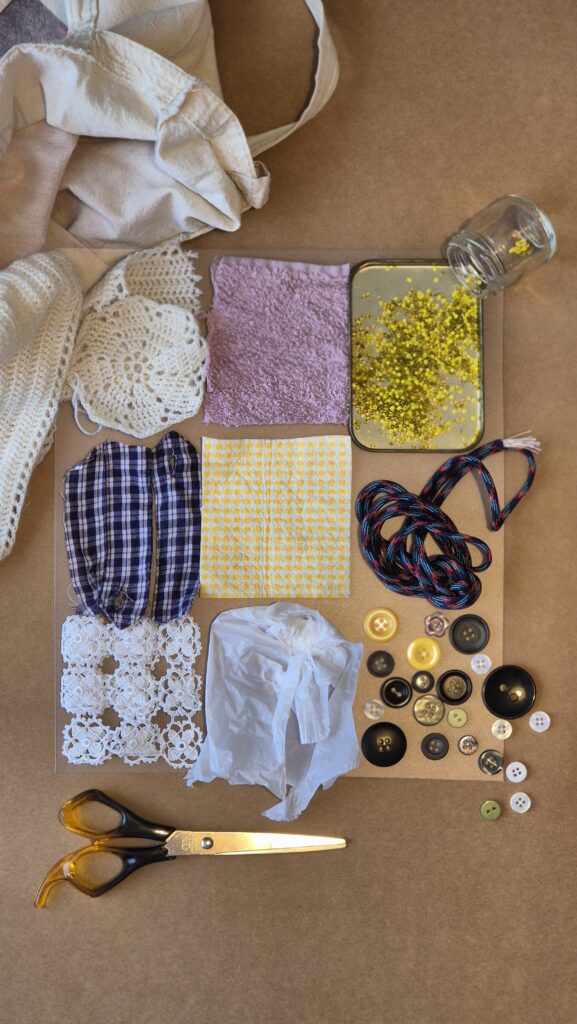

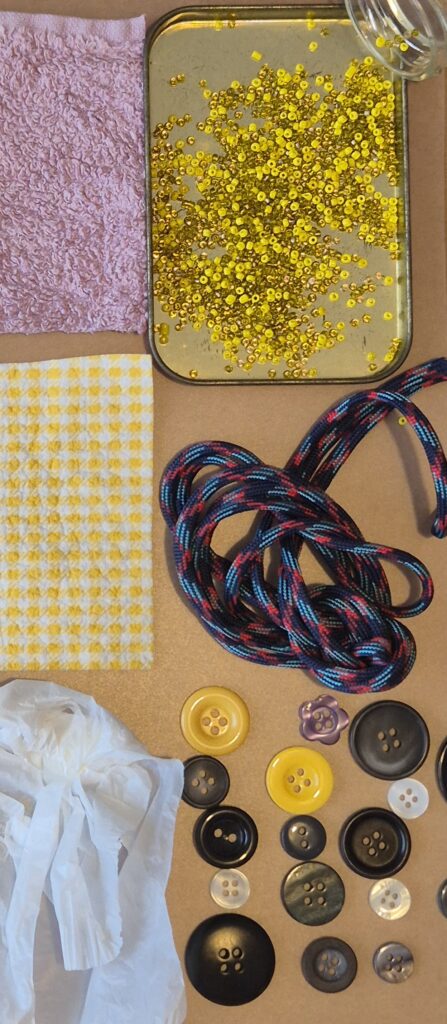
“I created this touchboard solely with the materials that I found at home. I divided the materials into three columns. From left to right, in the first column I sorted all the materials that were leftover from various projects: the yarn consists of scraps left over from my mother’s crochet projects as well as the dantela, while the fabric was salvaged from a shirt I modified. In the second column I gathered an old towel, once used daily in the bathroom, a piece of a cleaning cloth and a piece of a plastic shopping bag. These three led me to question the materials we typically throw away but could instead transform. Besides the core materials, in the third column I tried to find additional textures and details, like buttons and beads, that could be incorporated into the bag’s overall design or used functionally, such as the rope for handles. The touchboard also serves as an exploration of material potential, demonstrating how different fabrics can be manipulated. Some materials accept stitching, while others are better suited for crocheting or forming various knotted shapes.”