Amereida: School, Crossings, and Open City
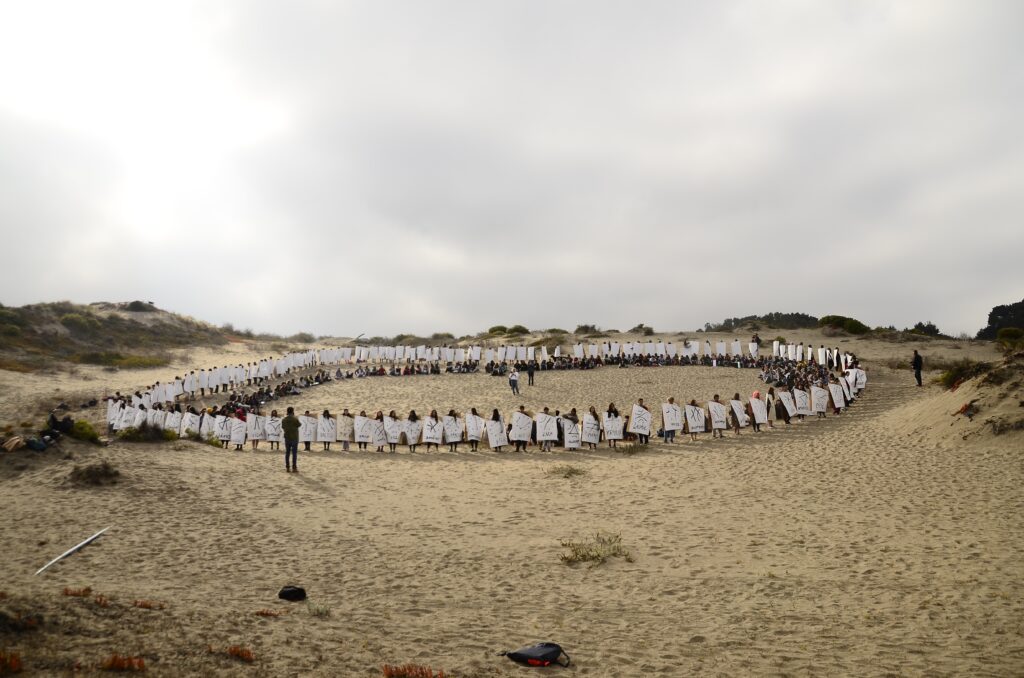
The Escuela de Arquitectura y Diseño (School of Architecture and Design) at the Pontifical Catholic University of Valparaíso, Chile, has based its work on the relationship between the trades or crafts of architecture and design, and poetry. This has resulted in the construction of a vision that has been sustained for some 70 years now, in which the steps leading to an understanding of architecture and design are connected to an aural experience of the poetic word.
Since the school’s founding in 1952, this relationship between poetry and the practices of architecture and design have enabled the development of a complex and reflective look at the intimate singularity of being American and the American’s relationship with the world. In 1965, this gave rise to the first Traversía (crossing), a poetic journey across the South American continent from Tierra del Fuego, Chile, to Santa Cruz de la Sierra, Bolivia, which was taken by the founders of the school and a group of artists, philosophers, poets, and sculptors from different countries. Based on this experience they wrote the visionary poem Amereida, inspired by Virgil’s Aeneid and the explorer Amerigo Vespucci. The poem was written in 1967 and led the group to founding the Ciudad Abierta, the Open City, in 1971.
Amereida evokes the star constellation commonly known as the Southern Cross, the cardinal points of which stand for the origins of America in the Caribbean, the adventure of the Pacific Ocean, an anchor at the South Pole, and the light of the Atlantic Ocean. Within the star constellation, the axes of “our own north” are traced and the relationships that enable us to understand the continent from an original perspective are identified. The Travesía questions the European tradition, “the ancient theft,” of the inland sea of America – as the inland territories of America are called in the poem Amereida –, the Pacific Ocean and present-day life on this continent populated by aboriginals, mestizos, and immigrants – by going out to explore America every year from 1984 to the present day. This has meant having the attitude and the will to step up to whatever occurs in American life.
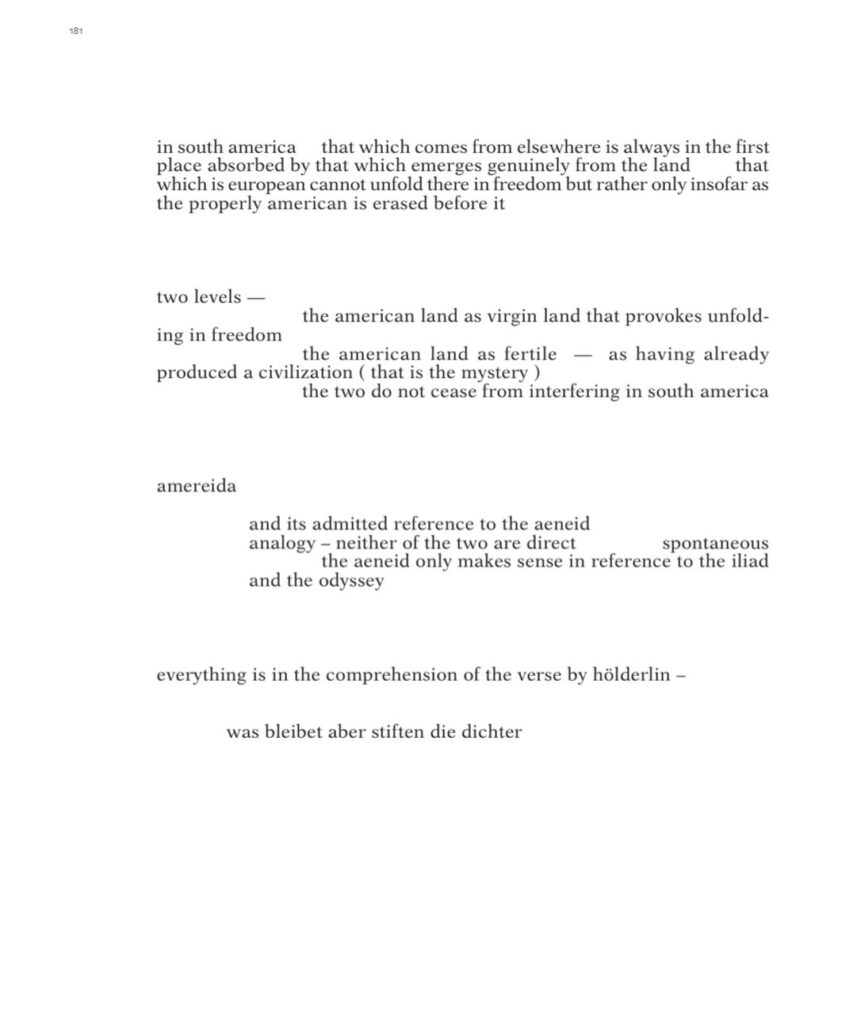
At the School of Architecture and Design, observation is one of the fundamental tools resulting from the link between craft and poetry; it challenges students and teachers to know and understand reality. Observation is studied in an intuitive and profound practice of inquiring into reality which is reflected through the sketch as an abstract freehand drawing or named through a written annotation that describes the qualities and intangible relationships of the place. It is invariably a question of unveiling human acts and their positioning in space.
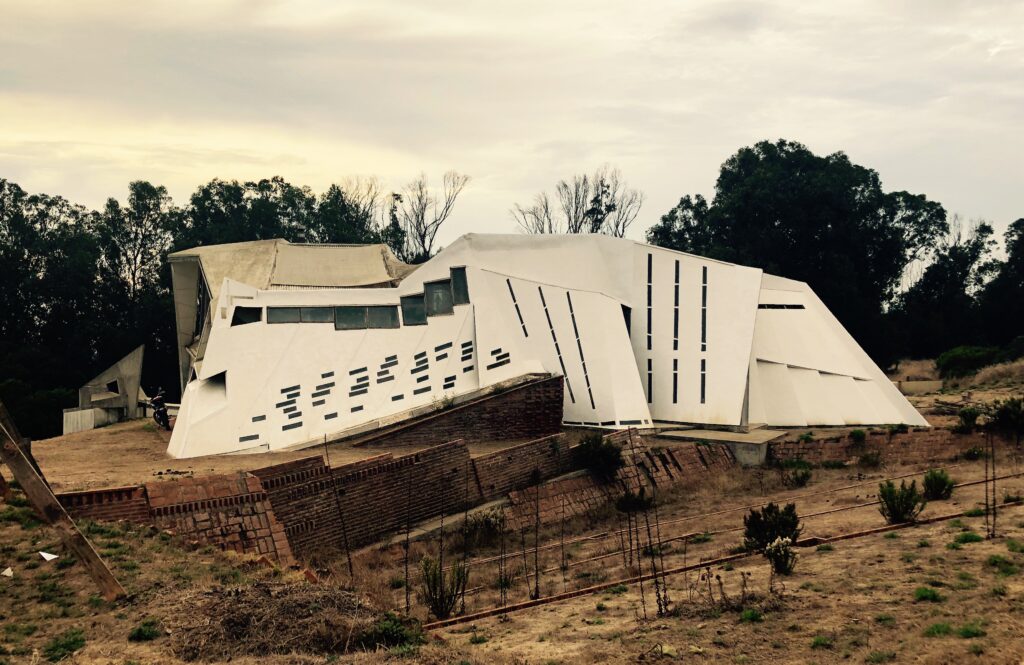
The Open City was founded in 1970 as a collective act in the dunes, meadows, and plateaus of the southern Pacific coast, west of Mount Aconcagua and close to the city of Valparaíso. In the context of his active participation in the Chilean university reform of 1967 and the global clamor of wanting to “change the world,” the poet Godofredo Iommi, the founder of the school, invited us to reorient the university and open up the possibility of realizing this as an ideal space where life, work, and study come together in unison. This signified a tremendous adventure entailing new ways of living, both personally and collectively. The poetic triad (life, work, study) became the horizon of the founding of the Ciudad Abierta, giving it the gift of being the meeting place between poetry and craft in the light of the poem Amereida.
It has meant more than 50 years of permanent work, focused on human habitation, giving tangible form to the act of “hospitality” in the sense of “hearing the other as who he is.”
In the Open City, students, teachers, and the community come together, interacting creatively in pedagogical and artistic fields in close relationship with the natural space that makes up this territory. They give meaning to living in unison with this medium where the work is placed in the light of the poetic word that gives meaning to life.
Since the school’s foundation, its students have participated in creating the works of the Open City through research projects that materialize in works of architecture, design, sculpture, and other visual arts, provoking a constant reflection regarding the living conditions of the human being.
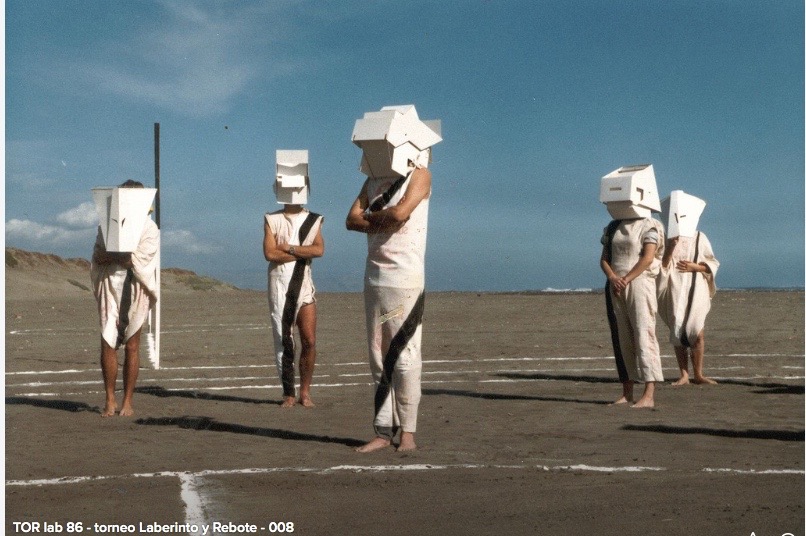
In the arenas of the Ciudad Abierta, life revolves around the idea of “the return to not knowing” (various authors, 1971), meaning suspending or moving away from certainties, from what is justified by the habits accumulated in life. The poets have been part of this collective from the beginnings to the present day, contributing – with their unique way of seeing life – to all the activities of the School of Architecture and Design and the Ciudad Abierta.
They propose the poetic act as a celebration in the form of a game that, in ordinary and colloquial language, finds a key that allows us to recognize the singular, that which is proper and constitutive of that place (Reyes, 2016), in the encounter with the people who participate in the act, configuring their “here and now.”
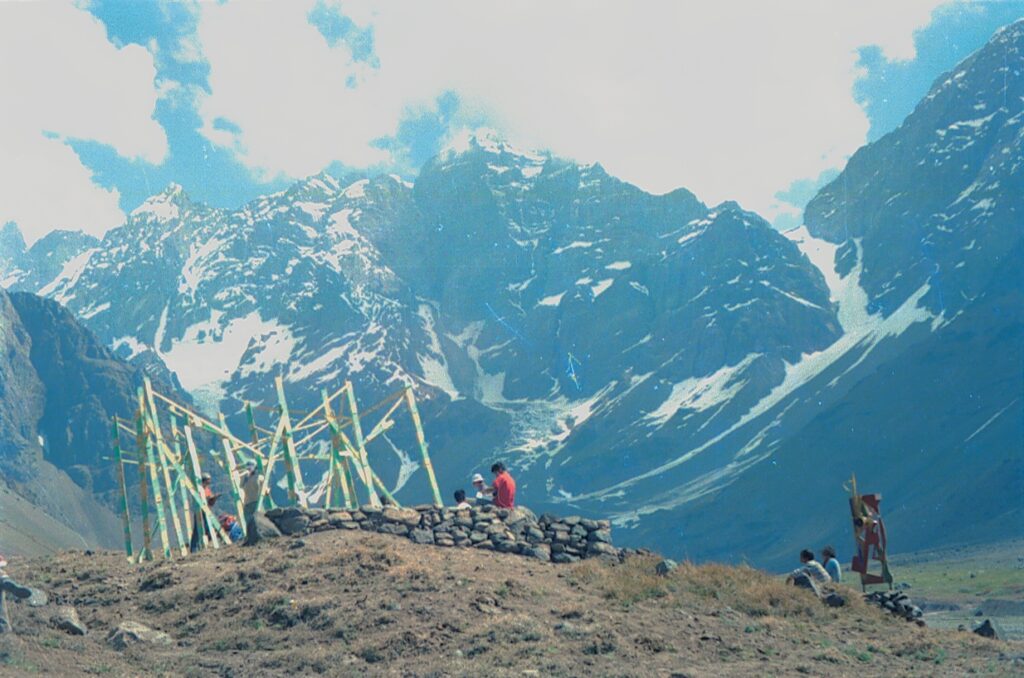
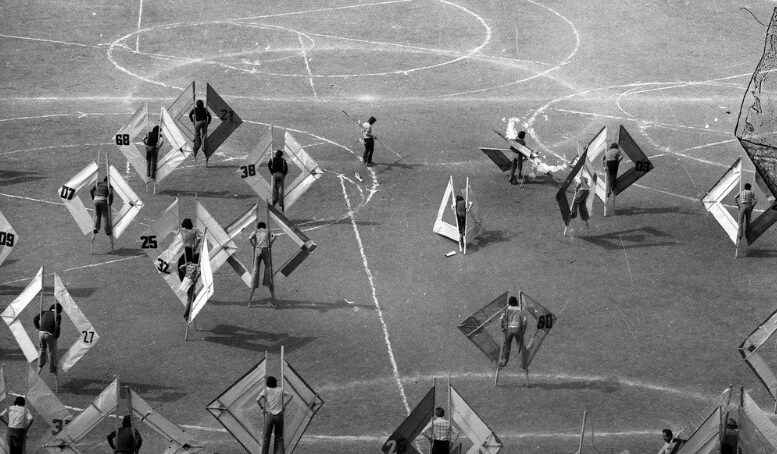
The “playfulness of habit” explores the forms and daily acts of the human being in order to decipher their true meaning through observation. From this origin, their divergent and playful expressions that enable human creativity are explored. This seeks to go beyond function as a utilitarian origin of objects to delve into the mystery of forms as a cultural and transcendent form of expression (Lang). The “playfulness of habit” relates human acts and artefacts to the disciplines of design and architecture through the multiple celebrations, competitions and exhibitions that have taken place throughout the history of this school.
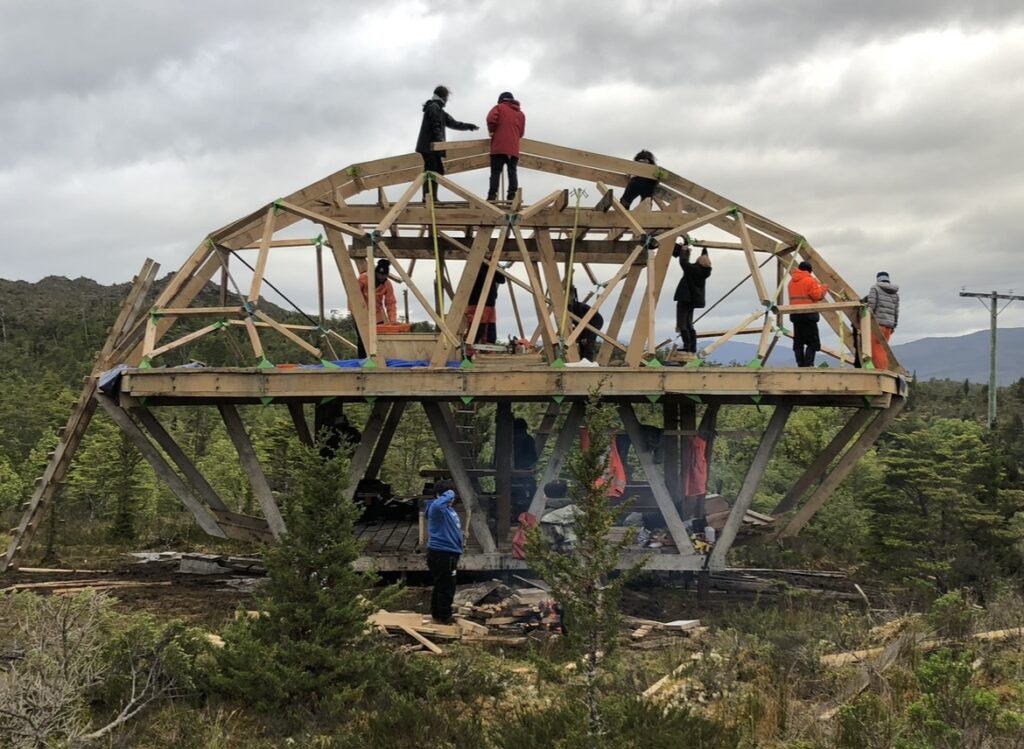
We live in the re-creation of the present understood as a gift. This way of thinking leads to the daily construction of a common sphere of life in the eagerness to exhibit everything that has been made collectively, in which the collective nature of the creative act is preemptive through the different workshops that take place in the School of Architecture and Design and in the Ciudad Abierta.
In the Traversías and in the Ciudad Abierta, the contemplative act of observation is linked to the practical action of building and the poetic action of giving. The educational model of the School of Architecture and Design is structured according to the relationship between these three dimensions, between observation, building, and giving.
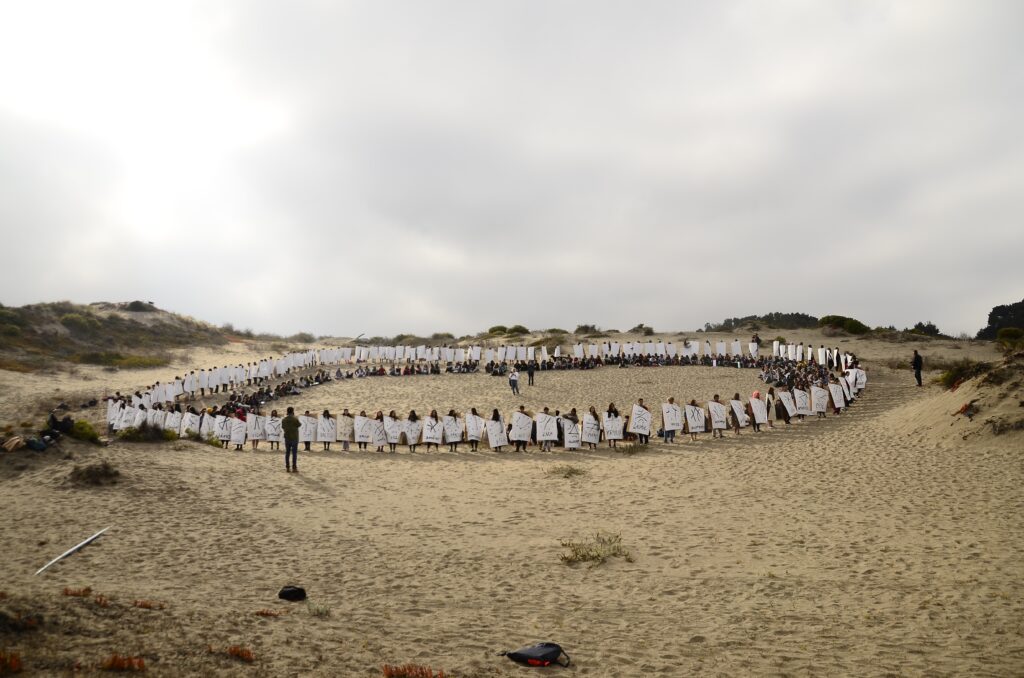
Corporación Cultural Amereida. http://amereida.cl/Ciudad_Abierta
Iommi, G. (1971). Carta del errante; https://wiki.ead.pucv.cl/Carta_del_Errante
Iommi, G. (1971). Voto Propuesto al Senado Académico 1969; https://wiki.ead.pucv.cl/Voto_Propuesto_al_Senado_Acad%C3%A9mico_1969
Iommi, G. et al. (1967). Amereida, Volume I, edited cooperatively by Lambda (https://wiki.ead.pucv.cl/Amereida) and the Escuela de Arquitectura y Diseño de la Pontificia Universidad Católica de Valparaíso, Chile (https://www.ead.pucv.cl)
Lang, R. Taller de la diversión del hábito. https://wiki.ead.pucv.cl/Taller_de_la_Diversi%C3%B3n_del_H%C3%A1bito
Reyes, J. (2016). Atajo de Amereida; https://wiki.ead.pucv.cl/El_atajo_de_amereida
Travesías de Amereida; https://www.ead.pucv.cl/experiencia/travesias/
Various authors (1971). Apertura de terrenos; https://www.ead.pucv.cl/1971/apertura-de-los-terrenos/
Andrés Garcés Alzamora is a Doctor of Architecture with 29 years of professional architectural and teaching practice. He is a professor at the School of Architecture and Design at the Pontificia Universidad Católica de Valparaíso (PUCV) and a member (since 1994) and former president of the Corporación Cultural Amereida – Ciudad Abierta (Amereida Cultural Corporation – Open City). He was previously head of the Department of Architecture and Urbanism Projects of the PUCV’s School of Architecture and Design where he was in charge of large-scale projects contributing to the development of public assets in Chile. ——- Katherine Exss Cid is a designer from the School of Architecture and Design (EAD) at the Pontificia Universidad Católica de Valparaíso (PUCV), Chile. She received her Master of Arts degree in Information Design from the University of Reading, UK, and now is a PhD candidate in Architecture and Urbanism at the Universidad del Bío Bío, Chile. Currently she is on a research visit to UC Berkeley, USA. —— David Luza Cornejo is an architect from the Pontifical Catholic University of Valparaíso (PUCV). He has gained a doctorate in Architecture from the Universitat Politècnica de Catalunya Barcelona. The title of his thesis from 2013 is The constitution of the common extension of the Open City. He is a professor at the School of Architecture and Design (EAD) of the PUCV. Since 2022, he has been Director of the Observatorio Regional de Desarrollo Urbano Sostenible (Regional observatory for sustainable urban development) of the same university. ——- Rodrigo Saavedra Venegas is a tenured professor at the School of Architecture and Design of the Pontificia Universidad Católica de Valparaíso (EAD-PUCV), from which he himself graduated as an architect. He gained his doctorate from the Universitat Politècnica de Catalunya (UPC) Barcelona in Spain with a thesis written in the framework of the Architectural Projects Program of the Escola Tècnica Superior d’Arquitectura de Barcelona (ETSAB).