"We are really fortunate to hold our sessions on the original BMC campus"
In autumn 2015, a group of creative thinkers gathered at the site of the former Black Mountain College (BMC), the legendary school of free-thinking and non-hierarchical learning that fostered the careers of personalities like John Cage and Merce Cunningham. They decided to set up a program that would tie in with the ideals of the historic school.
The School of the Alternative (SotA), an educational and community experiment, has existed since 2016 offering more opportunities to think, create, and act together than other schools. Instead of traditional classes, the campus supports a collectively developed, self-directed learning approach that provides opportunities for all participants to learn and teach. Courses take place on the original Black Mountain College campus and are held each summer. They draw on the legacy of previous alternative schools and seek to set the stage for a modern community of pioneers, artists, and critical thinkers.
Katja Klaus asked Heidi to answer her questions and share her thoughts …

In a post on Instagram from May 11, 2023, you write: „Nothing nourishes quite like living in a community where shared knowledge is a practice we all participate in.” What do you understand by a new community?
I think of a new kind of community as a world-building space, one that collectively models the sort of world we long for. A new community should be imaginative, open, caring, adaptive. I want to use the words of one of our other Board Members/facilitators here, Maria Judice. She has spoken so beautifully of the type of space we create, what our new community feels like.
“At SotA I can journey off into the unknown, find adventure, and wonder. In the everyday world, there is so much noise and fear, but in Black Mountain, I am encouraged to do my work – to gain my knowledge of self.
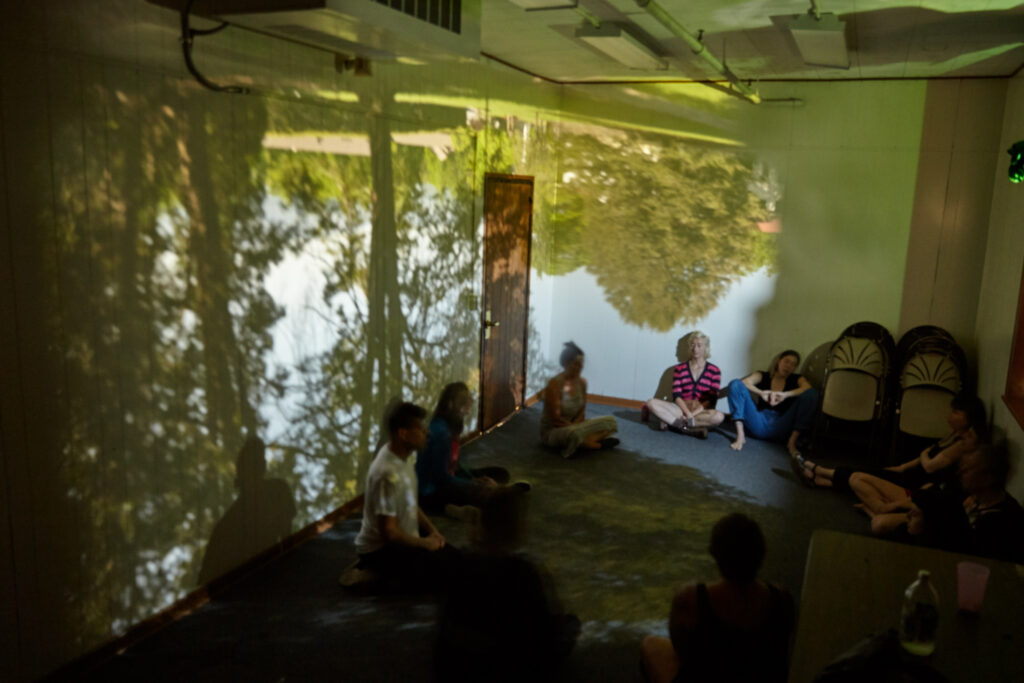
I return to SotA to attune my heart to the essential sounds. I know I am not alone. Every year I sit in silence with other participants while the trees, the wind, and the ancestors guide us. Returning is no small thing … I believe I am making a huge shift in the world simply by showing up. I am co-creating with a beautiful circle and making a world of my vision. This is the work. This is radical action. This is how my protest looks – building, revitalizing, restoring, and expanding thoughts and understanding.”
What community practices underpin your work, the vision of your school?
Thank you for asking this. From the beginning we have had a solid structure for our programming, our class types, what a day looks like, etc., but our community practices are where we have grown the most and into which we poured a lot of energy.
The way we host people is so crucial to this work. It’s crucial to folks feeling safe here, to us limiting harm, and to creating trust and solid community bonds. It’s vital to creating a space where folks are free to explore and share. For us that means a lot of preventative practices and deep, intentional care while in session.
We have a community agreement: a living, breathing document that we read at the top of each week and that we send to folks prior to arrival. We encourage editing sessions where we look at the agreement together and make updates and changes to ensure that everyone feels considered within this agreement. These editing meetings have happened several times both during and between our sessions, both with our facilitators and with various participants. We also have a point person system at SotA: Leaders in the community cover a small group of folks (12 to 15), guiding them through orientation on the first night, and the group then has dinner together mid-week as a way of checking in. Point people are in continual communication with each other to ensure folks are cared for within our capacities. We added a really crucial position a few years ago, one we’ve been dreaming of for years. We now have an on-site mental health staff person, a licensed therapist, who is at our sessions to offer support if and when folks need it. We also have some protocols and processes for living in conflict and ways to work through those moments with care for everyone involved, knowing that conflict can be generative, too. We are really continually nourishing this part of our work because we know this is a huge part of our responsibility as folks who are vocally offering a safe(r) space.
At which moments do you reach your personal limits in terms of community living?
I miss it so much when we’re not in session. Community living feeds me (and all of us) in ways that I haven’t been able to replicate in my day-to-day life. I think this is a huge advantage to our programming being just a few weeks every year: I really don’t reach my limit. I leave wanting more. I can definitely feel closer to burning out if things have been especially intense or during years in which we had less on-site facilitators, but in reality, when we have a full team of folks on the ground helping tend the container, it honestly just feels good to be in our community the entire time, even when it’s imperfect or hard.
What made you take on this task, the responsibility for this school?
My role at the school didn’t start as director but as we grew, I took on more. I have a pretty high capacity for labor, and I saw the impact that the work was having on others and on myself. I do take on a lot of the logistical labor, but the school is really upheld by all of us, everyone who attends. I have both felt and seen the impact, and I continue with this responsibility as long as I have this capacity because I think it’s important for spaces like this (of which there are so many other than us) to exist.
This is work that feels important to me, my values, and the kind of world I want to help cultivate. It’s hopeful. I need that, we need that to exist and help create spaces where we can have respite from a world that is continually trying to bring us down, to exist in a community free from traditional forms of hierarchy, individualism, and competition. It is a needed balm.
I feel really grateful that my path has led me to this work. As hard as it can be, I also think that SotA can be a sort of container for hope and can help us see and shape not only this one experience we share, but our communities back home.

Who studies and who teaches at your school?
I hesitate to be too specific here, because really we hope for SotA to be a space that isn’t just for one kind of person. Historically, this programming has appealed to folks who have felt restricted by traditional institutions and who want a space to explore educational ideas outside of academia. Folks who are curious and want to live collectively in a space that prioritizes care.
Other than being over 18, there are no prerequisites for studying or teaching at SotA. We are lucky to have had a huge range of participants in terms of place of origin, age, education, race, class, experience, and more. But our intentions are always to open our doors wider as we grow. Our recruitment work revolves around broadening the range of people who study and teach at SotA. Currently, the demographics of SotA skew towards white queer folks and people with higher-education, who live in large US cities. We hope to continue our journey towards radical accessibility by creating space for Black people and other people of color as well as folks living in rural places. We fundraise towards making SotA more equitable and accessible by offering numerous scholarships, including our Black Equity Scholarships, and by being intentional about membership on our Board and Advisory Committee.
Have you had positive experiences with schools and learning in your life?
I’ve always worked best with projects that are self-directed or collaborative instead of steeped in hierarchy. I’ve had positive and negative experiences with schooling. I’ve had teachers who really encouraged and nourished my learning style and skillset, but I also really struggled in school overall. I got in trouble a lot, I talked a lot in class, I’ve never been super great with authority figures. I had a few professors in college who really encouraged me, and I don’t want to discount that, but overall I really struggled and was happy when it was over, to be honest. I also have ADHD, and I always really struggled with how to adapt my learning style to a traditional classroom.
I think some of my best, generative times in traditional schooling were studio art classes in college. I studied graphic design, and being in the studio with the other folks in my program, talking through each other’s work and problem solving together was what aligned most with my growth as a student. Although critiques could be brutal. I think fear is used as a tool a lot in schooling, and the program I was in required a review for entry a few years in, and that was really hard for me. My anxiety was through the roof, and I didn’t have the tools to manage it. The traditional hierarchies in institutions were always really tough for me, and I pushed up against them to a degree that was probably prohibitive to my experience.
What drew me to this work is the opportunity to create a learning environment where space is made for all types of learners and where everyone’s input helps shape the experience. This radical non-hierarchical setup has affected every aspect of my life outside of SotA, too.
I’ve always been a super curious person. I’ve always been a reader and a person who asks a lot of questions, and I am really amped up by the exciting prospect of being a lifelong learner. I think SotA has amplified this, too. One big lesson I have taken away from SotA is that there is just truly no value to resource hoarding or being a knowledge guardian. The world is so competitive that I think a lot of folks tend to hoard their knowledge but the kind of world I want to live in and the kind of world we try to enact at SotA is one that values the great power in sharing what you know.

Can you describe the impact that the surrounding landscape has on your community and on your learning experience?
There is magic in this place. There is incredible history and beauty and palpable energy in Black Mountain, specifically on the campus that we inhabit, that’s really hard for me to put into words. It’s also nice that we’re nestled in the woods, providing a sort of escape that I think is an appeal for a lot of people. The ability to tuck into the woods alone or with others is just something that you can’t simulate. Perhaps most importantly, though, we’re accessible to radical folks in the American South who want to attend programs similar to ours but might not be in a place where they can travel extensively to get to one.
What happens on the site outside of your summer course?
The campus we are on is a YMCA event space, it actually has been since its inception, even when Black Mountain College was there – so they were also renting space from the organization we rent space from. They have year-round conferences and events from a variety of groups and host camps in the summer. We meet every year in May because it’s their least busy time of year. We hope to always be one of the few groups on campus when we’re there so we can really roam freely and use the entire space, and maintain our container as much as possible.
Under what conditions would it be conceivable for you to change to a year-round operation?
This really isn’t doable for us and would really greatly exceed our capacity. Right now our program is fully self-funded, meaning tuition (which we keep as low as possible) fully funds our essential needs, and any additional cost is sustained through small fundraising efforts. We would need major funding to buy land, pay ourselves a living wage, etc. And ultimately, I think SotA can still offer what we hope to offer with short sessions, so right now our focus is on keeping this project alive and nourishing its growth in other ways.
I’ve learned to frame growth outside of a capitalist mindset, and for us, growth means creating more access and sustainability There are still so many folks who can’t access our programming who want to (even with a full scholarship, getting money to travel here, time away from work and other obligations, etc., it is tough for so many). What would it look like for us to get those folks here? What would that take? How can our community and our facilitators feel supported in this work so that it can sustain? Those are the big growth questions swimming in my brain.
Ultimately I think this program existing is more vital than this program getting bigger. I also want to consider our internal collective and prioritizing space for rest and recharge alongside the sometimes grueling work of making this thing happen.
I do think it would be great to do a session in the fall as well as the spring, we’ve flirted with that, but the reality is we’re just making it financially as is, fundraising is hard (and newish) for us. Maybe one day! But beyond that, I don’t think something like a year-round operation is our path.
Is there any kind of curriculum for your school and the summer courses?
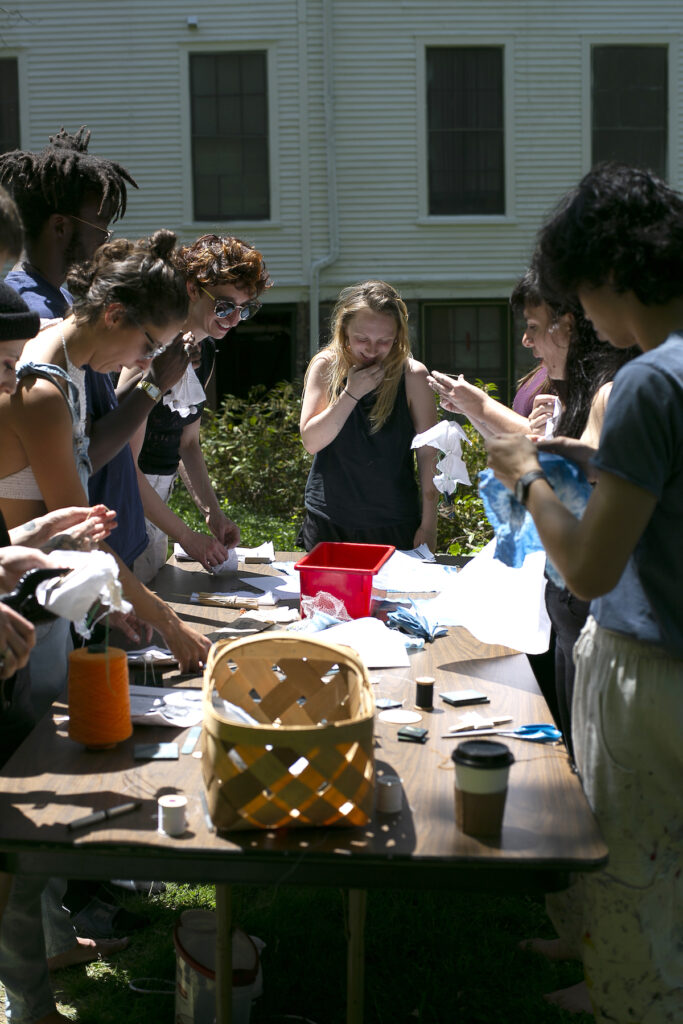
No, we don’t have a set curriculum. We hope to respond directly to our community, to the collective community, so each year our curriculum looks different and is determined by the radical folks who apply to teach. We put out a call for applications each fall, and anyone can apply – there are no prerequisites or requirements. Then, a group from our community reviews the applications, and lastly, myself and my right-hand-person/co-creator/Board Member Nelle Dunlap will create a balanced curriculum from the top applicants’ courses. Normally we work to have a balance of things like making/thinking, introspective content vs more playful content, etc. This year, we had less “making” applications and more class proposals that aimed to hold space for processing what’s happening in the world which looked like a lot more writing this year and a lot less making. And I think that’s what people needed at this time, so for us keeping the call pretty open hopefully creates space for us to meet the needs of the time by design.
Why did you change your school’s name from “Black Mountain School” to “School of the Alternative”?
A larger institution had the rights for educational use of the phrase “black mountain.” We fought it, but lost. Our original founders were very tied to the name and really wanted to keep it. The inspiration that Black Mountain College offered to the inception of this project was important to them, which I understand. There was a silver lining to losing the name, though, and to be honest, maybe even a drop of relief. It was a lot to carry that weight, and in reality, while we are inspired by Black Mountain College and its legacy, we are doing our own thing; we are now responding to the very different needs of our present moment.
I also think we share that inspiration of BMC as an alternative learning space, it’s so far from unique to us. I think it’s probably safe to say (and very beautiful how) so many folks doing this kind of work are inspired by and pull from that legacy. So, although we are on the original site and share much of the ethos, I don’t think we need the name. Our name is just one piece of what we are, and it’s nice to have something that doesn’t carry as much expectation. We are a space that lives by alternative and radical ideas – one of many.
What courses were offered this year?
Full class descriptions and faculty bios are on our website, but the lineup for this year’s session was:
_Britt Billmeyer-Finn taught “Instant Play”
_Dharushana Muthulingam taught “Beyond the Hero’s Journey: Storytelling to Make Sense of Care Work, Reckon with the Past, and Imagine Futures”
_Sabel Santa taught “The Shadow and the Artist”
_Sophie Traub taught “Re-re-re-Make – a Reiteration Workshop”
_Zoe Tuck taught “Read Like a __________”
_Jonathan Curtin taught “Queer Mobility Autonomy”
_Lo Bil taught “Unexpected Arrivals: Joyful Performance Risks”
_Swati Piparsania taught “Body as Site”
Are you in exchange with other international school experiments at home and abroad?
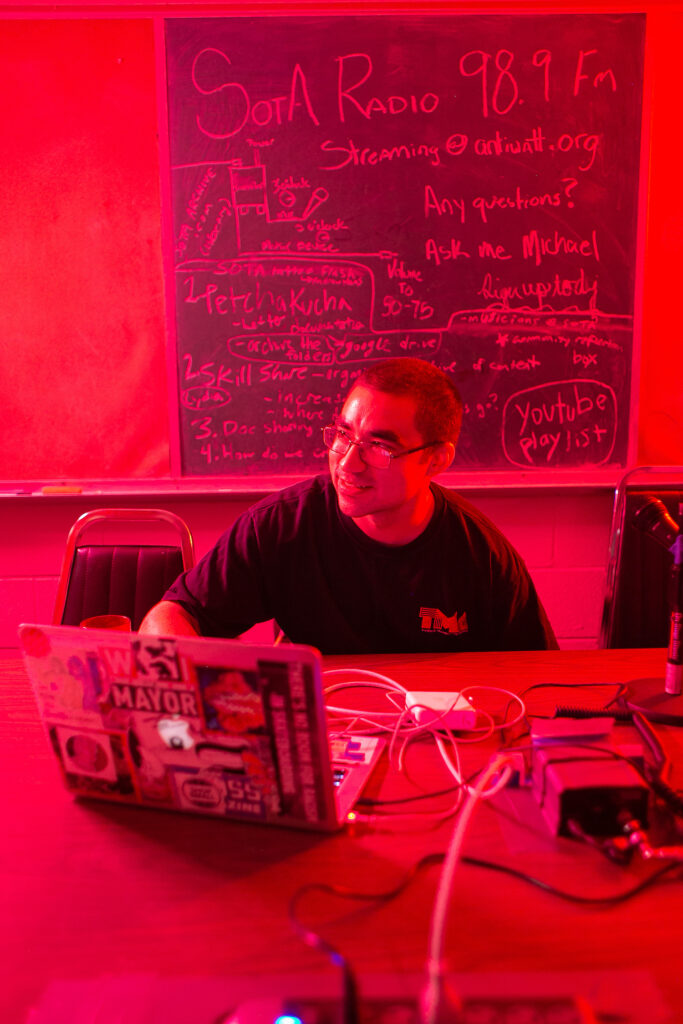
Yes, a bit, and we hope to do so more! Another facilitator of a similar program (Sophie Traub from The School of Making Thinking) taught a class at SotA this year, and they and I were able to host a pop-up event/radio show where we talked about running alternative art residencies. It was really inspiring to hear how they do things, to kind of chew on some things we were both thinking about together, and maybe mostly to share this with a large group, to demystify this work (we need more spaces like this!). That conversation has turned into another project, which is still in its infancy, where we are working to be in conversations with more facilitators and where we make those conversations accessible to others as an open resource. We’re still figuring out what this will look like, but I think all of that is generative and hopeful and comforting, really, to speak with other folks doing this work. In 2016 we also attended an Alternative Art School fair at Pioneer Works in Brooklyn, and being with other facilitators there, albeit brief, was eye-opening. I wish I had 100 hours in a day to organize another gathering like that, this work can be grueling (but worth it, always), and it feels really vital to connect with others doing this, hopefully, transformative and world shifting work.
Which developments in the current education of artists and designers do you particularly dislike?
Those that don’t consider varying identities and experiences or which value tradition over evolution. When an institution claims to hold space for varying identities but doesn’t practice that in action. Those that lack consideration of and deep care for folks holding identities that have historically been oppressed in institutions.
You promise “spaces for a different logic, a new language, new categories of thought.” What alternatives do you specifically offer?
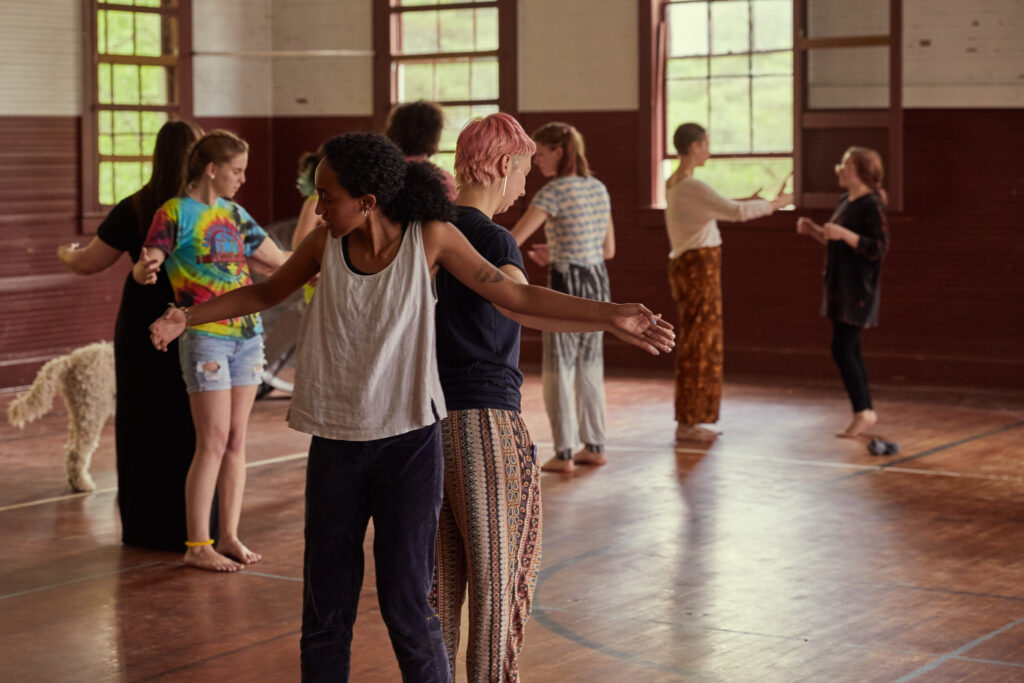
We hope to offer alternative class environments, where students impact the way the class is run as much as the faculty. It feels simple to say but huge and impactful to experience. I can alter the course of a class? My voice is as important as a faculty member? That often opens up for folks the big beautiful idea that they can also teach what they know and are passionate about.
We vocally prioritize care and work to grow those practices. We create space for listening to our community about what they need from the school. For us in this work so far it’s largely been about creating the conditions for folks to feel present and safe and engaged so that they are free to create, grow, and thrive at SotA.
To what extent do academic discourses influence your work?
I’m not steeped in academic discourse really at all, to be honest. I think there are folks who are a part of our community who are more interested in academia, and their resistance to certain aspects within institutions I’m sure helps to shape our project, but my life outside of SotA is as an Art Director/Designer, and academia is not a part of my day to day. Where I am trying to learn and grow as a facilitator is more centered around radical world building and community care. Right now we really have to actively work to sustain this project alongside the rest of our lives and other work (SotA is volunteer-run), so what informs and influences this work most is our community, and our in-person sessions. Are we meeting their needs? Are we meeting the needs of the communities we wish to serve?

In what way does the legacy of Black Mountain College still influence your work?
We likely wouldn’t exist without the precedent, and so much of our foundation was built from their ethos. Non-hierarchical learning, work service/collective sustaining of the community, self directed study, and so on. I feel really grateful for the ways that legacy was such a catalyst for this program, but as a group we don’t really refer to them the way we did at the start anymore. We are responding to such a different time. Sitting, always, in deep gratitude for the foundation, but/and growing from that original seed as we need to respond to the needs of our current world.
Do you see yourselves as the first official successor to Black Mountain College?
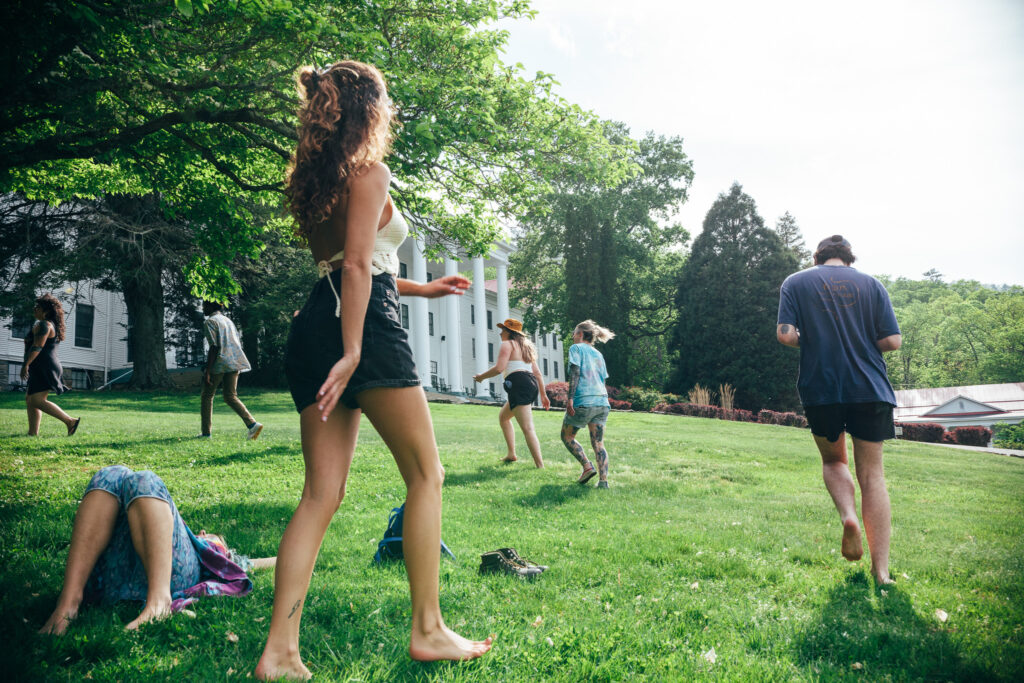
I don’t. There are so many radical programs that are doing work like this, and I would consider us a part of the collective of alternative art schools/residencies that carries on the legacy of programs before us, like BMC. I think we are offering an alternative amidst a world that really needs more, just as they were offering an alternative in a world that really needed more. We are really fortunate to hold our sessions on the original BMC campus, and it really is powerful to be on that land, in their classrooms, dancing across the same lawn they danced across. So in that way we are connected, but I think it’s more abstract than us being a successor.
is a dynamic and enthusiastic creative professional who works to foster spaces of inevitable connection through enduring and thoughtful work. She has worked as a gallery director, graphic designer, art director, and organizer. She has served on the board at School of the Alternative (SotA) since 2016 and currently serves as the school’s Executive Director. At SotA, she is committed to hosting an equitable space of communal learning and collective care, and to continually expand and nourish the ways we do both.