Craft in the periphery – Navigating disobedience in Estonian design education
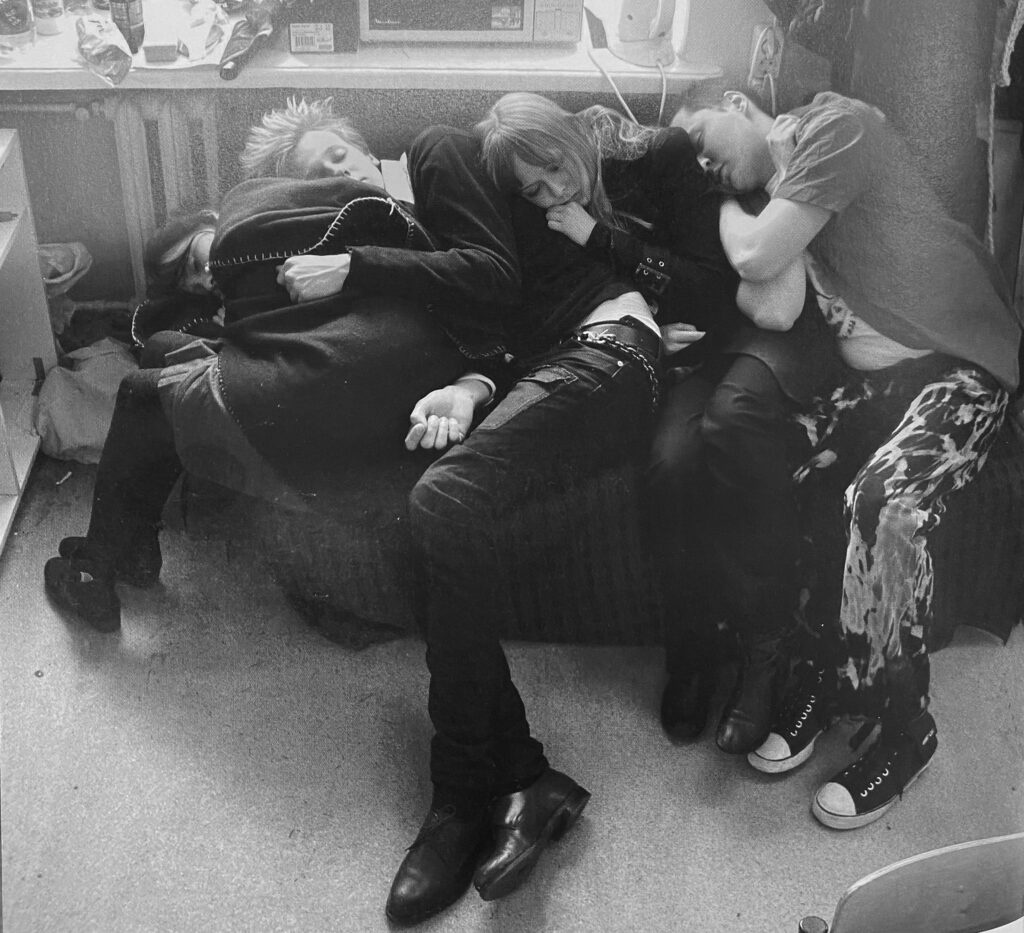
The periphery is a matter of perspective. In the following dialogue, Lilo Viehweg and Triin Jerlei discuss Estonian design education from the perspective of craft in the periphery in historical and contemporary contexts. The periphery in this case is seen as a playful thought and may have multiple and sometimes contradictory meanings – geopolitically, culturally and discursively.
In prominent Western design education models such as in the Arts and Crafts movement or the Bauhaus as well as in their historiographies, craft has often been a pivotal point in the argumentative framework. In mid- and late twentieth-century Estonian design education on the other hand, the tacit qualities and infrastructures of craft culture played a decisive role in the self-determination in the face of dominating Cold War systems between Soviet imperialism and Western ideas of infinitely growing progress.
While, from a Western/Central European perspective, Estonia has been located in the very East since 1990, previously, from the Soviet Union’s point of view it was part of the western border region. This way Estonia was put in the geopolitical periphery by either view. However, telling this story from a perspective that puts Estonia in the centre provides grounds for design cultural self-determination in which the multifaceted qualities of craft become drivers for lively, gentle, ambivalent disobedience in the face of dominant imperialist and neoliberal systems of power. A skilful navigation of cultural exchange in the space between what is said and what is done.

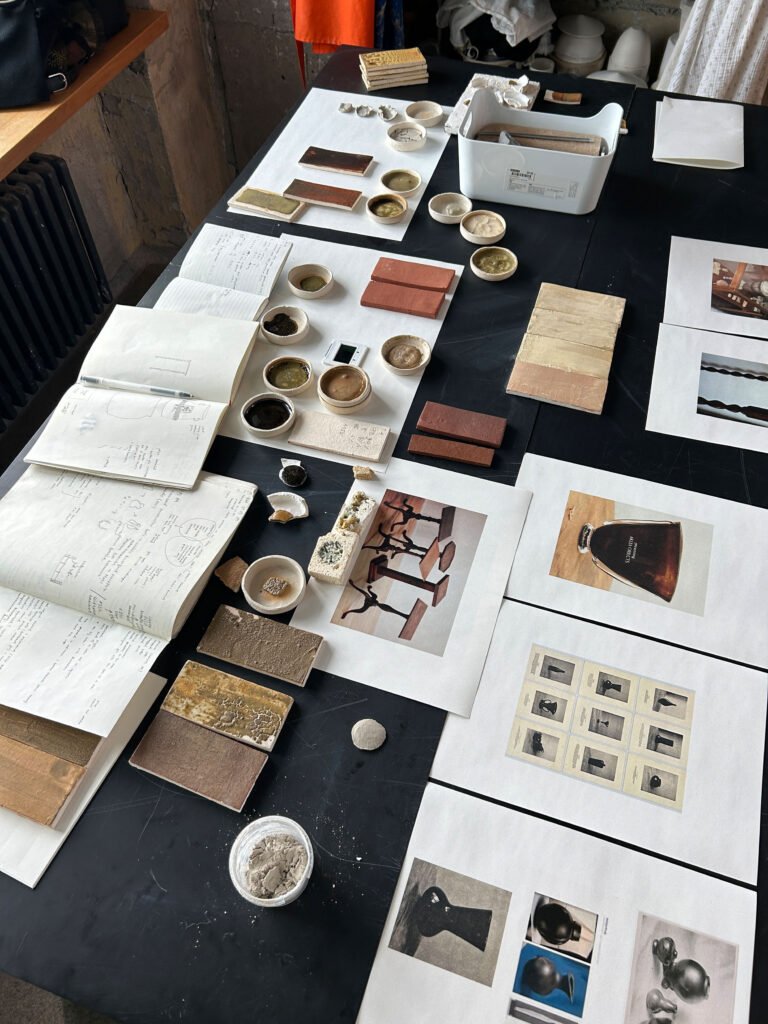
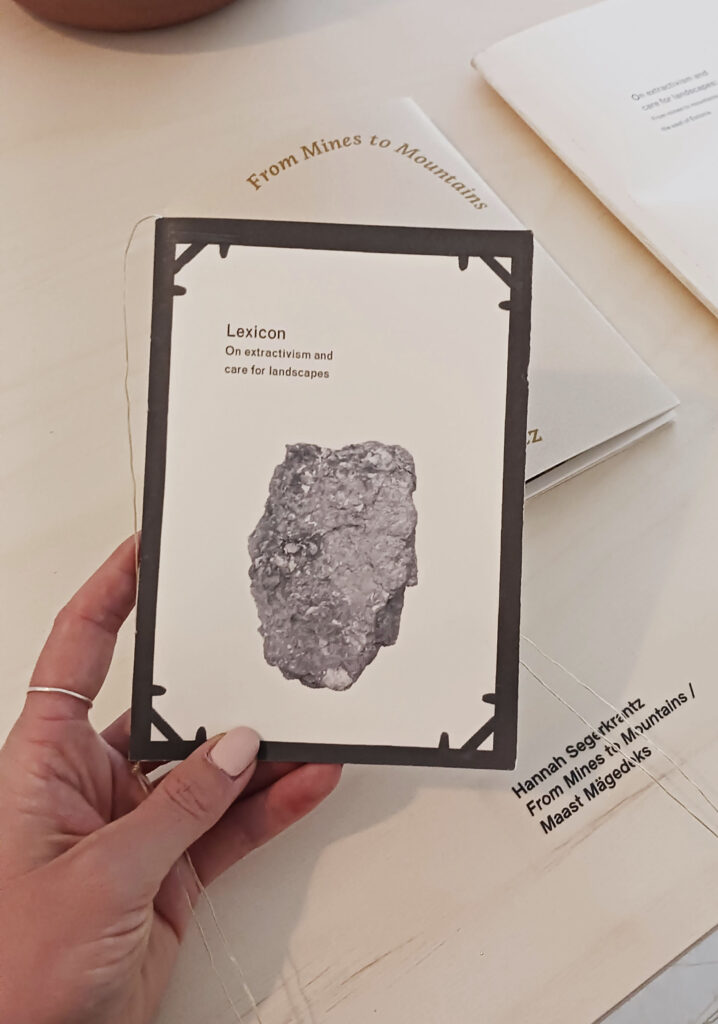
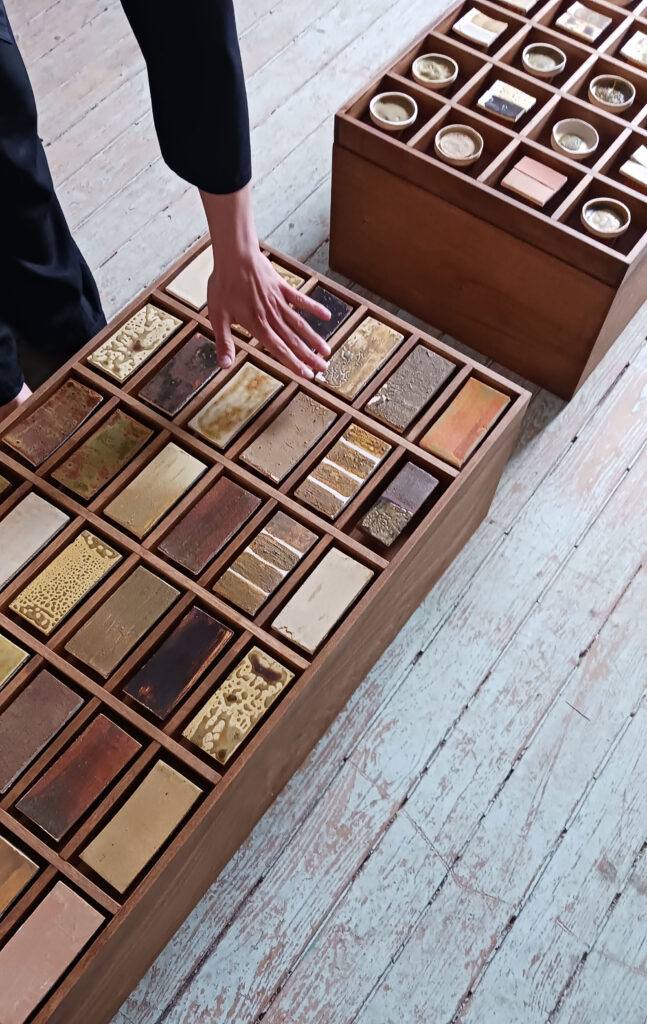
The notion of ‘craft’ in design educational contexts is an ambivalent term dependent on the particular contexts. The meaning of the English word ‘craft’ is related to ‘skill’. However, in the context of design, ‘craft’ is most often either associated with hands-on material work or a reference to pre-industrial production but not necessarily with a certain expertise in its traditional sense. In a conversation I had with Hannah Segerkrantz, a recent graduate of the new M.A. programme Craft Studies at the Estonian Academy of Arts (EKA), she told me that there is no direct equivalent for the English word ‘craft’ in the Estonian language. In her text Taidur-disainer loomeväljal (Artist-designer in the creative field) she explores this linguistic ambivalence: The Estonian word that comes closest to the word ‘craft’, but is not quite the same, is – as proposed by the programme’s heads Kärt Ojavee and Juss Heinsalu – taid, which roughly translates as ‘skill’ but also as ‘wisdom’ at the same time.[1]
With regard to the objectives of the Master’s programme and her own research focus, Hannah Segerkrantz further defines taid. According to Eik Hermann’s threefold craft theory of ‘legwork, handwork and headwork’, the programme combines ethnographic field studies, material experimentation in workshops and theoretical discourse. In this sense the ‘skills’ acquired are not referring to the traditional meaning of ‘craft’ in design contexts favouring handwork only, but equally include thinking and critically reflecting about processes of making.[2] Hannah’s M.A. thesis deals with waste material from oil shale mining grounds in Ida-Virumaa, Estonia’s easternmost border region to Russia. Navigating between craft techniques of ceramic glazes from toxic industrial waste, fieldwork in the (post-)industrial landscapes and reading into Estonian mining histories, she ‘positions craft as a tool for bodily and intellectual reorientation.’[3] An elegant peripheral exploration – geopolitically as well as epistemologically – which defies conventional definitions of craft in the design context. Here, ‘craft’ is not tacit anymore, but its critical reading in regard to material industries, labour and questions about ecologies is equally relevant.
In your research, Triin, you look at the history of the tööstuskunst (industrial art) which was established around the mid-1960s after the Khrushchev thaw in Estonia – back then a new professional field comparable to industrial design in Western contexts. What was the relationship between ‘industrial art’ and craft during this period in Estonia, and what impact did this have on design education at the State Art Institute of the Estonian SSR/ERKI (today’s EKA)?
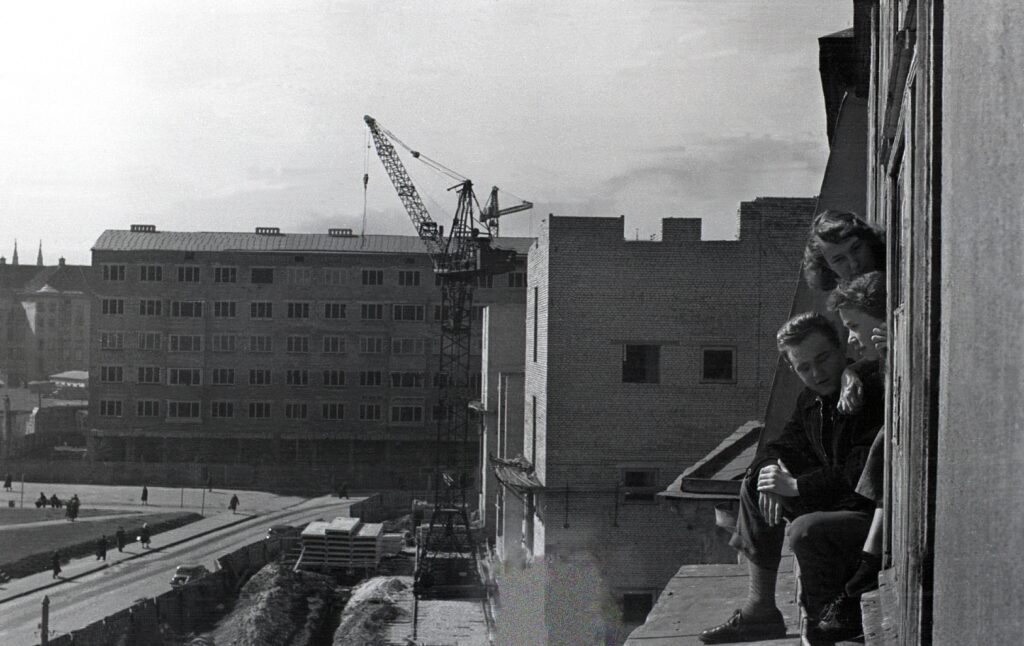
In the eyes of Soviet ideology, craft and ‘industrial art’ had a very simplistic and utilitarian relationship: the aim of craft (or applied arts, as it was called in the local context) in the 1950s and 1960s was originally to provide designs which could be mass-produced. This idea had already emerged in the 1920s at the Moscow design school VKHUTEMAS, a contemporary of the Bauhaus. Even though the ideas of VKHUMETAS did not reach Estonia directly, the link between industry and craft had been forged in the larger Soviet design thought. As stated in 1964 by Ingi Vaher, a craft artist active in design politics, ‘Only industry can duplicate applied arts products to the extent of being able to influence the taste of the wider public.’[4] And, to be fair, when the contemporary Estonian Academy of Arts was established in 1914, its first intention was to educate young people in ‘artistic crafts.’ Fine arts were only added to the curriculum in 1951 when the school was merged with a fine arts institute previously located in Tartu. However, even though industry might have been the justification for craft education and graduates were frequently directed to work in factories, academic projects often on had an artistic focus.
Although by the 1970s craft was able to establish its own right to exist in Estonia[5] without the need to be tied to mass industry, the centre of Soviet ideology was still the factory, and the system was geared towards mass production. In the 1950s, art and ‘applied art’ had become weapons of propaganda throughout the Soviet Union, as illustrated by numerous ornate vases with Stalin’s portrait on them. An object was simply a surface for decoration. And yet, once the imperial neoclassical style was replaced by modernist rationalism in the late 1950s, ‘applied art’ or craft was suddenly difficult to weaponise. It was like an awkward by-product of modern utilitarian mass production, which held ‘dangerous’ individualist connotations. Design could be utilised as a promise of a better tomorrow, a mimicry of Western consumerism (although Estonian design or ‘industrial art’ education equally rebelled against that task).
There was an element of subversion within craft, even though there were various social experiments to keep Soviet control at bay. For example, craft artists were organised into ’art products factories’ in order to add a factory-like dimension of collective control into their practice. It was this difficulty to fit craft into propaganda that allowed it to flourish in Soviet Estonia. It has also been suggested that some aspiring painters and other fine artists chose to study different craft subjects instead of fine arts because it was a well-known fact that the censorship was less rigid in this area. For example, Jüri Arrak, a painter famous for his semiabstract human figures, originally studied metalwork from 1961 to1966.
It should also be emphasised that the term ‘craft’ is used very loosely in Estonian contemporary art and design terminology, and I would argue that it is still not a fixed identity, rather a common denominator that could be applied to practices otherwise equally labelled art or design. This fluidity of identities allows flexibility in communities and practices.

Yes, and if one looks at the history of Estonian design education, craft was not always explicitly discussed in such heterogeneous terms as today as Hannah Segerkrantz’s example shows. Your research on the work of the Tööstuskunsti komitee (industrial art committee) done by Ingi Vaher in the 1960s[6] highlights how in unarticulated design politics, Estonian craft culture (glass and textiles, mainly carried out by female designers of that time) could find its way through history – not without ambivalence, yet beyond the dominance of the Cold War’s imperialist influences.
In what you call a case of ‘“peripheral” design organizations’,[7] it was possible to support designs that were not related to the military and heavy machinery industry, which were strongly promoted all over the Soviet Union by, for example, the institute VNIITE (All-Union Scientific Research Institute of Industrial Design). A design preference that, from my perspective, is also similar in this context to the prevailing Western industrial design concepts of the time, such as those of MIT in Boston. Why was it possible for craft culture to become a driving force for a kind of ambivalent disobedience against this totalitarian dominance in Estonia?
I believe that to a certain extent, craft is more difficult to control because it often defies categorisation and thus is hard to define. Both in the mid-twentieth century and in the contemporary context, there exist objects, categories, artists who greatly differ in materials, intentions and modes of production and yet together inhabit the sphere of craft. Totalitarianism prefers simple and uncontested definitions and struggles with peripheral areas.
I keep trying to come up with a good example of counter-Soviet practices … and constantly fail. Because the reality of craft in totalitarian systems is that most of the time, it is not visibly subversive by contemporary standards. The subversion is in the absences, the things we don’t see in archives. It is difficult to find anti-totalitarian works in university archives; they would not have been preserved.
We must also remember that craft-based courses of studies did not exist to educate artists in the contemporary sense. They existed to prepare artists for factories and similar workplaces. Yet, as for example glass artist Maie-Ann Raun remembers, when she studied glass from 1958 to 1964, the main emphasis was still on artistic production. In our contemporary neoliberal culture, we would call it a failure to meet the demands of the job market. But can’t we instead define it as subversion?
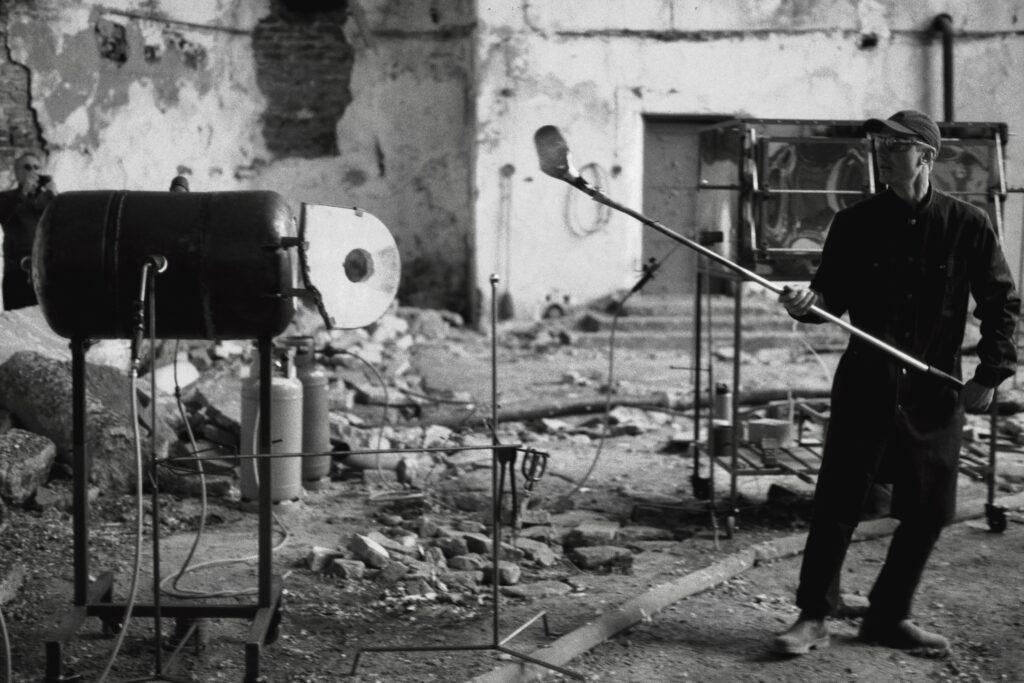
Exactly, employability is one of the favourite arguments of neoliberal thinking in education. However, this top-down market logic doesn’t take the students’ agency to imagine design differently into account. Similar to the times of the Soviet Union, we can observe a navigation between systems and notions of disobedience towards dominant design cultures through material exploration, craft and improvisation in Estonian design education since the 1990s. This is, for example, highlighted in the counter-movements against the neoliberalisation of design education, as described, for example, in texts by Mart Kalm[8] and Maarin Ektermann[9] but also shows in numerous documented student works. When visiting the EKA graduate show in the summer of 2025, I encountered many projects that showed poetic, playful and humorous disobedience against said systems of authoritarianism. How would you describe the current design culture at EKA in relation to the craft histories discussed above?

Perhaps something that still persists in EKA is the materiality as workshops and learning through making still hold an important position. Where the art and design students decades ago depended on the access to various materials and were often unable to purchase good quality pencils in Estonia, their contemporary counterparts depend on money. While digital tools allow to cut costs, one cannot really know material without working with it.
Here, I would argue that the traditionality of Soviet-era art and design education benefitted contemporary craft artists. Where contemporary digital tools became accessible in education later, certain traditions persisted long enough to still exist when globally, the novelty of digitality acquired a critical post-digital dimension. In 2014, Kadri Mälk, the Head of the department of Jewellery and Blacksmithing wrote, ’By valuing that which is disappearing elsewhere or which has never even existed there, we are doing a service to the future. … What to do with this knowledge? I believe – we should constrain the obsession with the pursuit of success that we see in the world and in Estonia too.’[10]
Contemporary Estonian students and artists working with traditionally craft-related materials such as glass, ceramics, metals, etc. are free to verbalise and visualise their protest whereas their colleagues in a totalitarian context needed to apply dual meanings. In a way, there are various works of craft from the mid-twentieth century that used nature as a visual reference, as a tacit protest against the modernist technocracy. Bruno Tomberg, the founder of the industrial art department in the 1960s, designed open-source lawn chairs which existed due to the lack of suitable mass-produced products but which we could also see as a resistance to industrial production and its toll on the environment. Perhaps it would be good to remember here once again that the meaning of the work does not depend solely on the craftsperson, but also on the beholder.
The blurring of the boundaries between different fields has helped contemporary craft culture to diversify, compared to the rigid totalitarian classifications. For that reason, it is also good to see today’s fields still defying rigid categorisations and labels.
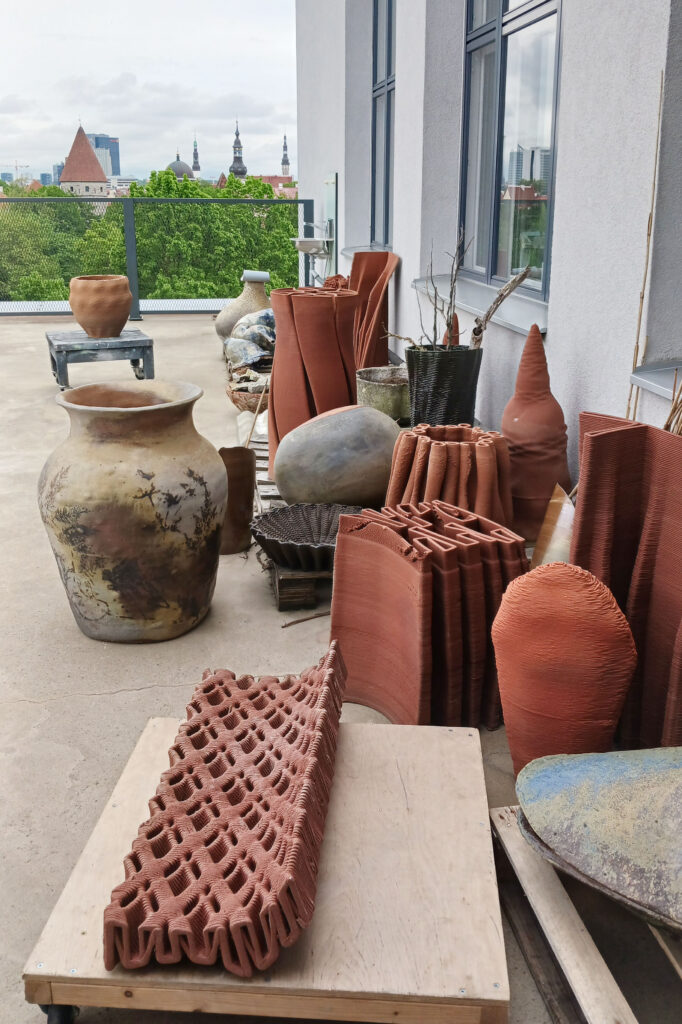
Yes, and in this sense, craft in peripheral spheres – practically as well as discursively – is a good teacher for navigating disobedience against totalitarianism. Thank you for the conversation, Triin.
Triin Jerlei is an Associate Professor of Design Theory and History at the department of Product Design at the Estonian Academy of Arts as well as a researcher at the Vilnius Academy of Arts within the initiative New European Bauhaus. Her research interests include Soviet and post-Soviet design economies and transnational connections in twentieth-century design. She has curated several exhibitions on Estonian and Baltic design, contributed to a number of academic journals and magazines, and edited books. ● Lilo Viehweg is a researcher, curator and educator with a background in industrial design and cultural studies. In her work she investigates critical historiographies of material-based design processes, the hierarchies of knowledge production and the related socio-political conditions of design. She teaches design research and history and develops formats for collective exchange inside and outside academia. Furthermore, Lilo is currently a Ph.D. candidate in the Make/Sense programme at the Academy of Art and Design Basel and the University of Arts Linz.