Formative power in the age of AI: Foundational education in form at the Kuwasawa Design School

The Kuwasawa Design School (KDS) was founded in 1954 by Yoko Kuwasawa, a fashion designer and a pioneer in establishing professional design education in Japan. From its inception, KDS’s curriculum and educational approach had been inspired by the Bauhaus’s system. Yoko Kuwasawa aimed to bring these progressive ideas on design and education to Japan and to develop a uniquely Japanese approach rooted in the local social and cultural context.
In 1998, KDS formalised its current curriculum structure, providing a three-year day programme and a two-year night programme. Since then, numerous designers have been trained in this framework. One of the most distinctive features of the day programme is the required first-year course called ‘Basic formative design’, which includes courses such as drawing, sculpture, three-dimensional composition, two-dimensional composition and experimental photography. These courses aim to develop the students’ formative abilities through visual and tactile hands-on experiences, encouraging them to re-evaluate form, space and composition with all their senses.
One of the key figures in the development of this foundational curriculum was Masato Takahashi, an art educator and practitioner teaching composition. Takahashi emphasised the importance of learning through personal experience – meeting form through one’s own bodily sensations. The attitude of engaging directly with materials and ‘thinking with the hands’ nurtures not only basic design skills but also fosters a flexible way of thinking that applies across all design disciplines.
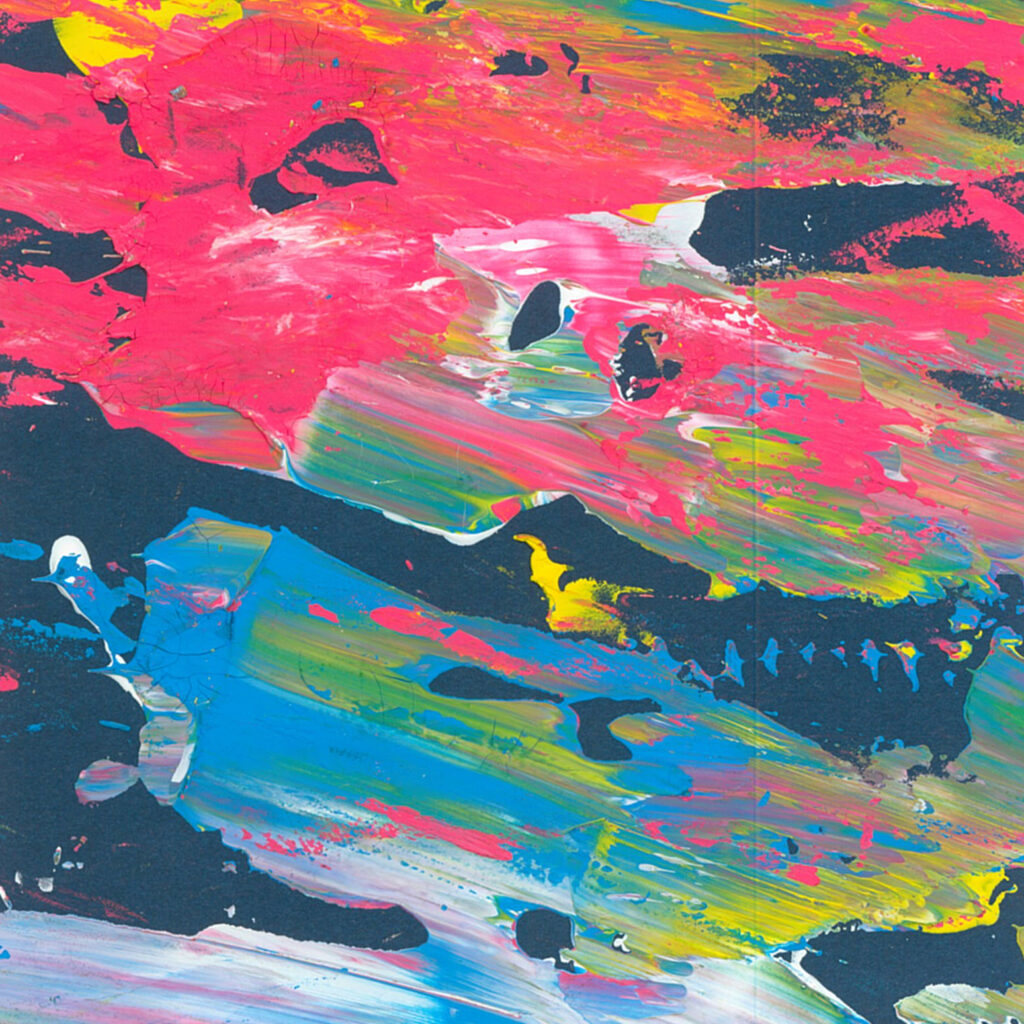
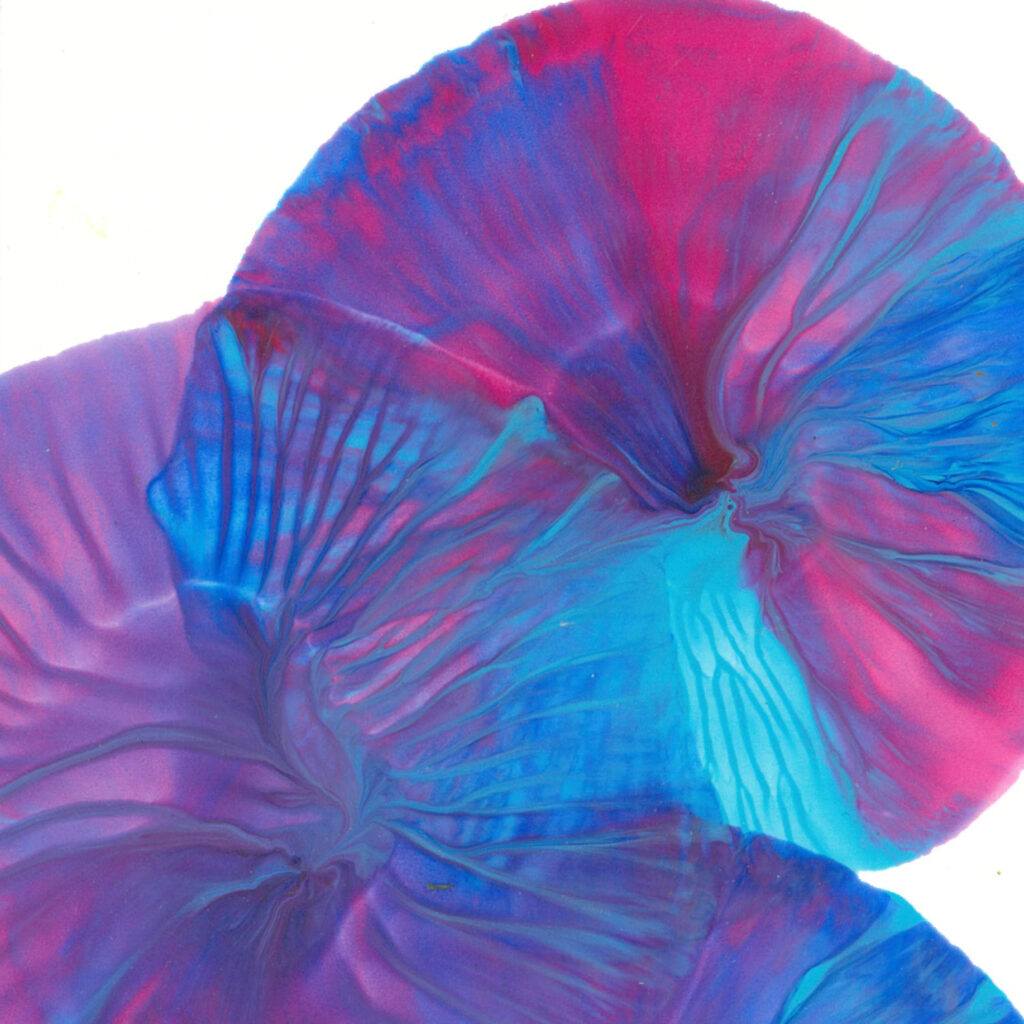
KDS project examples include hand sculptures, shapes carved out from a piece of wood, and tasks using easily accessible materials such as paint or coloured pencils to generate spontaneous forms. These projects value serendipity, incorporating unpredictable elements into forms to broaden the students’ creative potential.


Today, digital technologies like 3D printing and modelling software enable us to generate complex forms both efficiently and precisely – often in ways unachievable by hand. Still, certain forms can only be created through manual processes: those that emerge through dialogue between material and maker, coincidences and even through failure.
At the Kuwasawa Design School, tasks that involve processes by hand remain a vital part of the curriculum. For instance, in the projects involving spontaneous form creation with paint, students might drip or smear ink or pigment onto paper in uncontrollable ways, allowing unexpected shapes to emerge. Students then trim and edit what they find visually compelling. This approach is less about generating form and more about discovering it – that is where intuitional engagement within uncertainty becomes key.
Another example is the hand sculpture project, in which students craft a piece of wood into a form that feels pleasant to their own hands, relying solely on their tactile rather than visual judgment. Using saws, chisels, knives and files, students engage in a dialogue with the material. This assignment traces its origin to the New Bauhaus founded in the U.S. by former Bauhaus teacher László Moholy-Nagy and was introduced to KDS by the photographer Yasuhiro Ishimoto, who had studied at the school in Chicago and later taught at KDS. From its founding, KDS has emphasised education grounded in physical experience.
Many of the KDS assignments – like the hand sculpture – share principles with craft, emphasising dialogue with materials and cultivating sensory experience. When combined with Bauhaus-inspired modern Western functionality and rationality, KDS’s curriculum forms a unique fusion of modern design and Japanese craft spirit.


In Japan, craft (kōgei) involves shaping natural materials such as wood, clay, metal, textiles and lacquer by hand into vessels, tools, clothing and ornaments – manifesting beauty in utility. Craft in Japan weaves together technical skill, regional heritage, history and the bodily awareness of maker and user. Dialogue with materials, inherited techniques and the embrace of serendipity are essential components. The resulting forms may appear uneven or asymmetrical; yet this unique irregularity is often where beauty is found.
One figure who helped bridge Eastern and Western aesthetic philosophies is the Buddhist scholar and philosopher Daisetsu Teitaro Suzuki. In his 1940 book, Zen and Japanese Culture, he writes, ‘Where you would ordinarily expect a line or a mass or a balancing element, you miss it, and yet this very thing awakens in you an unexpected feeling of pleasure. In spite of shortcomings or deficiencies that no doubt are apparent, you do not feel them so; indeed, this imperfection itself becomes a form of perfection. Evidently, beauty does not necessarily spell perfection of form. This has been one of the favourite tricks of Japanese artists – to embody beauty in a form of imperfection or even of ugliness.’[1]
This aesthetic aligns with the idea that beauty can emerge from the irregularity of natural materials and the transformations brought about by chance. It suggests a different atheistic value system from Western ideals of symmetry and perfection – one that finds ‘perfection within imperfection.’


Recent advances in artificial intelligence are rapidly transforming the field of design. Artificial intelligence (AI) can learn from vast datasets and instantly generate infinite variations of form. These capabilities promise enormous potential for the future of design. At the same time, however, form arising from physical interaction with materials – through chance, failure and experience – will become all the more significant. AI cannot fully replicate the interaction between the human body and material.
As AI-generated form becomes an inevitable part of design, the act of working by hand – of confronting materials through the body and discovering form through imperfection – remains essential to design as a human endeavour. Even in the digital age, the Kuwasawa Design School’s approach to formative education emphasises this ‘dialogue with material’ and encourages the creation of forms shaped by chance. In this sense, its pedagogy is decidedly craft-oriented and represents an alternative method of form-making distinct from AI. Precisely because we are in an AI-driven era, the forms and processes that arise only through interaction of man and material gain renewed value.
completed his Master’s Degree in Design at the Graduate School of Art and Design, University of Tsukuba, Japan. He has worked in creative studios on websites, smartphone apps and VR contents. In 2019, he joined the Kuwasawa Design School as a faculty member in the formative design department, where he teaches foundational design and composition. His major exhibitions and awards include the Japan Media Arts Festival, Echigo-Tsumari Art Triennale, SIGGRAPH E-Tech, IVRC (Grand Prize) and the Lumière Japan Awards (Special Jury Prize in the VR Division).