MADE IN Platform as an educational tool and catalyst for cultural exchange in the skilled trades
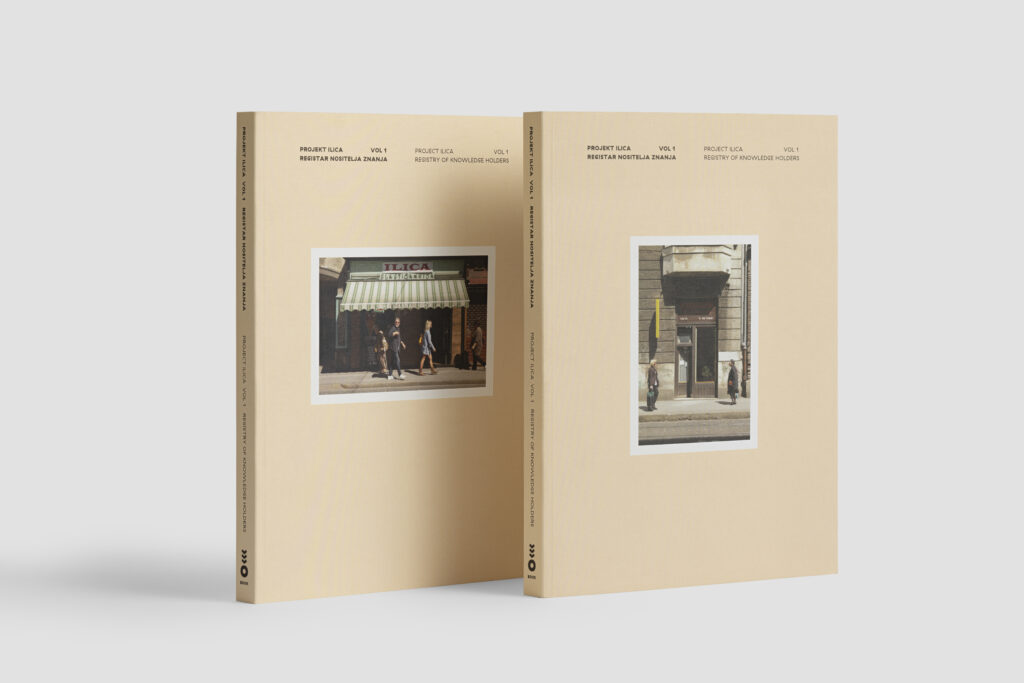
The MADE IN Platform emerged from a convergence of local urgency and global explorations in design and craft. Its earliest iteration, Project Ilica, was initiated in 2013 by the Oaza collective in Zagreb in response to the disappearance of traditional crafts and small-scale production from the post-socialist urban landscape. Ilica street, once a vibrant network of specialised workshops, had become depersonalised through gentrification, deindustrialisation and wider economic shifts. The project began by locating remaining knowledge holders, fostering exchanges between residents, designers and craftspeople and exploring new models for location-based production and cultural regeneration.
Ivana Borovnjak, founding member of MADE IN, reflects on the challenges, tasks and educational power of the network with Astrid Suzano and Jacob Strobel as representatives of associated institutions and initiatives. Katja Klaus and Philipp Sack asked the questions.





How did the project come about?
These days, MADE IN brings together various organisations across Europe – from civil society initiatives like Passa Ao Futuro to major cultural institutions such as the State Art Collections Dresden (SKD), Museum of Architecture and Design (MAO) in Ljubljana (current Platform coordinator) and the University of Applied Sciences Zwickau (WHZ). The platform operates as a transdisciplinary initiative for research, design and heritage, fostering collaboration and knowledge exchange among designers, craftspeople, scientists and cultural practitioners.
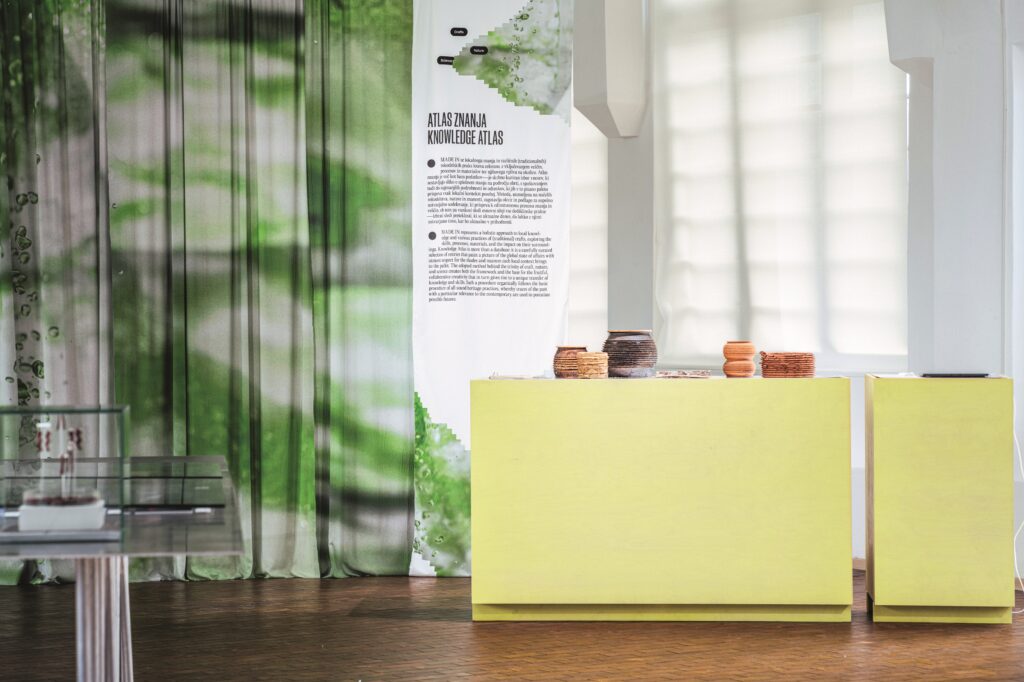
Its structure rests on three interconnected components: the Knowledge Atlas, which serves as an evolving compendium of traditional techniques, regenerative materials and contemporary scientific approaches; collaborations, which activate the atlas through residencies, workshops, summer schools and other collaborative formats; and dialogues, which open up space for critical reflection via public events, symposia and publications.
What began as a modest effort to document and support our neighbourhood’s craftspeople has grown into a living, polyphonic platform that reconsiders how we make, learn and relate across disciplines and geographies. At its core, MADE IN is guided by the belief that knowledge is not only archived but enacted – through relationships, embodied practices and a shared responsibility toward materials, places and each other.
How did your affiliation – both personal and institutional – with the MADE IN Platform come about?
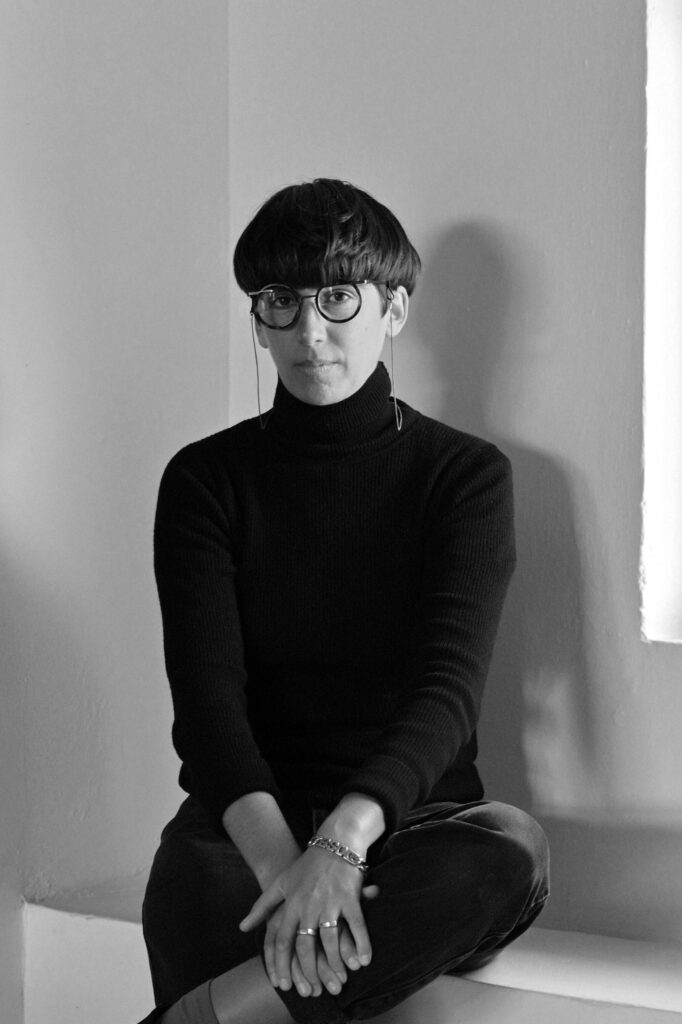
While MADE IN evolved from Zagreb’s Ilica Street into a robust European network of institutions and practitioners, Passa Ao Futuro approached the urgency of cultural preservation from another angle – from archival research, fieldwork and institutional engagement with Portugal’s intangible heritage.
Founded to document and activate endangered craft practices across Portugal, Passa Ao Futuro works to ensure that traditional knowledge systems – often held by ageing artisans in rural or semi-urban areas – are not only preserved, but meaningfully integrated into new cultural, ecological and pedagogical contexts. Passa Ao Futuro’s work bridges the gap between heritage and contemporary culture, employing a methodology that values oral histories, embodied skills, design and interdisciplinary and intergenerational transmission as tools for future-making.
The connection between the two initiatives was catalysed during the forum Towards a Bauhaus School Europe: Workshops for the whole earth, organised by the Bauhaus Dessau Foundation in 2021, where Fatima Durkee, co-founder of Passa Ao Futuro, crossed paths with Ivana Borovnjak and Maja Kolar from the Oaza collective. What began as a presentation during which both projects learned about each other’s work crystallised into a shared purpose. While MADE IN offered a pan-European framework for collaborative experimentation, Passa Ao Futuro brought localised, in-depth research and a network of craft practitioners rooted in Portuguese traditions. Our mutual interest in sustainability, material agency and knowledge transmission led to a joint application (with eight other partners) for Creative Europe funding.
Rather than parallel projects, the relationship between Passa Ao Futuro and MADE IN reflects a growing shift toward collective authorship and distributed knowledge. It challenges the division between centre and periphery, past and future, archive and action. United by a belief in the social and ecological potential of making, these two initiatives contribute to a broader reimagining of craft – not as nostalgia, but as a dynamic site of resistance, regeneration and possibility.

I was introduced to the MADE IN project by Thomas Geisler, director of the Museum of Decorative Arts in Dresden, who at the time was looking for a venue to host the final exhibition of the first MADE IN edition. Simultaneously, I was seeking opportunities for my students to present their work internationally and to gain hands-on curatorial experience. Due to the Covid pandemic, participation in international fairs was not possible – so the idea emerged to bring the international stage to Schneeberg in Saxony by hosting the MADE IN exhibition alongside student projects.
The Faculty of Applied Arts Schneeberg builds on a 150-year tradition in design education. At the heart of our pedagogical approach lies what we call the ‘workshop principle’: a practice rooted in the interpretation of regional craft heritage, the use of predominantly natural materials and the development and realisation of concepts in our well-equipped workshops. This ethos resonated strongly with the values Ivana had articulated for MADE IN. As a result, we joined the consortium in the second round of the project.
In my role as Chair of Wood Design/Furniture and Product Design, I was immediately drawn to the idea of inviting young international creatives to immerse themselves in the rich yet often overlooked craft traditions of the Ore Mountains. MADE IN offered a unique framework to connect these local practices with broader cultural, ecological and educational discourses.
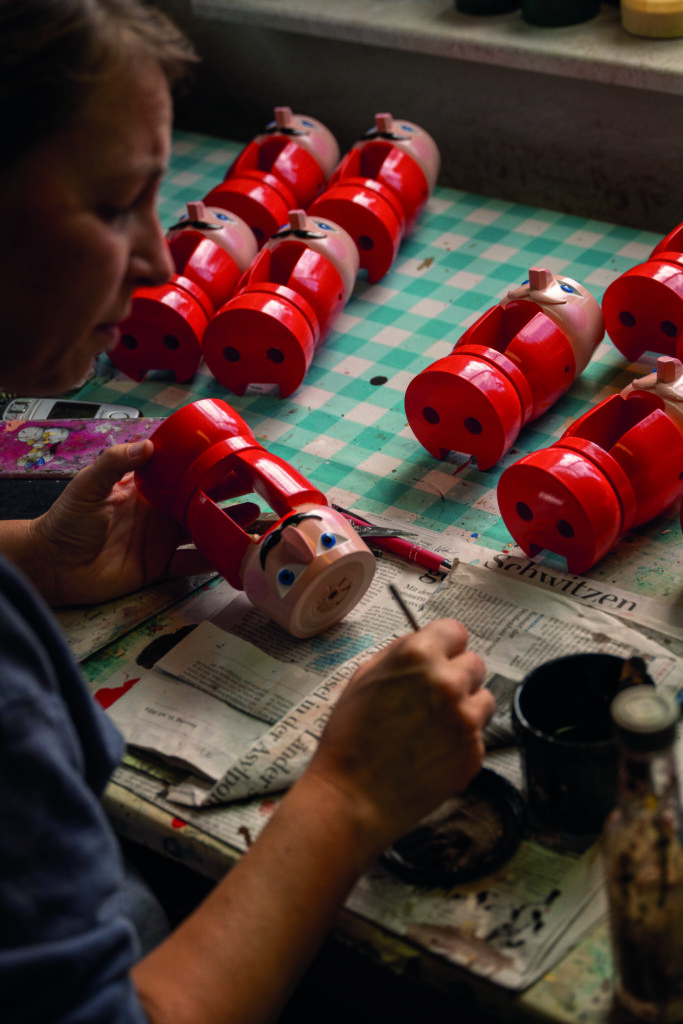
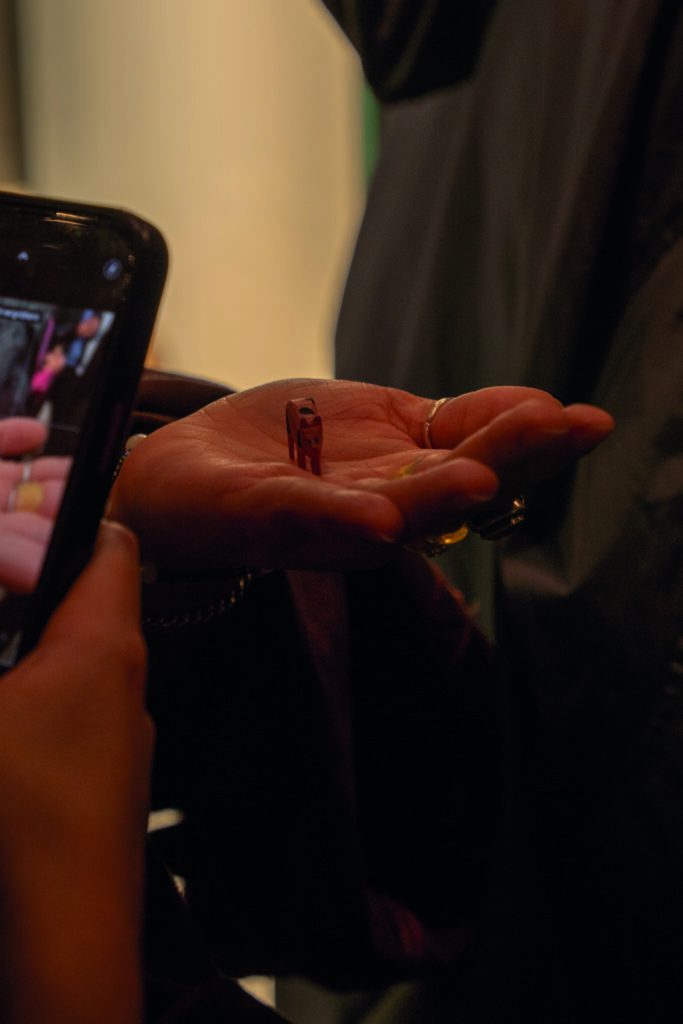


How is craft being defined in the project, and how do you relate your own practice to this?
In the MADE IN Platform, craft is approached as a situated, embodied and often intergenerational knowledge system – intimately tied to place, ecology, materiality and community. Drawing on thinkers like Richard Sennett, we see craft not only as ‘good work’ but as a framework through which to localise, question and open up practices of making.
As co-founders of MADE IN, we continuously navigate the ways the platform evolves – curating both its content but also the modes of working that support long-term engagement. Craft, in this sense, becomes a tool for rethinking systems of value, resisting standardisation and fostering slower, reciprocal approaches to knowledge exchange.
This expanded understanding allows us to connect diverse practices – from exploring regenerative material systems to supporting disappearing skills and place-based traditions. Be it through research, residency or exhibition, craft is approached as a living and adaptive field – one that we believe holds relevance for imagining more just and sustainable futures.
While MADE IN thinks of craft as a situated, relational practice embedded in material, social and ecological systems, Passa Ao Futuro brings in a complementary focus on how design can serve as a catalyst for the continuity and transformation of traditional knowledge. For us, craft is not only something to be preserved but something to be actively reimagined – through design-led processes that foster innovation while honouring the integrity of ancestral skills.
We see innovation as essential to preservation. Our work that is strongly based on research, on understanding the past to envision the future, supports craftspeople in adapting their practices to contemporary realities – whether through new forms of collaboration, access to alternative markets or the integration of sustainable materials and methods. By connecting design with craft in a way that is mutually respectful, we aim to create pathways for economic viability, intergenerational transmission and environmental responsibility. This approach expands the definition of preservation beyond archiving or safeguarding to include activation and evolution. In practice, this means facilitating and curating exchanges between artisans and designers, developing tools for sustainable production and fostering creative models that can support rural economies and local communities. We believe that craft, in this sense, is a site of possibility – where heritage and innovation meet to shape socially just and environmentally conscious futures.
We closely identify with the definition of craft as articulated within the MADE IN Platform, and we also see many parallels – particularly with the approach of Passa Ao Futuro. At our faculty, craft is not only a foundational element of teaching but also a method of creative inquiry. Developing and implementing ideas directly in the workshop allows hands, materials and processes to actively shape the design. Serendipity is embraced, and the immediate tactile feedback becomes a source of inspiration. Engaging with the resistance of materials fosters a deeper respect for natural resources and the value of skilled manual labour.
For us, craftsmanship begins not with the execution of a design, but with research – into historical techniques, regional traditions and sustainable practices. This includes everything from felling and processing timber to exploring how existing objects can be repaired or reimagined. In light of global digitalisation and the decline of hands-on, tactile activities, transmitting craft processes to amateur audiences is becoming an increasingly vital role for emerging designers.
More and more, our students are developing participatory objects and workshop-based formats that invite dialogue and co-creation. Many of the contributions we’ve made to the MADE IN Platform have come directly from students and alumni – demonstrating how craft can serve as both a pedagogical tool and a catalyst for cultural exchange.

What kind of projects have you implemented in the context of the platform? Could you each present a recent and/or particularly relevant endeavour?
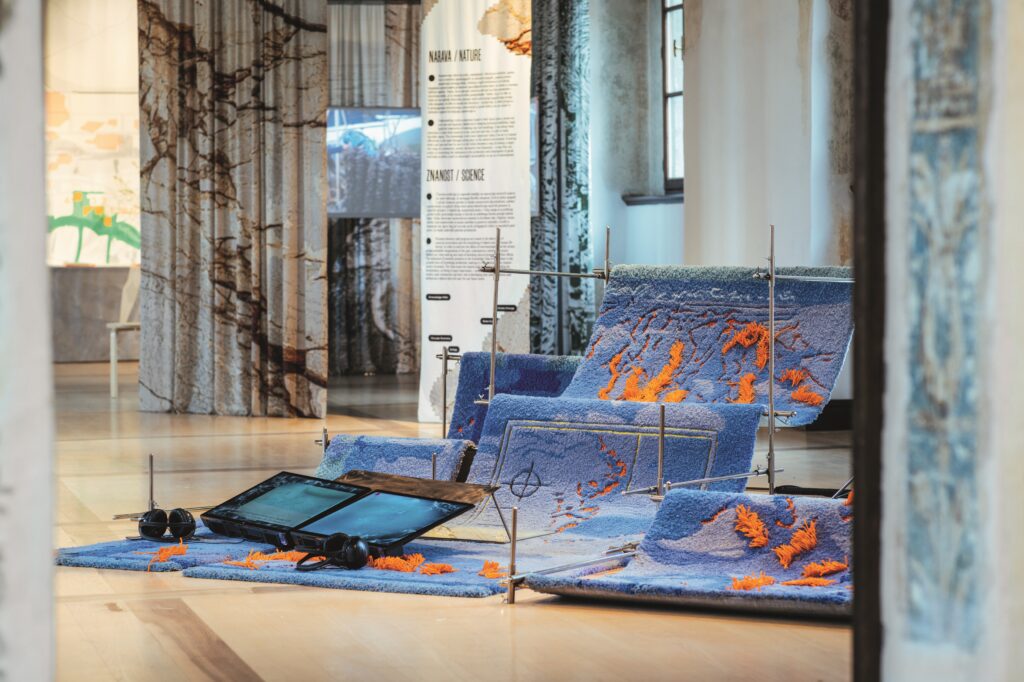
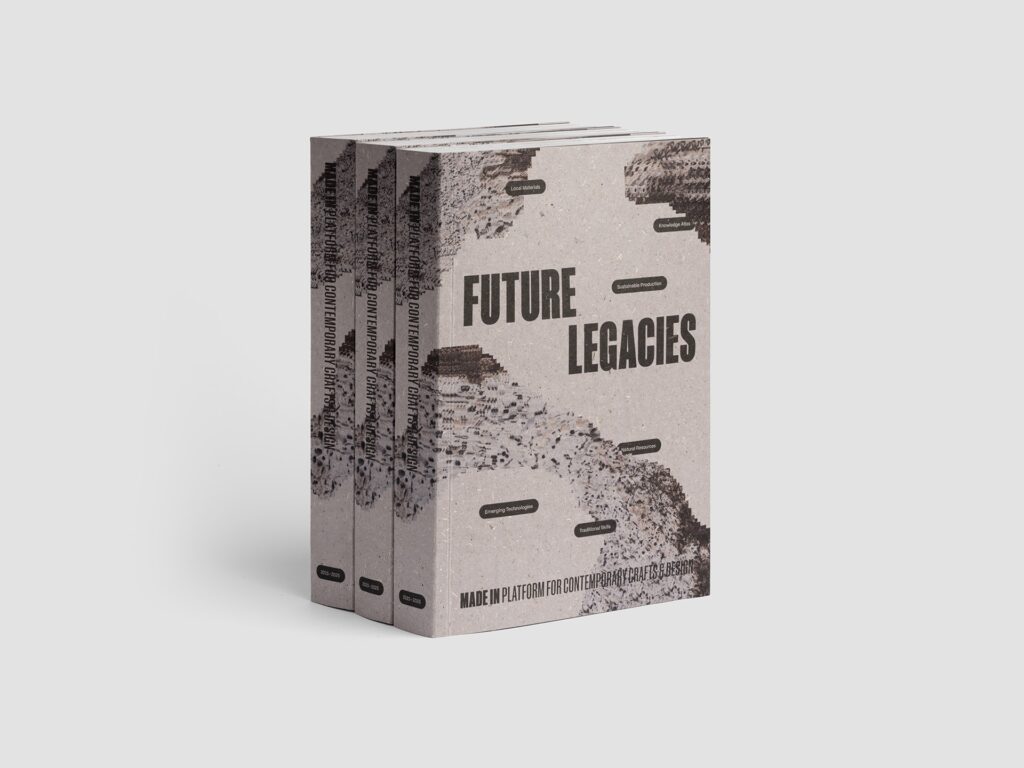
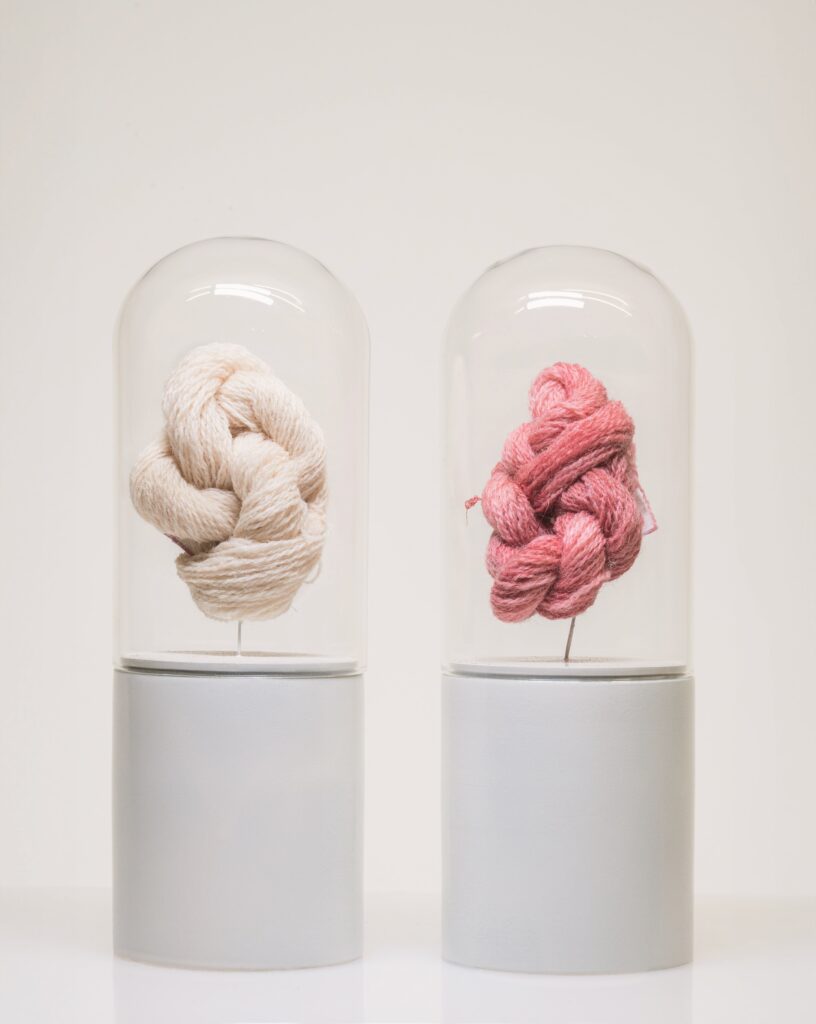
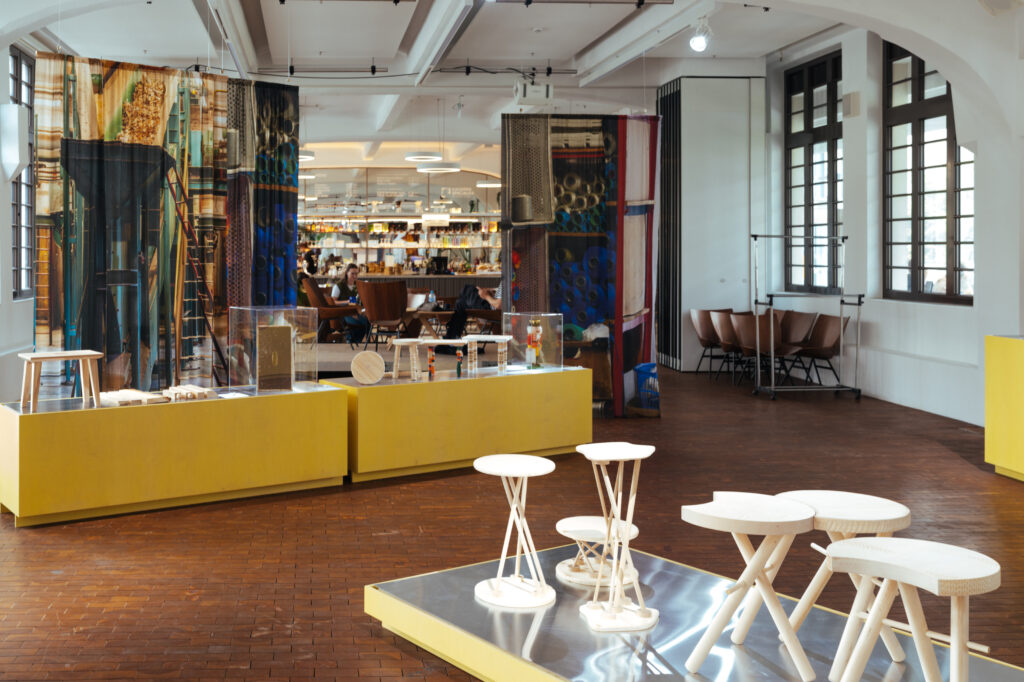
Contributors to the recent Future Legacies exhibition in Ljubljana and Schneeberg included Robertina Šebjanič, who investigates the hidden legacy of discarded chemical weapons in the sea by weaving together scientific research, storytelling and local crafts to call for ecological responsibility. Also, there were Cécile Feilchenfeldt, whose architectural knitwear reinterprets Saxony’s craft heritage for contemporary couture, and Kim Cordes, who extends the lifecycle of silk and wool through sustainable textile practices.
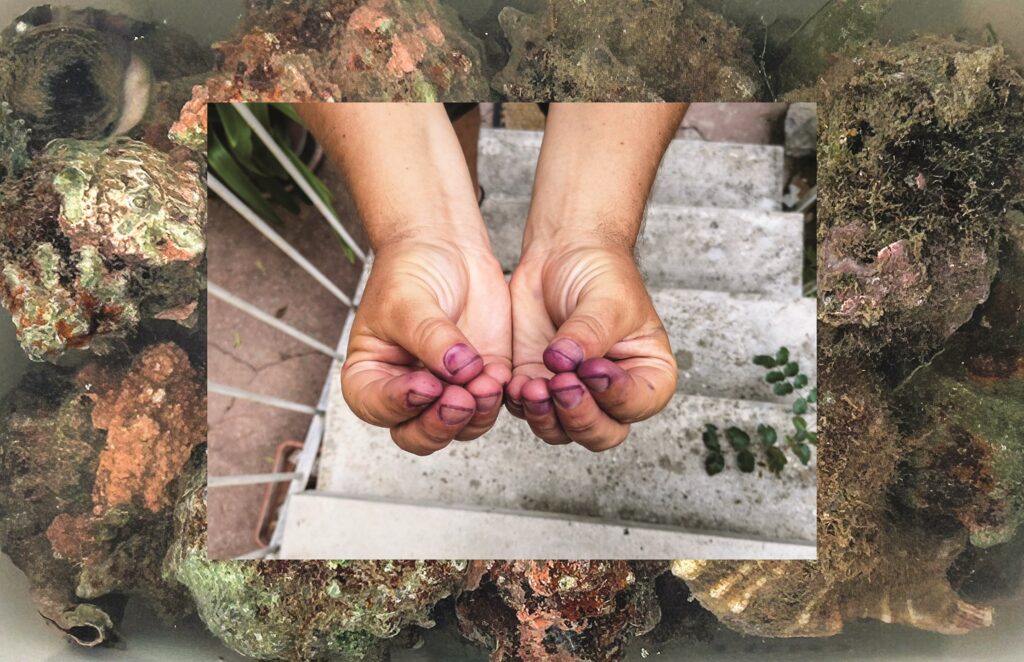
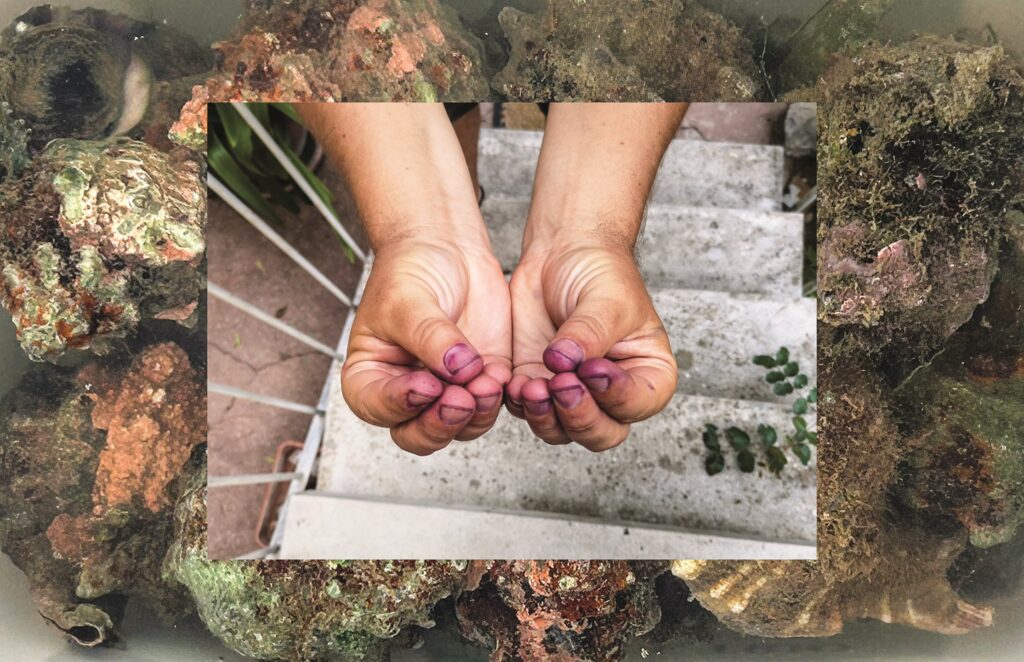
Trajna and Debra Solomon activate feral urban ecologies with craft-based biodiversity corridors while Biomatters promotes biomaterials and bioremediation strategies for protecting biodiversity. Igor Eškinja reimagines ancient purple dye production as a bridge between cultural heritage, science and ecology whereas SOLL works with Silvio Vujičić and Miro Roman to merge craft, design and artificial intelligence in a reinterpretation of the Mediterranean as a boundless, data-rich cultural and material network. Many others contributed to the exhibition, for which we are deeply grateful, even if not all can be named here.
While diverse in form and medium, these works share a commitment to craft as a situated, embodied and often intergenerational knowledge system – one that engages deeply with material, ecological and political realities, and opens up new frameworks for making in a rapidly changing world.
In Portugal, Passa Ao Futuro organised five residencies and one summer school, all centred on plant-based design. Though their approaches and formats differed, they shared a unified goal, making it difficult to pick one as the most representative.
Both initiatives fostered collaboration but with distinct frameworks: residencies pair one designer with one artisan to co-create a small, market-ready collection, but the designer does not necessarily acquire hands-on craft skills. In contrast, the summer school teams one artisan with two students; here, participants learn and practice the craft directly alongside the artisan, resulting in a collaboratively produced collection.
Both programmes emphasise sustainability, requiring all designs to align with cradle-to-cradle and circular economy principles.
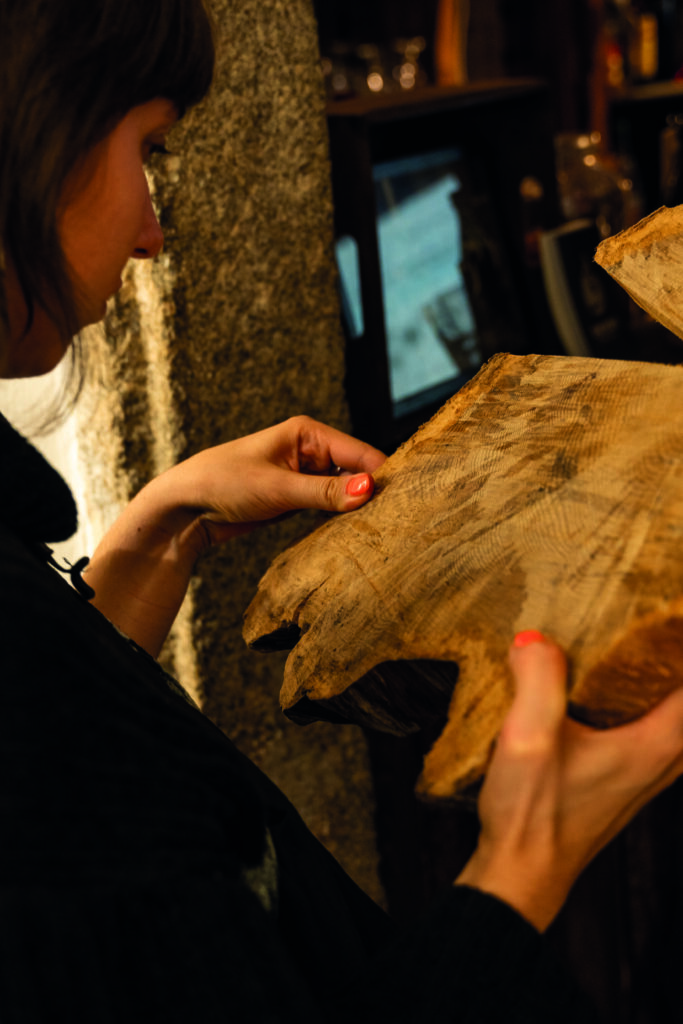
Our most representative contribution to the MADE IN Platform was a workshop series focused on the sustainable use of regional wood resources in the Ore Mountains – a region historically shaped by scarcity and ingenuity. The project explored how traditional knowledge and contemporary design can intersect to address current ecological challenges, particularly in light of climate change and the renewed scarcity of wood due to monocultures and forest decline.
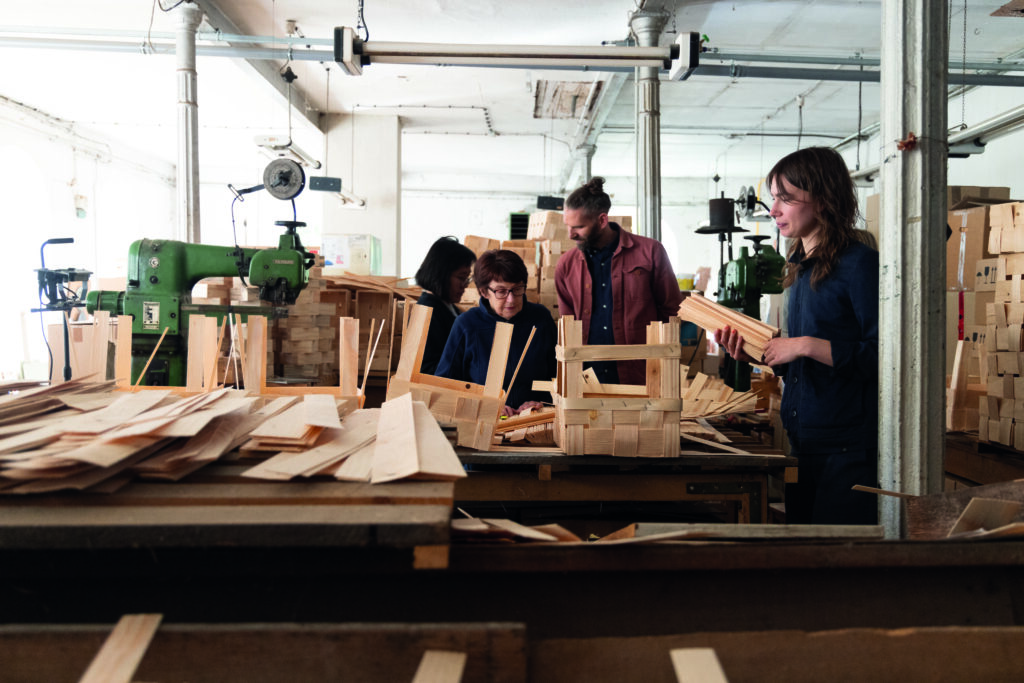
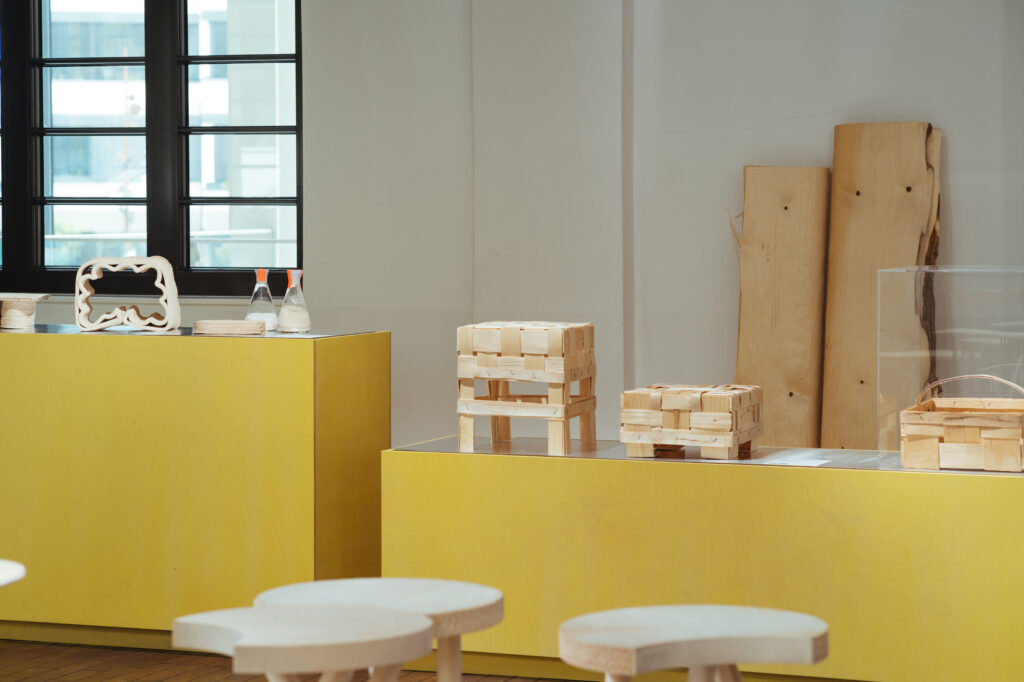
The programme brought together students and young professionals from across Europe and began quite literally at the root: in the forest. Participants witnessed horse logging – a low-impact, energy-efficient method of timber harvesting – before working with freshly cut spruce in a chip basket making workshop. Led by Annette Rüffer and her father Gunther, the workshop introduced a traditional technique that transforms a single log into a woven object without cutting loss or energy-intensive drying. The process combined machine-assisted steps with manual craftsmanship, offering a powerful example of circular resource use.
What made this project particularly compelling was its experimental dimension: the reinterpretation of the chip basket into a stool. Drawing from a handwritten archive of basket dimensions, participants explored how a heritage technique could be adapted to new functions. This hands-on, material-driven exploration not only deepened participants’ understanding of ecological design and value awareness, but also highlighted the potential of craft as a flexible, evolving practice rooted in place and community.

How do you relate these projects to your educational practice?
Education is not a separate strand of the MADE IN Platform – it’s integral to how the platform functions and evolves. From the outset, MADE IN was envisioned as a space for knowledge exchange between diverse disciplines, generations and cultural contexts. In this sense, its pedagogical dimension is both intentional and embedded. Whether through the Knowledge Atlas, which serves as an open-ended and evolving pedagogical archive, or through workshops, symposia and residencies – the platform encourages learning as a situated, reciprocal and embodied process.
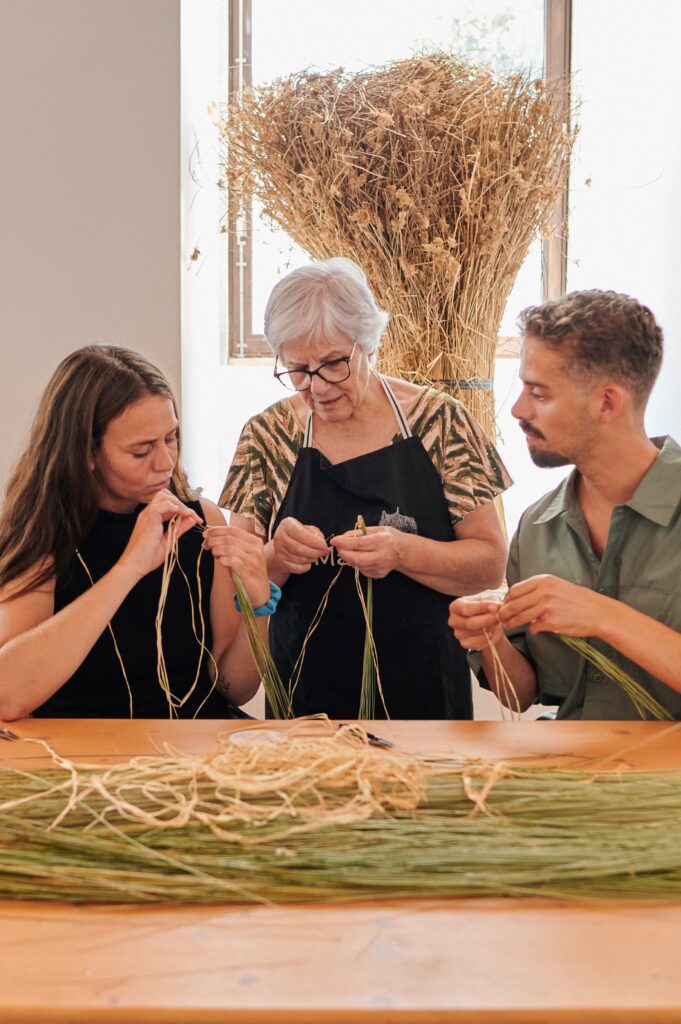
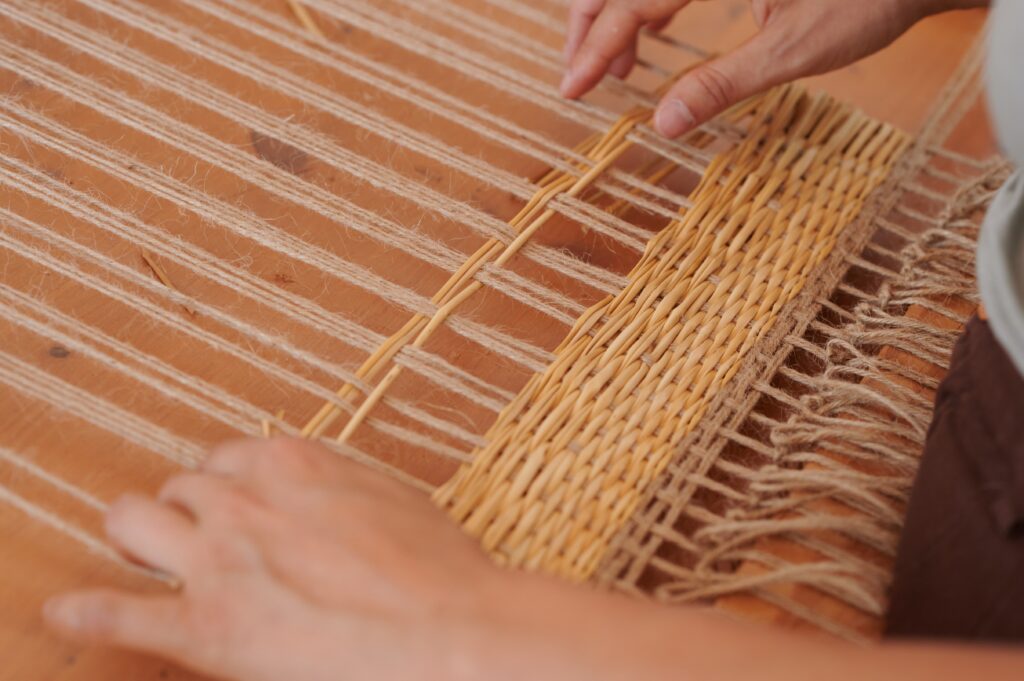
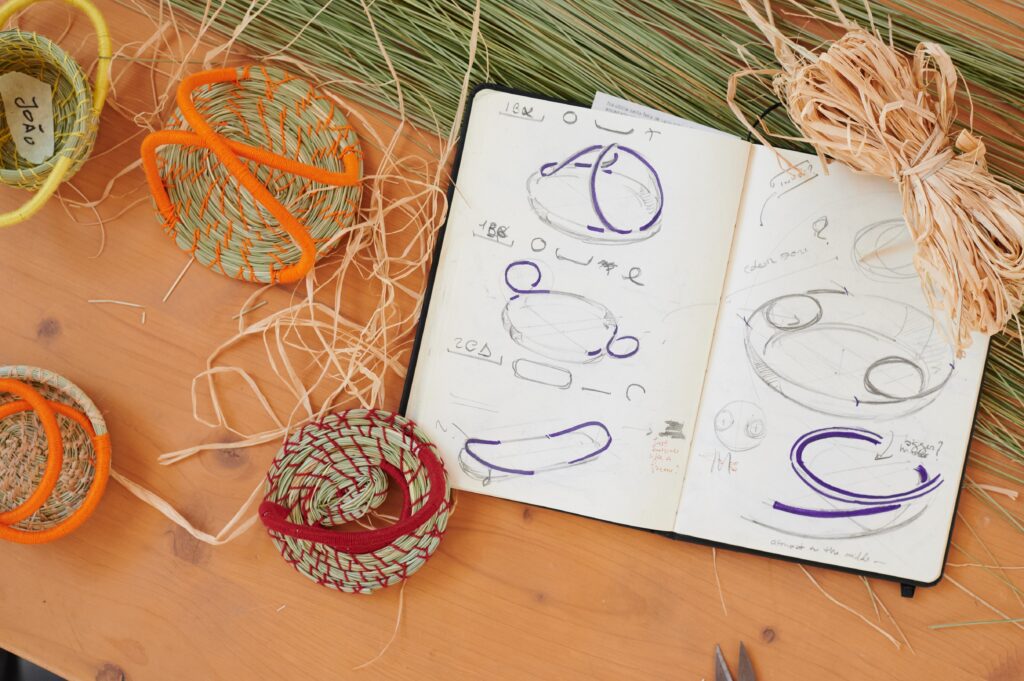
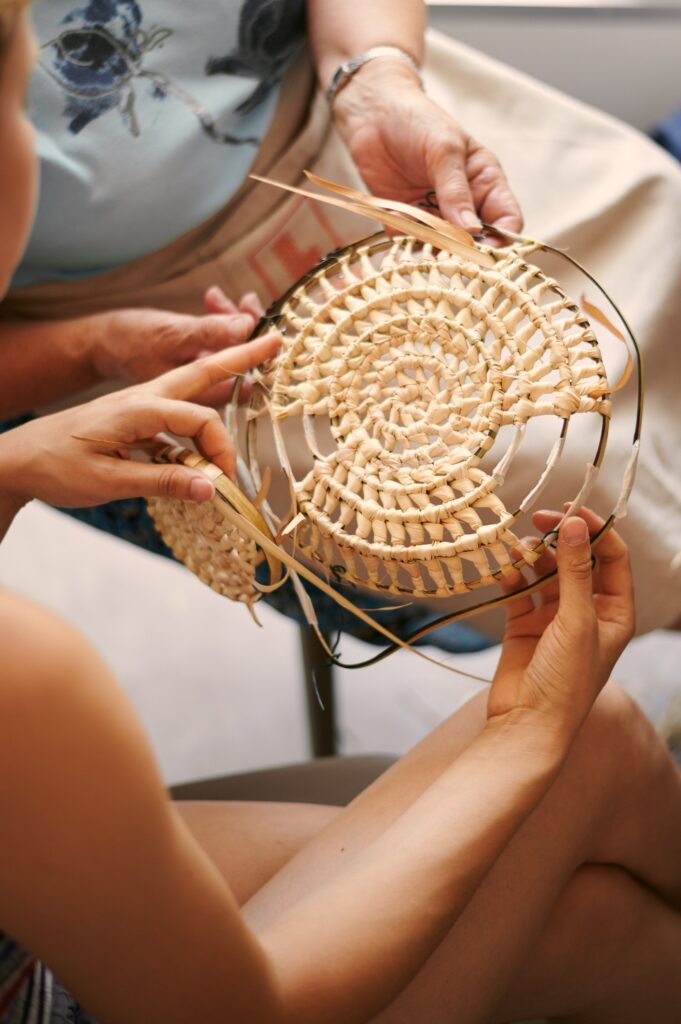
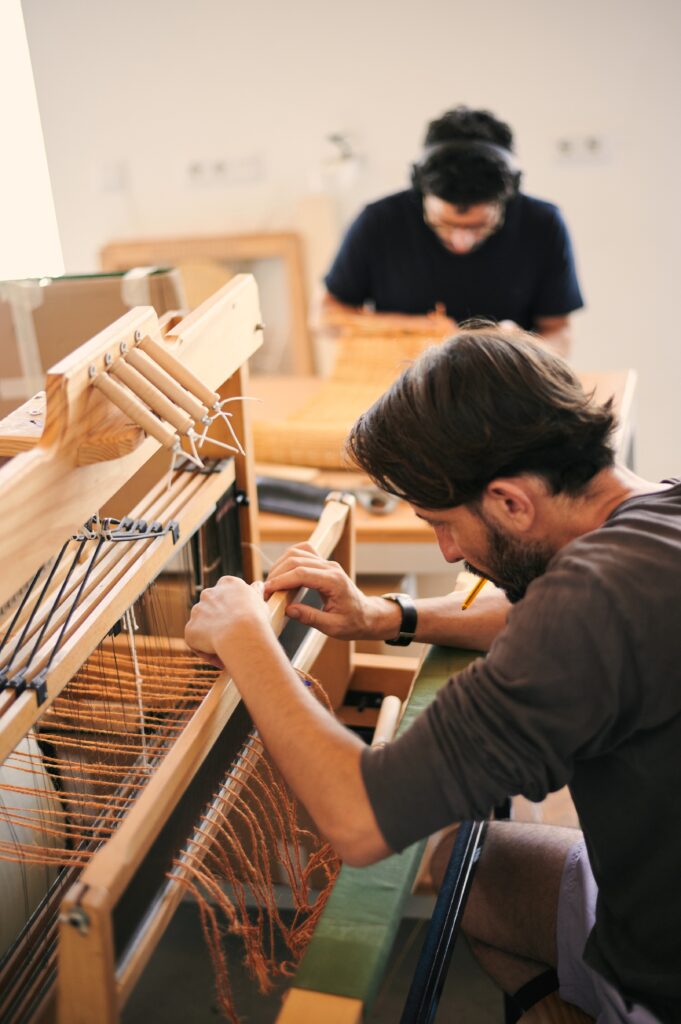
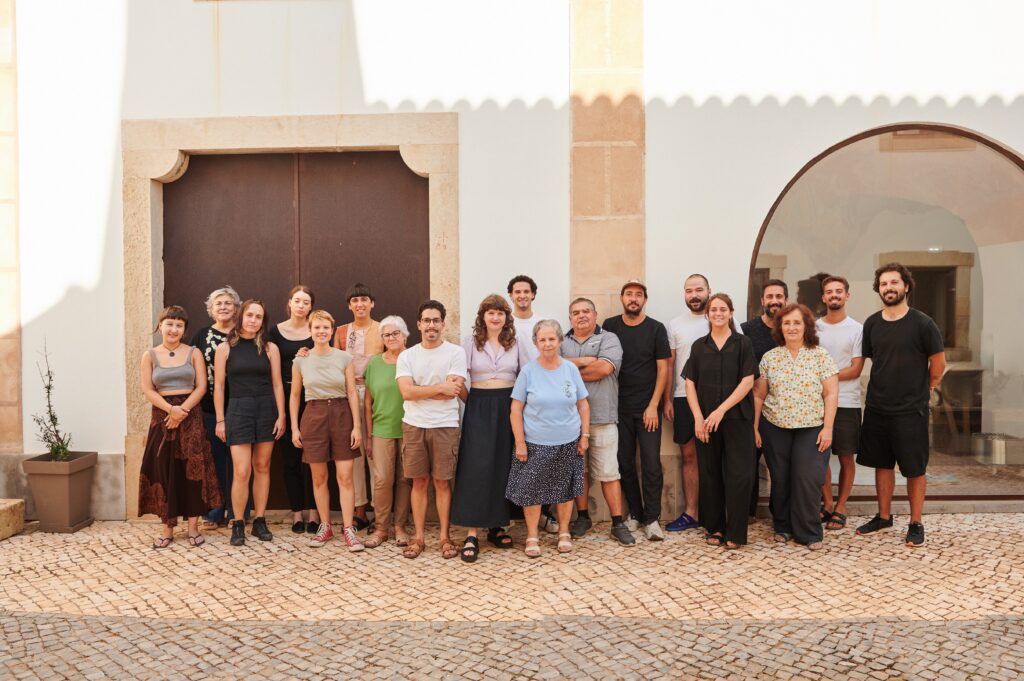
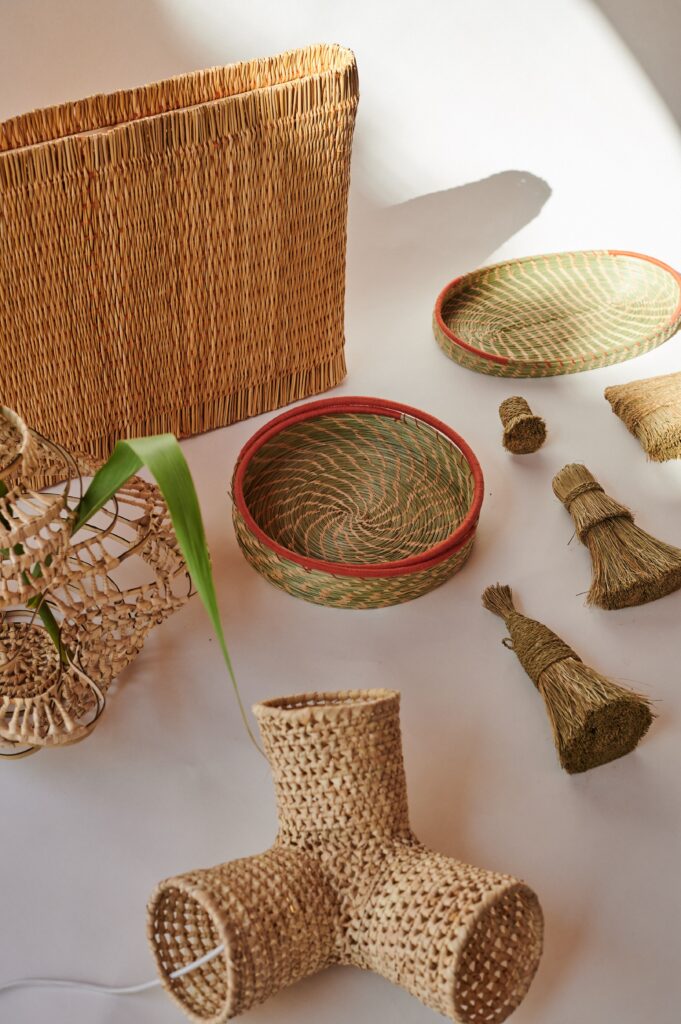
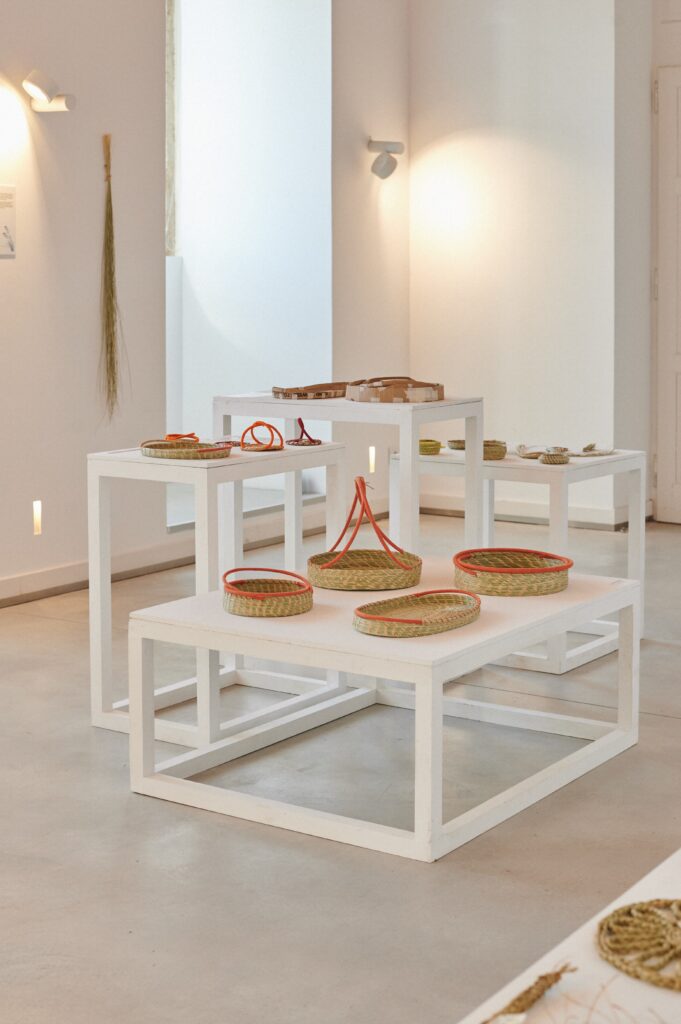
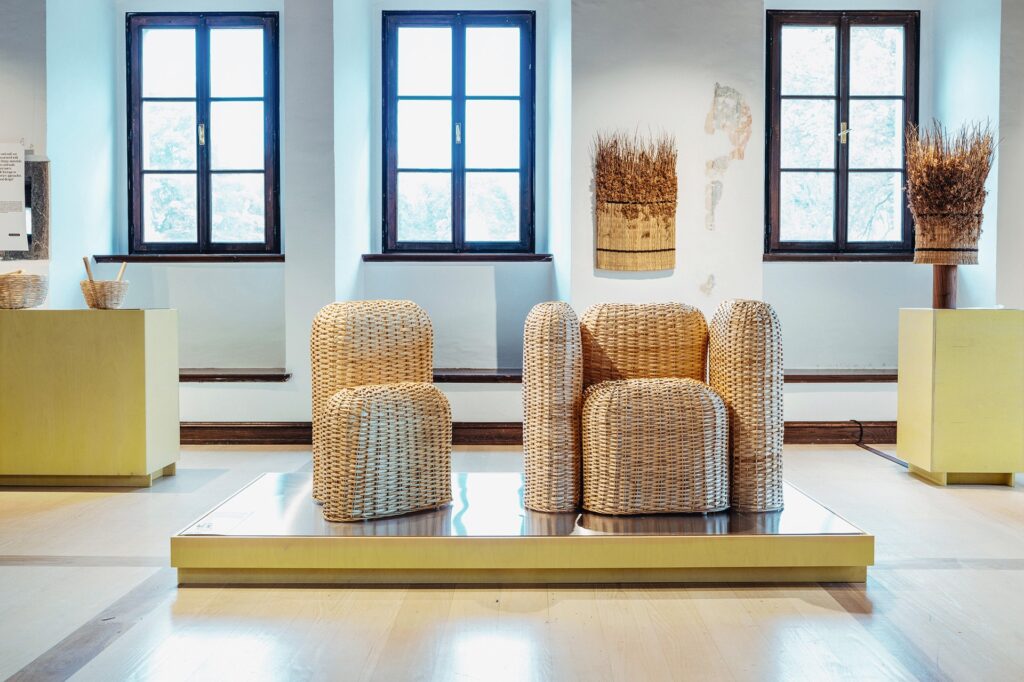
The residencies and summer school that Passa Ao Futuro organised within the MADE IN Platform project relate closely to our broader educational practice and mission as they are deeply rooted in preserving and promoting Portuguese artisan heritage while fostering innovation and sustainability through collaborative learning and design thinking. They reflect our educational philosophy of merging research, activation and training to ensure the continuity and evolution of Portuguese craftsmanship in a socially and environmentally sustainable manner through collaborative, interdisciplinary and intergenerational engagement.
As an educational institution, we deliberately focused on a compact and intensive transfer of knowledge and skills within the MADE IN Platform. The workshops we offered can be seen as a distilled version of our broader teaching practice – hands-on, material-based and rooted in contextual learning. The opportunity to enrich this format with impulse lectures, excursions and interdisciplinary input – made possible by EU funding – was a valuable extension of our regular curriculum. While the condensed timeframe did not allow for deep artistic exploration, it offered participants a meaningful glimpse into the study of applied arts.
At the same time, the platform has generated a lasting impact beyond the workshops themselves. The connections and research initiated through MADE IN have opened new pathways for our university. For example, the basket weaving workshop – originally conceived as a short-format experience – will be expanded into a full semester project in the upcoming winter term. This allows students to engage more deeply with the topic and to develop substantial artistic outcomes.
Moreover, the visibility of these projects has helped raise public awareness around nearly forgotten craft traditions. In the case of basket weaving, a local interest group has formed to continue exploring and preserving this cultural heritage. In this way, the educational impact of the project extends beyond the classroom – into the community, the region and the broader discourse on sustainable design and cultural continuity.


Looking back on the MADE IN programme, how would you assess its benefits? Are there plans to continue it beyond 2025?
Looking back, one of the most valuable outcomes of the MADE IN Platform is its effort to shift the narrative about crafts – from nostalgia and preservation to something much more dynamic, speculative and future-facing. Rather than treating craft as a static cultural residue, the platform reframes it as a mode of thinking, researching and making that is deeply relevant to contemporary life.
This shift has been carried by a transdisciplinary network of designers, craftspeople, curators, scientists and educators, all working across different contexts yet connected by a shared investment in the ethical, ecological and cultural dimensions of making. The Knowledge Atlas, which now holds over 150 entries, reflects this approach: its articles span traditional crafts, regenerative materials, ecological practices and scientific processes, creating an evolving map of knowledge that is both grounded and experimental.
MADE IN’s exhibitions have also played a key role in increasing public engagement. The Crafts and Design Narratives exhibition back in 2020 and the current show, Future Legacies, in Ljubljana and Schneeberg are not simply showcases – they are discursive platforms that activate the research, methodologies and collaborations that have emerged over the course of the programme. They make visible the multiple ways in which craft can intersect with education, material innovation, environmental repair and cultural reflection.
As for what comes next: while the current cycle formally concludes in 2025, the foundations are in place to continue. We are already in conversation with collaborators, institutions and new partners about how to sustain and grow the platform – through future publications, expanded digital tools and educational formats that benefit from the momentum of the work so far. MADE IN was not designed as a closed project but as a living structure, responsive to changing conditions. The work is ongoing – and so is the learning.
● Ivana Borovnjak is a cultural worker based in Zagreb and a founding member of the Oaza art and design collective. Her work spans design, curation and research, engaging with the intersection of art and critical cultural production. From 2013 to 2017, she was director of the Croatian Designers Association, overseeing the creative direction, curation and management of a range of cultural platforms, festivals and educational initiatives. She currently co-leads MADE IN, a project on crafts and local production, and Oaza Books, an independent publishing platform for art and design. ● Astrid Suzano holds an M.A. in Architecture and has worked in studios in Rotterdam and Mexico City. In 2013 she became co-director of a contemporary art gallery in Lisbon and later worked at Projeto Lygia Pape, contributing to major exhibitions at the Metropolitan Museum in New York (2017) and Moderna Museet in Stockholm (2018). In 2016, together with Fatima Durkee, she founded Passa Ao Futuro, a non-profit organisation that connects designers and craftspeople for the purpose of activating, preserving and promoting Portugal’s intangible cultural heritage and fostering innovation within it. As CEO of Passa Ao Futuro, Astrid is responsible for the strategic and operational direction of the organisation, overseeing its partnerships, funding and long-term vision. She also curates the collaborative residencies and exhibitions, shaping programmes that foster meaningful dialogue between contemporary design and traditional craftsmanship. ● Jacob Strobel is a trained cabinet maker and furniture designer as well as a Professor of Wood Design. He has been developing and designing solid wood furniture at an international level for many years, fusing ecological aspects with surprising functionalities. He challenges his students to find their own individual approach to design and encourages them to base it on actually making things. His research is driven by his interest in everyday objects, their social and design-historical background and their potential to contribute to a sustainable future. ● Oaza (Nina Bačun, Ivana Borovnjak, Roberta Bratović, Tina Ivezić, Maja Kolar and Maša Poljanec) is a Zagreb-based art and design collective exploring critical dimensions of design through curation, research and editorial work. As founders of the MADE IN Platform for Contemporary Crafts & Design, Oaza fosters knowledge exchange among craftspeople, designers and scientists, shaping sustainable production and responsible resource use in cultural and heritage contexts.