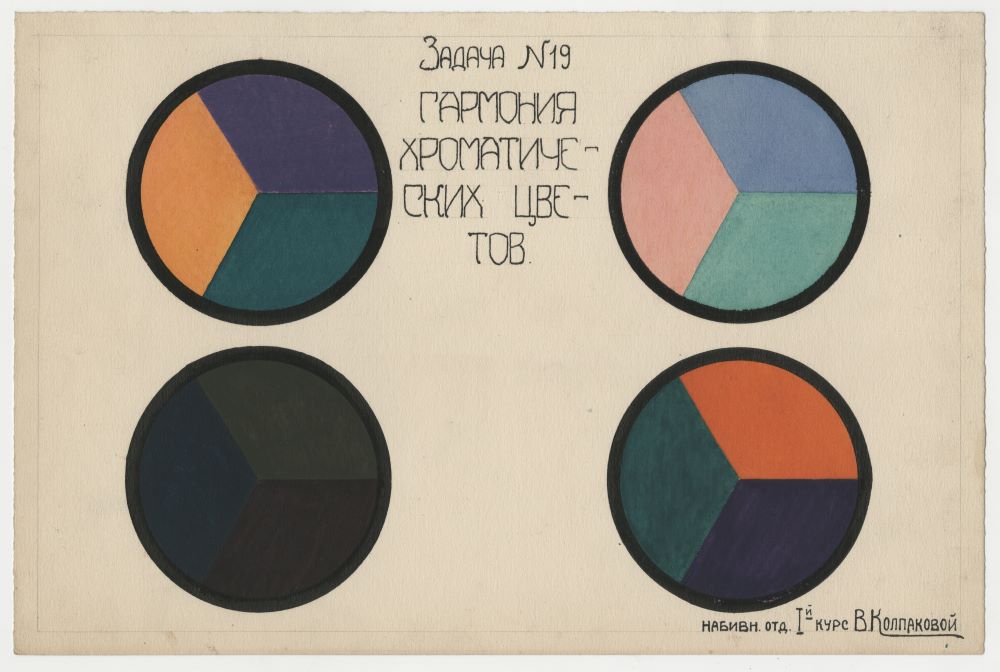
Vkhutemas (Russian: Вхутемас, acronym for Высшие художественно-технические мастерские Vysshiye Khudozhestvenno-Tekhnicheskiye Masterskiye “Higher Art and Technical Studios”) was the Russian state art and technical school founded in 1920 in Moscow.
The portrait of Soviet VKhUTEMAS, spanning a transformative decade from 1920 to 1930, reveals a revolutionary chapter in art education catalysed by the October Revolution of 1917. In response to the dominance of the St Petersburg Academy of Arts, the Moscow-based free state art workshops (SGKhM) emerged in 1918, birthing the experimental ‘Renaissance experiment’ curriculum. However, inefficiencies plagued SGKhM, necessitating a subsequent reform leading to the establishment of the VKhUTEMAS.
Under the visionary leadership of Yefim Ravdel, VKhUTEMAS aimed to harmonise artistic workshops, standardise student levels and focus on industrial training. Radically leftist ideals initially dominated, championed by Constructivists advocating for design education. Internal strife ensued as tensions between constructivists and traditionalists escalated, ultimately resulting in Ravdel’s dismissal and the appointment of Vladimir Favorsky.
Favorsky, a graphic artist and theorist, steered VKhUTEMAS towards a more balanced approach, emphasising the general artistic level and retaining the innovative core division. Despite his success, industrial departments faced challenges. Pavel Novitsky’s subsequent rectorship from 1926 intensified efforts to bridge the gap between art and industry, recruiting influential teachers like El Lissitzky and Vladimir Tatlin.
VKhUTEMAS underwent external transformations in 1927, becoming the Higher Art and Technical Institute (VKhUTEIN) and reflecting an accelerated training paradigm demanded by the industrialised economy. However, the school’s ultimate dissolution in 1930 underscored its inability to meet Stalinist expectations for rapid artist production. Despite its demise, VKhUTEMAS left an indelible mark on twentieth-century art, shaping influential stylistic and formative trends.